一文解惑mybatis中的#{}和${}

一文解惑mybatis中的#{}和${}

一个风轻云淡
发布于 2023-10-15 10:51:21
发布于 2023-10-15 10:51:21
基本概述
#{}:先编译sql语句,再给占位符传值,底层是PreparedStatement实现。可以防止sql注入,比较常用。
${}:先进行sql语句拼接,然后再编译sql语句,底层是Statement实现。存在sql注入现象。只有在需要进行sql语句关键字拼接的情况下才会用到。
#{}的基本使用
    <select id="selectById" resultType="pojo.Car">
        select  * from t_car where id=#{id}
    </select>
通过执行可以清楚的看到,sql语句中是带有 ? 的,这个 ? 就是大家在JDBC中所学的占位符,专门用来接收值的。
这就是 #{},它会先进行sql语句的预编译,然后再给占位符传值
${}的基本使用
    <select id="selectByCarType" resultType="com.study.mybatis.pojo.Car">
        select
            id,car_num as carNum,brand,guide_price as guidePrice,produce_time as produceTime,car_type as carType
        from
            t_car
        where
            car_type = ${carType}
    </select>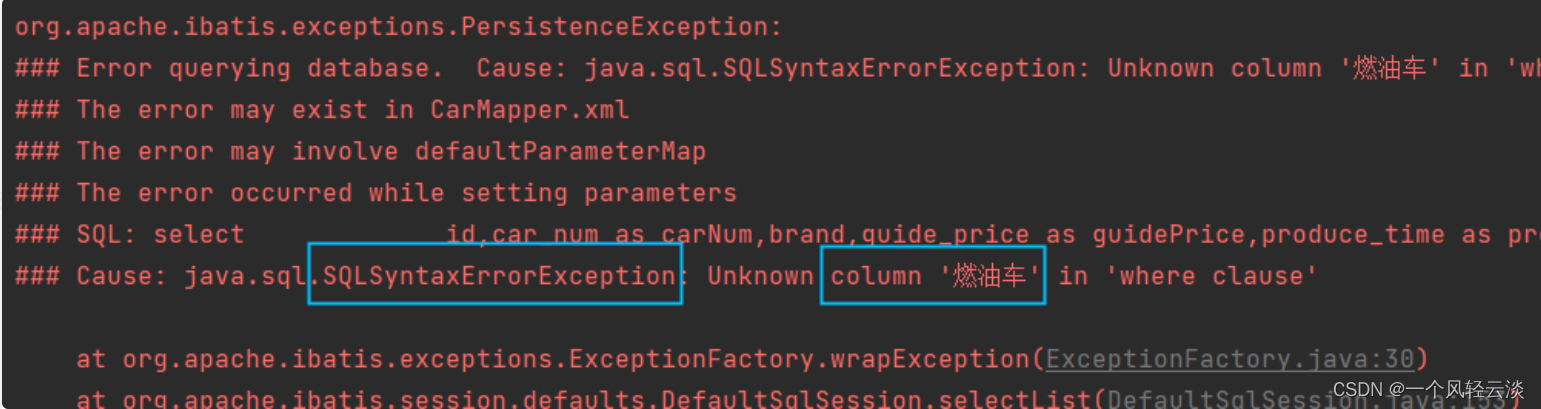

很显然,${} 是先进行sql语句的拼接,然后再编译,出现语法错误是正常的,因为 燃油车 是一个字符串,在sql语句中应该添加单引号
    <select id="selectByCarType" resultType="com.study.mybatis.pojo.Car">
        select
            id,car_num as carNum,brand,guide_price as guidePrice,produce_time as produceTime,car_type as carType
        from
            t_car
        where
            <!--car_type = #{carType}-->
            <!--car_type = ${carType}-->
            car_type = '${carType}'
    </select>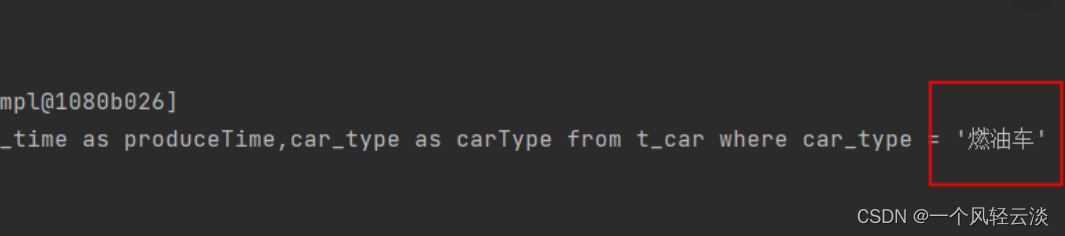
原则:能用 #{} 就不用 ${}
${}使用情况
当需要进行sql语句关键字拼接的时候。必须使用${}
sql排序asc|desc
需求:通过向sql语句中注入asc或desc关键字,来完成数据的升序或降序排列。
<select id="selectAll" resultType="com.study.mybatis.pojo.Car">
  select
  id,car_num as carNum,brand,guide_price as guidePrice,produce_time as produceTime,car_type as carType
  from
  t_car
  order by carNum ${key}
</select>
desc是一个关键字,不能带单引号的,所以在进行sql语句关键字拼接的时候,必须使用${}
拼接表名
业务背景:实际开发中,有的表数据量非常庞大,可能会采用分表方式进行存储,比如每天生成一张表,表的名字与日期挂钩,例如:2022年8月1日生成的表:t_user20220108。2000年1月1日生成的表:t_user20000101。此时前端在进行查询的时候会提交一个具体的日期,比如前端提交的日期为:2000年1月1日,那么后端就会根据这个日期动态拼接表名为:t_user20000101。有了这个表名之后,将表名拼接到sql语句当中,返回查询结果。那么大家思考一下,拼接表名到sql语句当中应该使用#{} 还是 ${} 呢?
使用#{}会是这样:select * from 't_car'
使用${}会是这样:select * from t_car
<select id="selectAllByTableName" resultType="car">
  select
  id,car_num as carNum,brand,guide_price as guidePrice,produce_time as produceTime,car_type as carType
  from
  ${tableName}
</select>
批量删除
业务背景:一次删除多条记录。
对应的sql语句:
- delete from t_user where id = 1 or id = 2 or id = 3;
- delete from t_user where id in(1, 2, 3);
假设现在使用in的方式处理,前端传过来的字符串:1, 2, 3
如果使用mybatis处理,应该使用#{} 还是 ${}
使用#{} :delete from t_user where id in('1,2,3') 执行错误:1292 - Truncated incorrect DOUBLE value: '1,2,3'
使用${} :delete from t_user where id in(1, 2, 3)
<delete id="deleteBatch">
  delete from t_car where id in(${ids})
</delete>
模糊查询
需求:查询奔驰系列的汽车。【只要品牌brand中含有奔驰两个字的都查询出来。】
使用${}处理方法:
<select id="selectLikeByBrand" resultType="Car">
  select
  id,car_num as carNum,brand,guide_price as guidePrice,produce_time as produceTime,car_type as carType
  from
  t_car
  where
  brand like '%${brand}%'
</select>
使用#{}
第一种:concat函数
<select id="selectLikeByBrand" resultType="Car">
  select
  id,car_num as carNum,brand,guide_price as guidePrice,produce_time as produceTime,car_type as carType
  from
  t_car
  where
  brand like concat('%',#{brand},'%')
</select>
第二种:双引号方式
<select id="selectLikeByBrand" resultType="Car">
  select
  id,car_num as carNum,brand,guide_price as guidePrice,produce_time as produceTime,car_type as carType
  from
  t_car
  where
  brand like "%"#{brand}"%"
</select>
本文参与 腾讯云自媒体同步曝光计划,分享自作者个人站点/博客。
原始发表:2023-09-15,如有侵权请联系 cloudcommunity@tencent.com 删除
目录
腾讯云开发者

Copyright © 2013 - 2026 Tencent Cloud. All Rights Reserved. 腾讯云 版权所有
深圳市腾讯计算机系统有限公司 ICP备案/许可证号:粤B2-20090059  粤公网安备44030502008569号
腾讯云计算(北京)有限责任公司 京ICP证150476号 | 京ICP备11018762号