【关于Java的浅拷贝和深拷贝】


"浅拷贝和深拷贝的区别"是一个经典问题。这个问题不仅考察你对对象复制的理解,还涉及到内存管理、引用机制和对象序列化等核心概念。本文将深入浅出地讲解这两个概念。
什么是对象拷贝?
在Java中,当我们说"拷贝"一个对象时,我们指的是创建一个与原对象状态相同的新对象。但这里的"状态相同"有不同的理解方式,这就引出了浅拷贝和深拷贝的概念。
浅拷贝(Shallow Copy)
定义
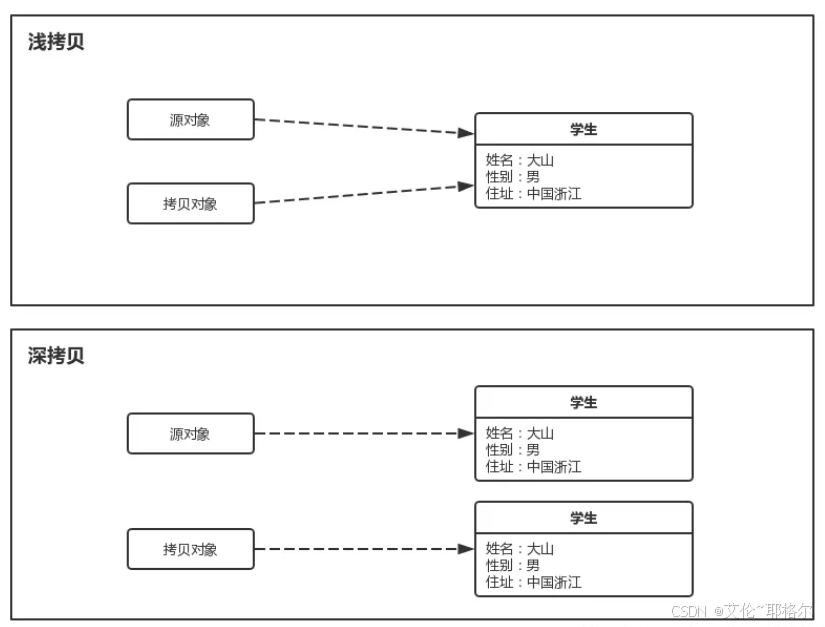
浅拷贝是指创建一个新对象,这个新对象有着原始对象属性值的一份精确拷贝。如果属性是基本数据类型,拷贝的就是基本数据类型的值;如果属性是引用类型,拷贝的就是内存地址。
特点
- 基本数据类型:值被复制
- 引用类型:只复制引用(地址),不复制对象本身
- 原始对象和拷贝对象共享引用类型的成员变量
代码示例
class Address {
    String city;

    public Address(String city) {
        this.city = city;
    }
}

class Person implements Cloneable {
    String name;
    int age;
    Address address;

    public Person(String name, int age, Address address) {
        this.name = name;
        this.age = age;
        this.address = address;
    }

    @Override
    protected Object clone() throws CloneNotSupportedException {
        return super.clone(); // 这就是浅拷贝
    }
}

// 使用示例
Address addr = new Address("北京");
Person p1 = new Person("张三", 25, addr);
Person p2 = (Person) p1.clone();

// 修改p2的引用类型属性
p2.address.city = "上海";

System.out.println(p1.address.city); // 输出:上海
System.out.println(p2.address.city); // 输出:上海
可以看到,修改p2的address.city也影响了p1,因为它们共享同一个Address对象。
深拷贝(Deep Copy)
定义
深拷贝是指创建一个新对象,不仅复制原始对象的基本数据类型,还会为引用类型的成员变量创建新的实例。
特点
- 基本数据类型:值被复制
- 引用类型:创建新的对象实例,不共享
- 原始对象和拷贝对象完全独立
实现方式
方法一:重写clone()方法并递归克隆
@Override
protected Object clone() throws CloneNotSupportedException {
    Person cloned = (Person) super.clone();
    // 对引用类型进行深拷贝
    cloned.address = new Address(this.address.city);
    return cloned;
}
方法二:使用序列化(推荐)
public Person deepCopy() {
    try {
        // 将对象序列化到字节流
        ByteArrayOutputStream bos = new ByteArrayOutputStream();
        ObjectOutputStream oos = new ObjectOutputStream(bos);
        oos.writeObject(this);

        // 从字节流反序列化创建新对象
        ByteArrayInputStream bis = new ByteArrayInputStream(bos.toByteArray());
        ObjectInputStream ois = new ObjectInputStream(bis);
        return (Person) ois.readObject();
    } catch (Exception e) {
        throw new RuntimeException(e);
    }
}注意:使用序列化方式需要实现Serializable接口。
常见问题
1. 浅拷贝和深拷贝的核心区别是什么?
回答要点:
- 浅拷贝只复制对象本身,引用类型共享
- 深拷贝复制对象及所有引用的对象,完全独立
- 浅拷贝速度快但可能有副作用,深拷贝安全但性能开销大
2. 如何实现深拷贝?
回答要点:
- 重写clone()方法,对每个引用类型手动创建新实例
- 使用序列化/反序列化(最彻底,能处理复杂对象图)
- 使用第三方库如Apache Commons Lang的SerializationUtils
3. 为什么推荐使用序列化实现深拷贝?
回答要点:
- 自动处理复杂的对象引用关系
- 能正确处理循环引用
- 不需要手动维护clone逻辑
- 更加可靠,减少出错可能
4. 浅拷贝有什么应用场景?
回答要点:
- 性能要求极高,且确定不会修改引用对象的场景
- 临时使用对象副本,很快就会丢弃
- 对象图简单,引用对象也是不可变的
5. clone()方法有哪些注意事项?
回答要点:
- 必须实现Cloneable接口
- clone()是protected方法,需要重写为public
- 对于final字段需要特殊处理
- 异常处理:需要处理CloneNotSupportedException
最佳实践建议
- 优先考虑不可变对象:如果对象是不可变的,就不需要拷贝
- 谨慎使用浅拷贝:除非明确知道不会修改引用对象
- 复杂对象使用序列化:这是最可靠的深拷贝方式
- 考虑使用构建器模式:对于需要频繁创建相似对象的场景
总结
浅拷贝和深拷贝的选择本质上是性能与安全性的权衡。不仅要能说出两者的区别,还要能分析具体场景下的选择依据。没有绝对的好坏,只有是否适合当前需求。
本文参与 腾讯云自媒体同步曝光计划,分享自作者个人站点/博客。
原始发表:2025-08-27,如有侵权请联系 cloudcommunity@tencent.com 删除
目录
腾讯云开发者

Copyright © 2013 - 2026 Tencent Cloud. All Rights Reserved. 腾讯云 版权所有
深圳市腾讯计算机系统有限公司 ICP备案/许可证号:粤B2-20090059  粤公网安备44030502008569号
腾讯云计算(北京)有限责任公司 京ICP证150476号 | 京ICP备11018762号