The content of this page has been automatically translated by AI. If you encounter any problems while reading, you can view the corresponding content in Chinese.
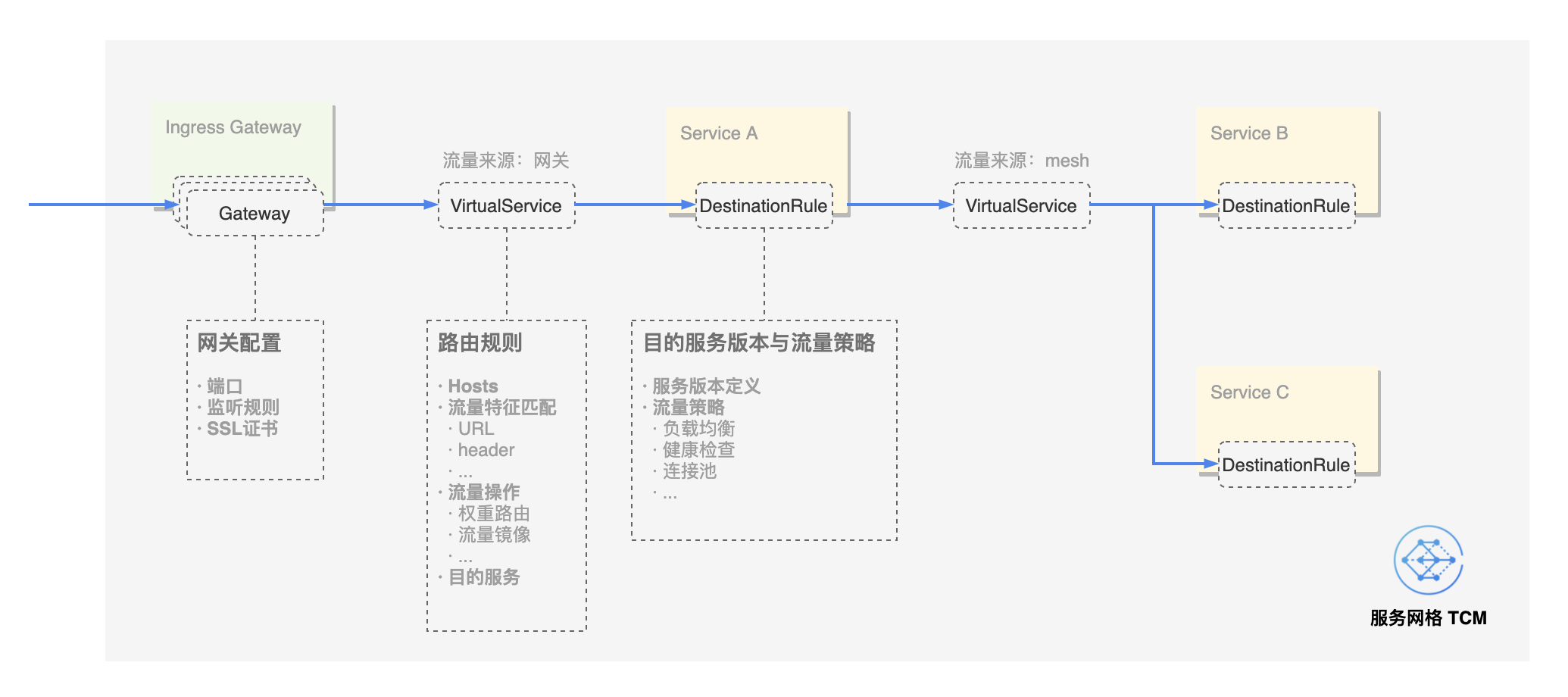
Tencent Cloud Mesh is fully compatible with Istio's native traffic management CRDs Gateway, VirtualService, and DestinationRule, and presents the native traffic management syntax as a product. The following figure shows the traffic management model of Tencent Cloud Mesh:
Tencent Cloud Mesh uses Gateway, VirtualService, and DestinationRule to manage traffic.
Gateway: defines the port, listening rule, and certificate configurations of a gateway. Gateways and gateway configurations are in a one-to-many relationship. The Gateway specifies a gateway to which the configurations are to be delivered through the selector field.
VirtualService: defines routing rules and traffic operation rules for a specified host. The VirtualService specifies a bound domain name through the hosts field. It can specify that traffic comes from a gateway or an internal component of a mesh.
DestinationRule: defines versions and traffic policies of a service. The traffic policies include load balancing, health check, and connection pools. Services and DestinationRules are in a one-to-one binding relationship.
Traffic Management Configuration Methods
Currently, TCM provides the following two methods to configure Gateway, VirtualService, and DestinationRule:
Console UI Configuration
Resource Creation via YAML
You can use the Console UI to create, delete, update, and view Gateways, VirtualServices, and DestinationRules.
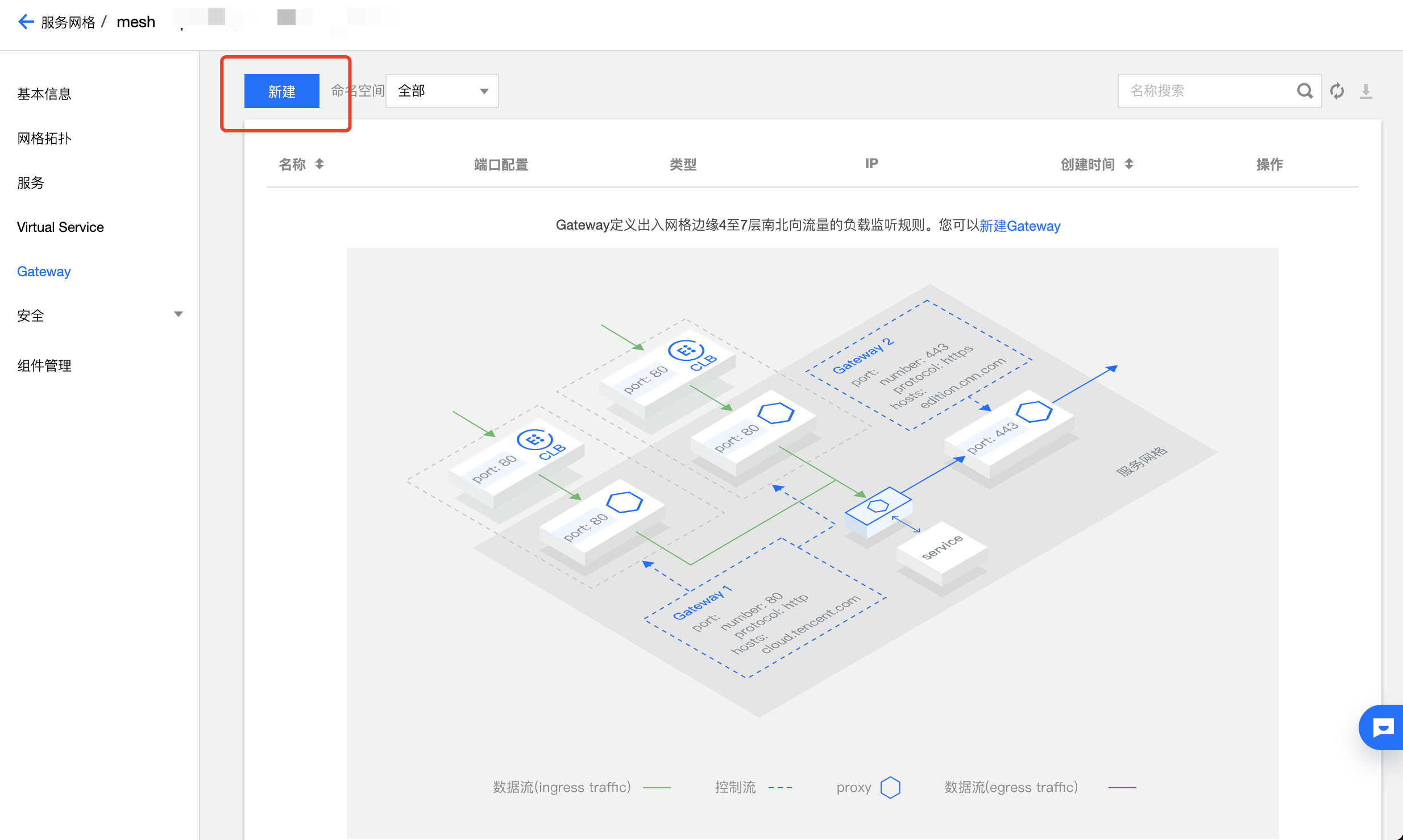
Creating a Gateway:
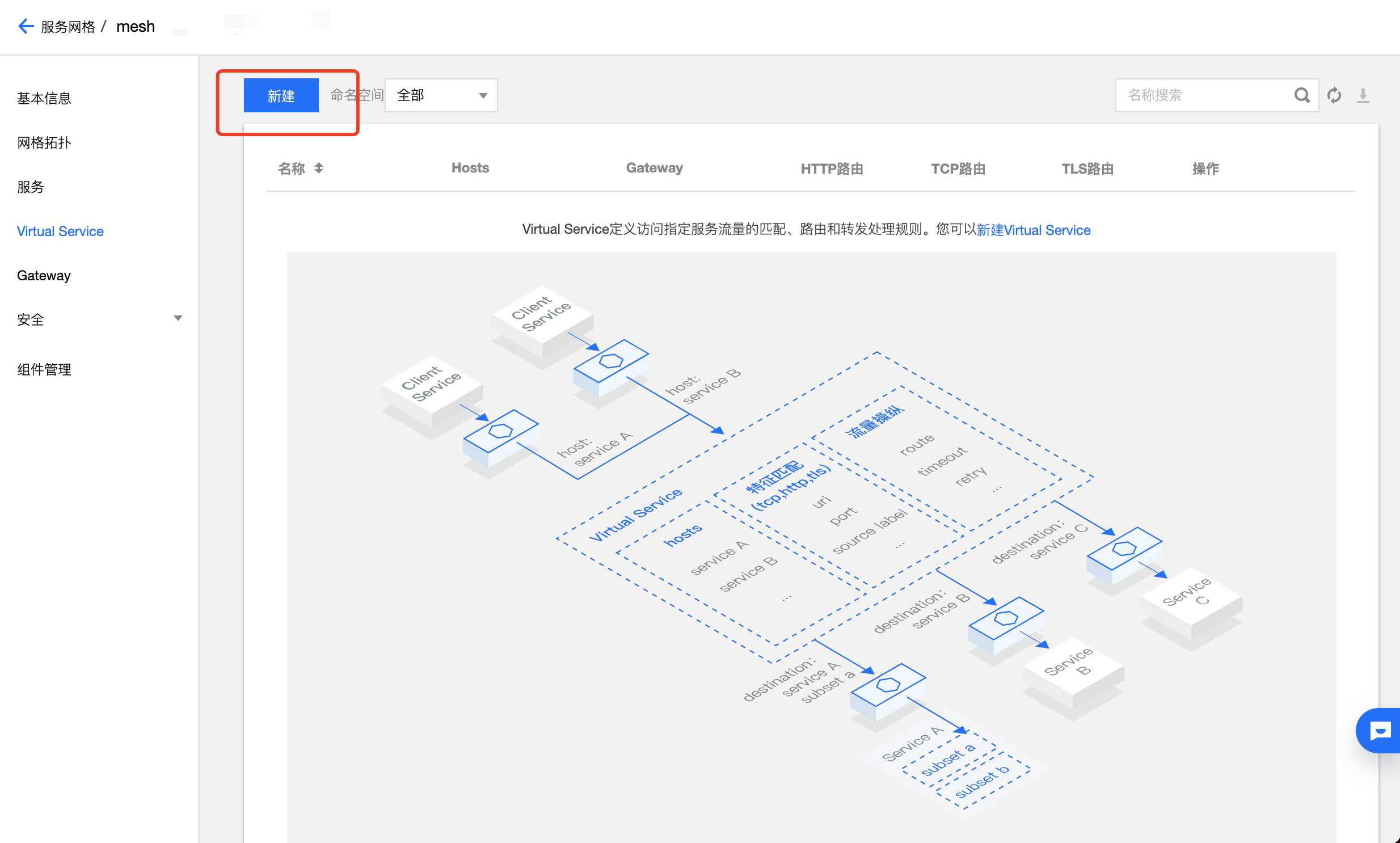
Creating a VirtualService:
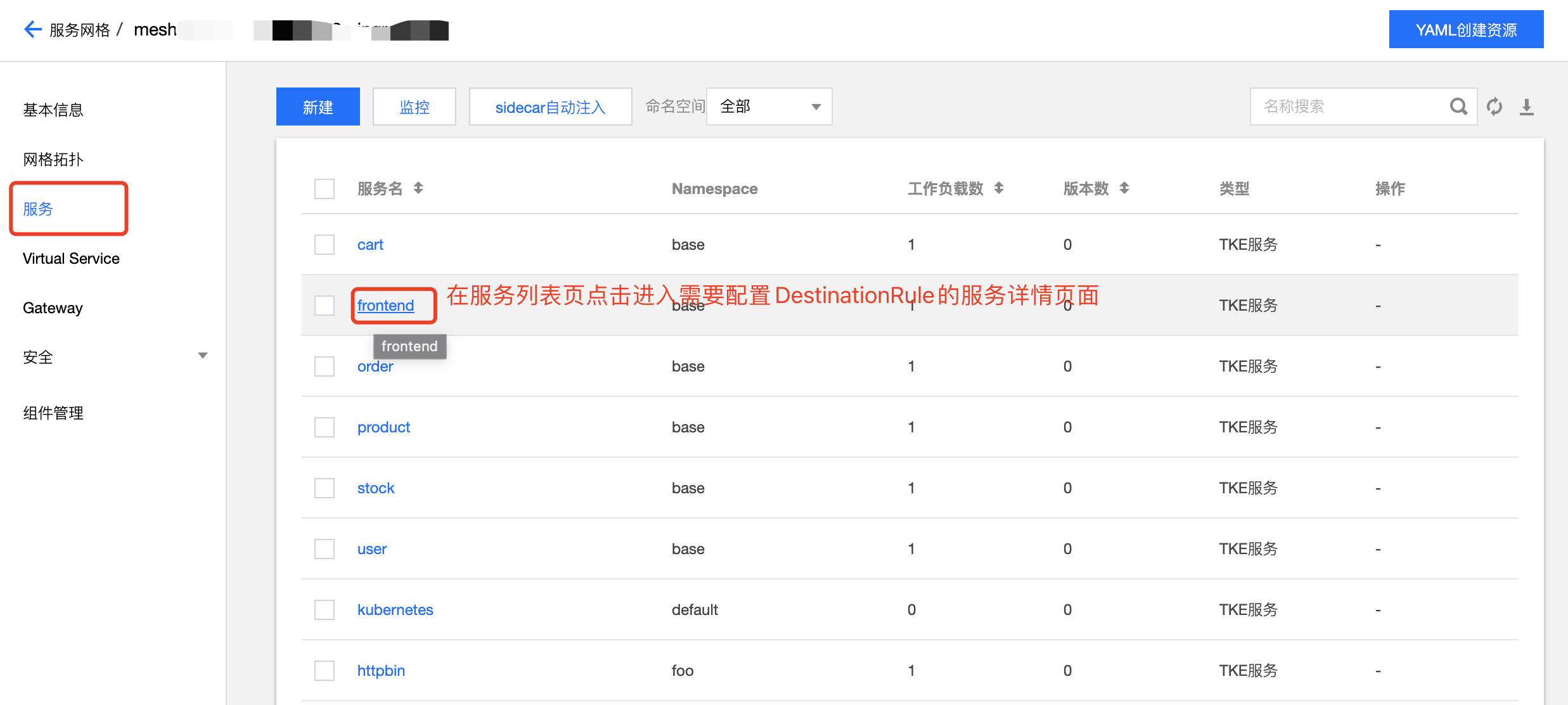
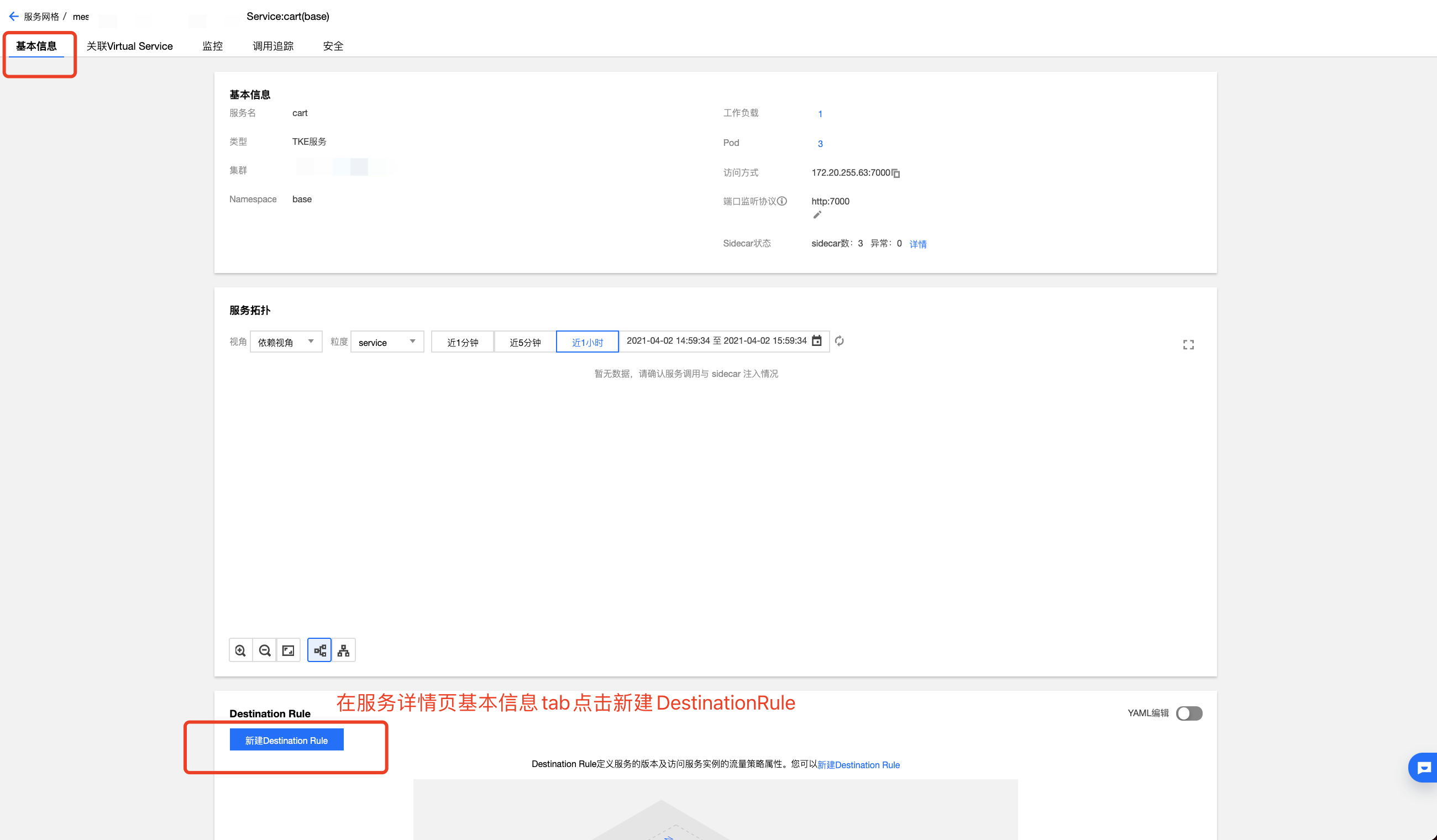
Creating a DestinationRule: A DestinationRule is bound to a service one-to-one. It is created and managed on the service details page:
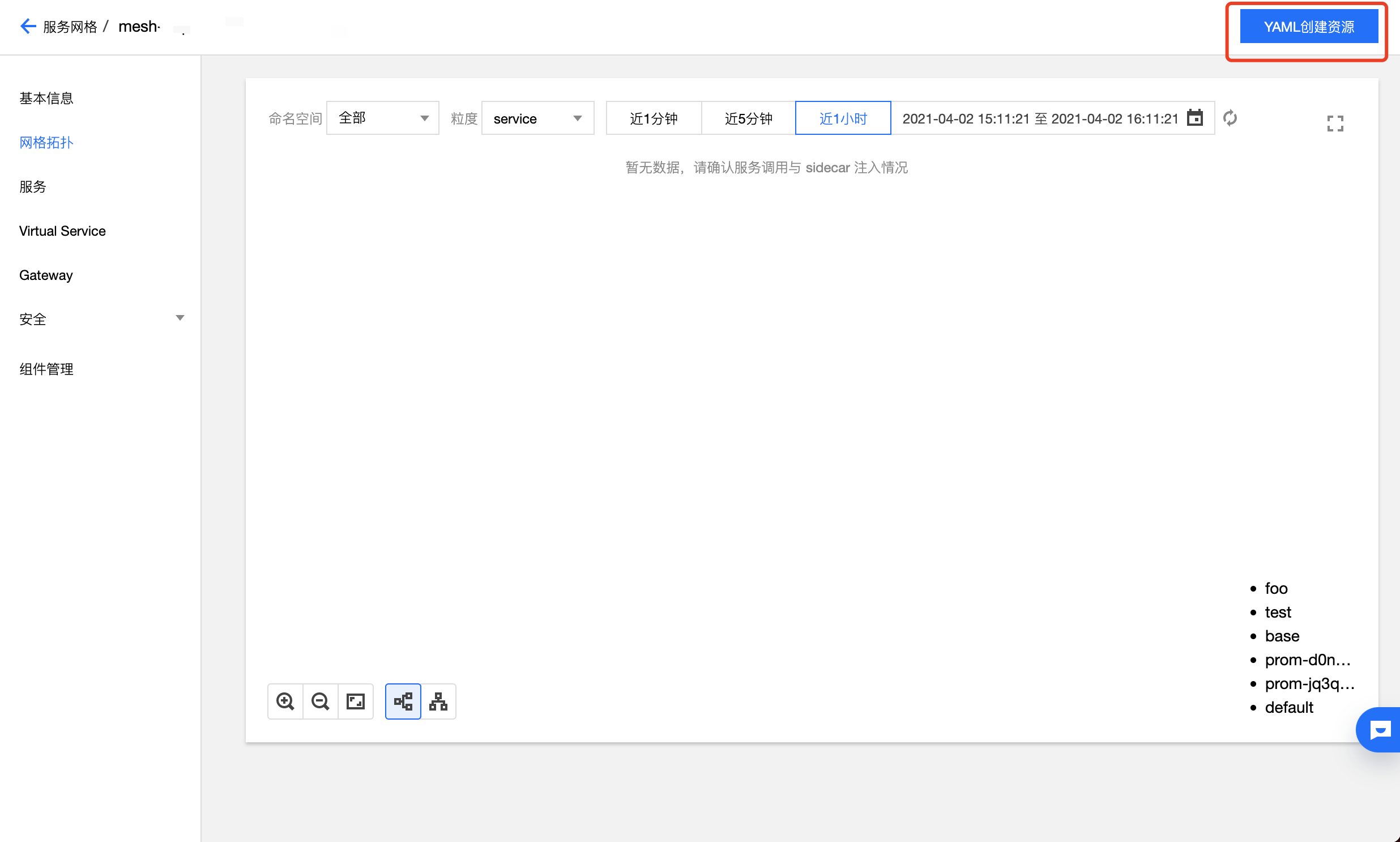
You can create Istio or Kubernetes resources by clicking Create via YAML in the upper right corner of the grid management interface. If the YAML you submit contains a Kubernetes resource and the current mesh manages multiple clusters, you need to select a destination cluster to which the YAML-created resource is submitted.