基本原理
通常高可用主备集群包含2台服务器,一台主服务器处于某种业务的激活状态(即 Active 状态),另一台备服务器处于该业务的备用状态(即 Standby 状态),它们共享同一个 VIP(Virtual IP)。同一时刻,VIP 只在一台主设备上生效,当主服务器出现问题时,备用服务器接管 VIP 继续提供服务。高可用主备模式有着广泛的应用,例如,MySQL 主备切换、Nginx Web 接入。
在 VPC 的云服务器间可以通过部署 Keepalived 来实现高可用主备集群。Keepalived 是基于 VRRP 协议的一款高可用软件,Keepalived 配置通过 keepalived.conf 文件完成。
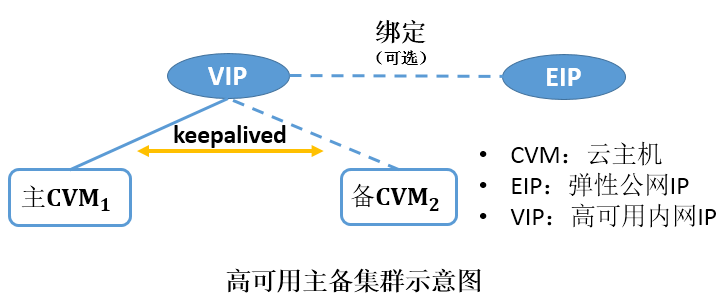
在传统的物理网络中,可以通过 keepalived 的 VRRP 协议协商主备状态,其原理是:主设备周期性发送免费 ARP 报文刷新上联交换机的 MAC 表或终端 ARP 表,触发 VIP 迁移到主设备上。
在腾讯云 VPC 中,支持部署 keepalived 来搭建主备高可用集群。与物理网络相比,主要区别是:使用的 VIP 必须是从腾讯云申请的 高可用虚拟 IP (HAVIP) 。
注意事项
推荐使用单播方式进行 VRRP 通信。
说明:
本文演示配置为单播模式,在 keepalived 配置文件中无需配置对端设备的 IP 地址,即不配置 “unicast_peer” 参数。
推荐使用 Keepalived(1.2.24版本及以上)。
确保已经配置以下 garp 相关参数。因为 keepalived 依赖 ARP 报文更新 IP 信息,如果缺少以下参数,会导致某些场景下,主设备不发送 ARP 导致通信异常。
garp_master_delay 1garp_master_refresh 5
确保同一 VPC 下的每个主备集群需要配置不同的 vrrp router id。
确定没有采用 strict 模式,即需要删除“vrrp_strict” 配置。
控制单个网卡上配置的 VIP 数量,建议目前在单个网卡绑定的高可用虚拟 IP 数量不超过5个。如果需要使用多个虚拟 IP,建议在 keepalived 配置文件的 global_defs 段落添加或修改配置 “vrrp_garp_master_repeat 1”。
通过调节 advert_int 参数的大小,在抗网络抖动及灾害恢复速度进行平衡取舍。当 advert_int 参数过小,容易受网络抖动影响发生频繁倒换和暂时 双主(脑裂) 直到网络恢复。当 advert_int 参数过大,会导致主机器故障后,主备倒换慢(即服务暂停时间长)。请充分评估双主(脑裂)对业务的影响!
track_script 脚本的具体执行项(如 checkhaproxy )中的 interval 参数请适当提高,避免脚本执行超时导致 FAULT 状态的发生。
可选:注意日志打印导致的磁盘使用量上涨,可以通过 logrotate 等工具解决。
操作步骤
注意:
本文操作步骤均以如下环境条件为例,实际操作时,请您务必使用实际环境参数进行替换。
主节点云服务器:HAVIP-01,172.16.16.5
备节点云服务器:HAVIP-02,172.16.16.6
高可用HAVIP:172.16.16.12
弹性公网IP:81.71.14.118
镜像版本:CentOS 7.6 64位
步骤1:申请 VIP
1. 登录 私有网络控制台。
2. 在左侧导航栏中,选择 IP 与网卡 > 高可用虚拟 IP。
3. 在 HAVIP 管理页面,选择所在地域,单击申请。
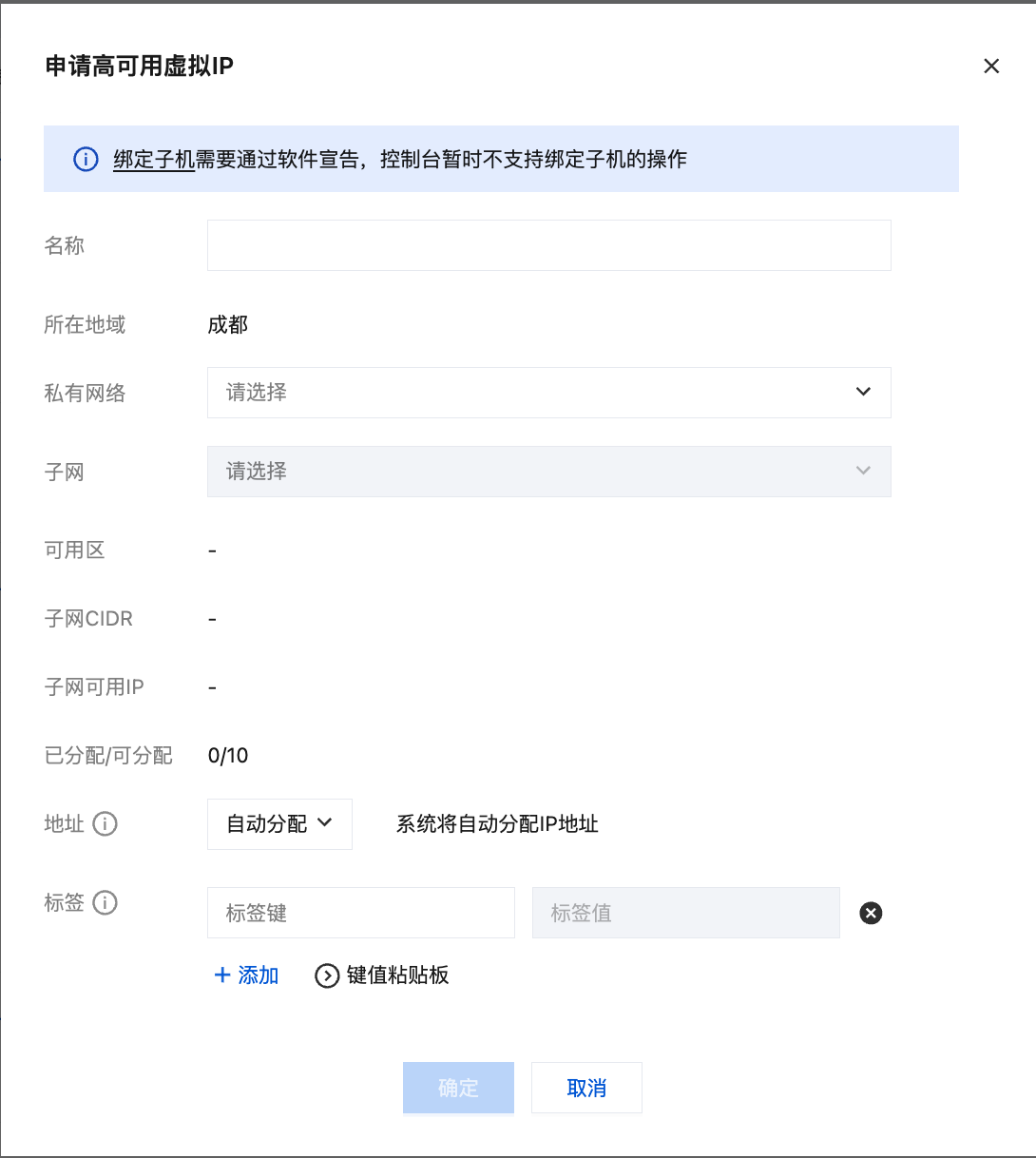
4. 在弹出的申请高可用虚拟 IP 对话框中输入名称,选择 HAVIP 所在的私有网络和子网等信息,单击确定即可。
说明:
HAVIP 的 IP 地址可以自动分配,也可以手动填写。如果您选择手动填写,请确认填写内网 IP 在所属子网网段内,且不属于系统保留 IP。例如,所属子网网段为:10.0.0.0/24,则可填的内网 IP 范围 为:10.0.0.2 - 10.0.0.254。
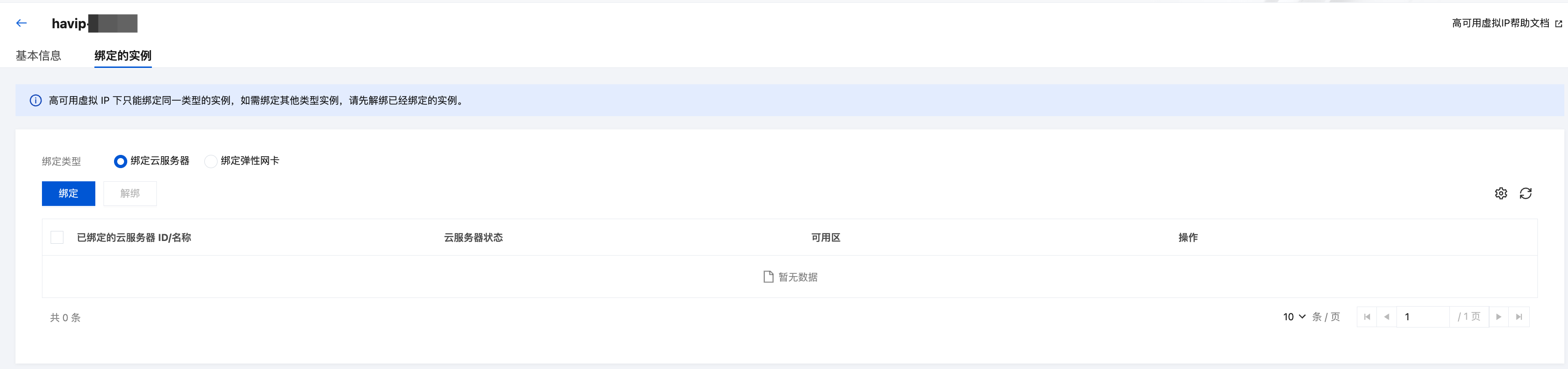
申请成功的 HAVIP 如下图所示。

在详情页选择绑定的实例,填写 HAVIP 可切换的实例范围。
步骤2:在主服务器和备服务器上安装 keepalived 软件(推荐1.2.24版本及以上)
本文以 CentOS 7.6镜像类型服务器为例提供 keepalived 的安装方法。
1. 查看 keepalived 软件包版本号是否符合要求。
yum list keepalived
是 = 执行2
否 = 执行3
2.
使用 yum 方式安
装软件包。yum install -y keepalived
3. 使
用源码方
式安装软件包。tar zxvf keepalived-1.2.24.tar.gzcd keepalived-1.2.24./configure --prefix=/make; make installchmod +x /etc/init.d/keepalived //防止出现 env: /etc/init.d/keepalived: Permission denied
步骤3:配置 keepalived,绑定高可用 VIP 到主备云服务器
1. 登录主节点云服务器 HAVIP-01,执行
vim /etc/keepalived/keepalived.conf,修改相关配置。说明:
HAVIP-01 和 HAVIP-02 在本例中将被配置成“等权重节点”,即 state 均为 BACKUP,priority 均为 100。优点是可以减少抖动造成的倒换次数。
! Configuration File for keepalivedglobal_defs {notification_email {acassen@firewall.locfailover@firewall.locsysadmin@firewall.loc}notification_email_from Alexandre.Cassen@firewall.locsmtp_server 192.168.200.1smtp_connect_timeout 30router_id LVS_DEVELvrrp_skip_check_adv_addrvrrp_garp_interval 0vrrp_gna_interval 0}vrrp_script checkhaproxy{script "/etc/keepalived/do_sth.sh" # 检测业务进程是否运行正常。其中“do_sth.sh”文件为用户自定义的业务进程检测脚本,请根据业务需要来执行,执行时“do_sth.sh”更换为实际的脚本名称。interval 5}vrrp_instance VI_1 {# 注意主备参数选择state BACKUP # 设置初始状态均为“备“interface eth0 # 设置绑定 VIP 的网卡 例如 eth0virtual_router_id 51 # 配置集群 virtual_router_id 值nopreempt # 设置非抢占模式,# preempt_delay 10 # 仅 state MASTER 时生效priority 100 # 两设备是相同值的等权重节点advert_int 5authentication {auth_type PASSauth_pass 1111}unicast_src_ip 172.16.16.5 # 设置本机内网IP地址unicast_peer {172.16.16.6 # 对端设备的 IP 地址}virtual_ipaddress {172.16.16.12 # 设置高可用虚拟 VIP}notify_master "/etc/keepalived/notify_action.sh MASTER"notify_backup "/etc/keepalived/notify_action.sh BACKUP"notify_fault "/etc/keepalived/notify_action.sh FAULT"notify_stop "/etc/keepalived/notify_action.sh STOP"garp_master_delay 1 # 设置当切为主状态后多久更新 ARP 缓存garp_master_refresh 5 # 设置主节点发送 ARP 报文的时间间隔track_interface {eth0 # 使用绑定 VIP 的网卡 例如 eth0}track_script {checkhaproxy}}
2. 按“esc”退出编辑状态,输入
:wq!保存并退出。3. 登录备节点云服务器 HAVIP-02,执行
vim /etc/keepalived/keepalived.conf,修改相关配置。! Configuration File for keepalivedglobal_defs {notification_email {acassen@firewall.locfailover@firewall.locsysadmin@firewall.loc}notification_email_from Alexandre.Cassen@firewall.locsmtp_server 192.168.200.1smtp_connect_timeout 30router_id LVS_DEVELvrrp_skip_check_adv_addrvrrp_garp_interval 0vrrp_gna_interval 0}vrrp_script checkhaproxy{script "/etc/keepalived/do_sth.sh"interval 5}vrrp_instance VI_1 {# 注意主备参数选择state BACKUP # 设置初始状态均为“备“interface eth0 # 设置绑定 VIP 的网卡 例如 eth0virtual_router_id 51 # 配置集群 virtual_router_id 值nopreempt # 设置非抢占模式# preempt_delay 10 # 仅 state MASTER 时生效priority 100 # 两设备是相同值的等权重节点advert_int 5authentication {auth_type PASSauth_pass 1111}unicast_src_ip 172.16.16.6 # 设置本机内网 IP 地址unicast_peer {172.16.16.5 # 对端设备的 IP 地址}virtual_ipaddress {172.16.16.12 # 设置高可用虚拟 VIP}notify_master "/etc/keepalived/notify_action.sh MASTER"notify_backup "/etc/keepalived/notify_action.sh BACKUP"notify_fault "/etc/keepalived/notify_action.sh FAULT"notify_stop "/etc/keepalived/notify_action.sh STOP"garp_master_delay 1 # 设置当切为主状态后多久更新 ARP 缓存garp_master_refresh 5 # 设置主节点发送ARP报文的时间间隔track_interface {eth0 # 使用绑定 VIP 的网卡 例如 eth0}track_script {checkhaproxy}}
4. 按“esc”退出编辑状态,输入
:wq保存并退出。5. 重启 keepalived 进程使配置生效。
systemctl restart keepalived
6. 检查两台云服务器的主备状态,并确认 HAVIP 已经正确地绑定到主备服务器。
说明:
此示例中 HAVIP-01 先启动 keepalived 服务,所以正常情况下,HAVIP-01 将被选择为主节点。

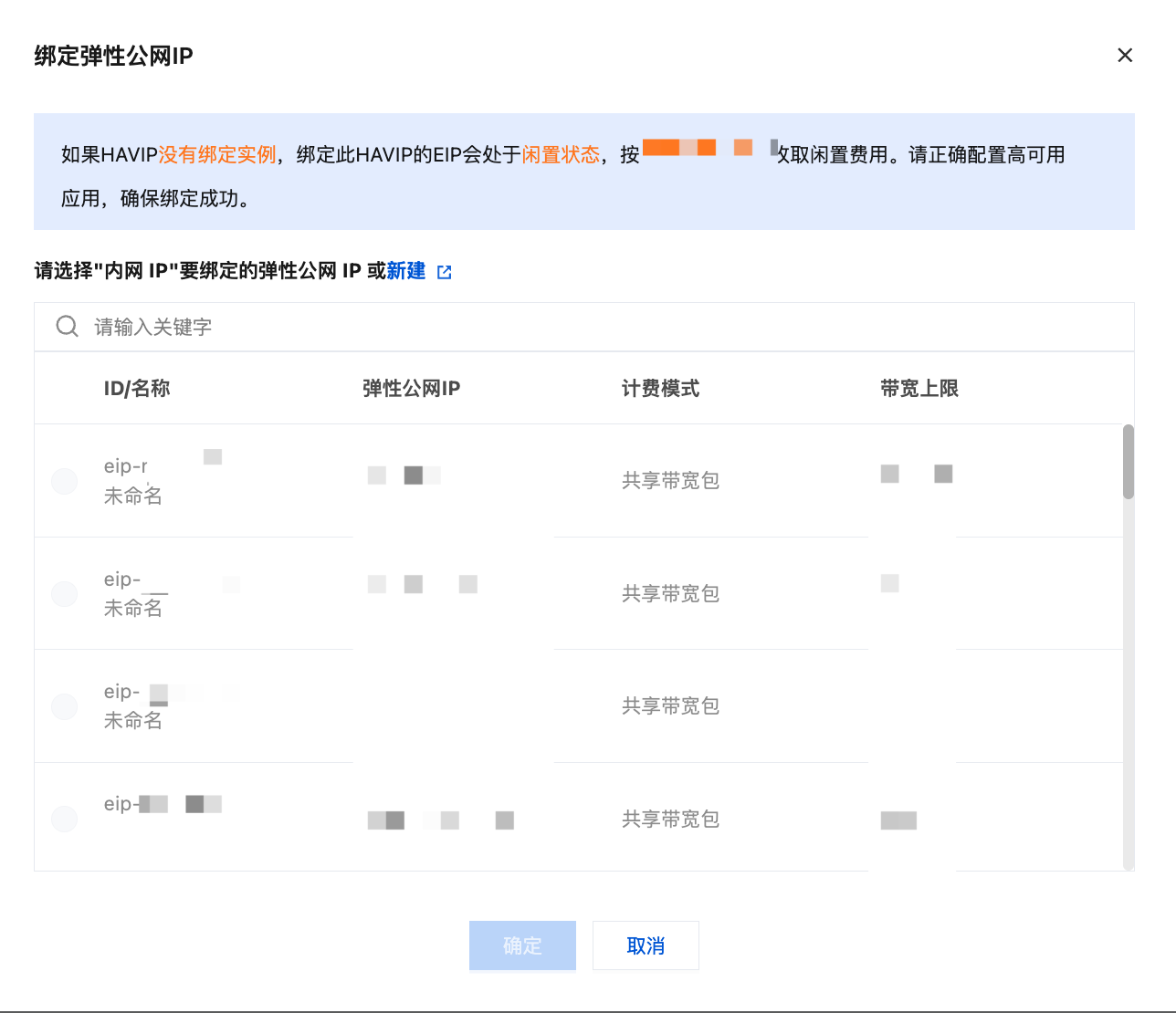
步骤4:VIP 绑定弹性公网 IP(可选)

2. 在弹出的绑定弹性公网 IP 对话框中选择待绑定的 EIP,并单击确定。如果没有可用的 EIP,请先在 弹性公网 IP 控制台申请。
步骤5:使用 notify_action.sh 进行简单的日志记录(可选)
keepalived 主要日志仍然记录在“/var/log/messages”中,可以通过添加 notify 的脚本来进行简单的日志记录。
1. 登录云服务器,执行
vim /etc/keepalived/notify_action.sh 命令添加脚本“notify_action.sh”,脚本内容如下:#!/bin/bash#/etc/keepalived/notify_action.shlog_file=/var/log/keepalived.loglog_write(){echo "[`date '+%Y-%m-%d %T'`] $1" >> $log_file}[ ! -d /var/keepalived/ ] && mkdir -p /var/keepalived/case "$1" in"MASTER" )echo -n "$1" > /var/keepalived/statelog_write " notify_master"echo -n "0" /var/keepalived/vip_check_failed_count;;"BACKUP" )echo -n "$1" > /var/keepalived/statelog_write " notify_backup";;"FAULT" )echo -n "$1" > /var/keepalived/statelog_write " notify_fault";;"STOP" )echo -n "$1" > /var/keepalived/statelog_write " notify_stop";;*)log_write "notify_action.sh: STATE ERROR!!!";;esac
2. 执行
chmod a+x /etc/keepalived/notify_action.sh 修改脚本权限。步骤6:验证主备倒换时 VIP 及外网 IP 是否正常切换
通过重启 keepalived 进程、重启子机等方式模拟主机故障,检测 VIP 是否能正常迁移。
如果完成了主备切换,则可以看到控制台的绑定主机已经切换为 BACKUP 云服务器。
另外,也可以从 VPC 内 ping VIP 的方式,查看网络中断到恢复的时间间隔,每切换一次,ping 中断的时间大约为4秒。从公网侧 ping HAVIP 绑定的 EIP,可以查看网络中断到恢复的时间间隔,每切换一次,ping 中断的时间大致为4秒。
使用 ip addr show 检查 HAVIP 是否出现在主设备网卡上。


