云数据库 SQL Server 支持单节点、双节点以及多节点三种部署架构,本文为您介绍单节点架构。
支持版本
SQL Server 2012、2014、2016、2017、2019、2022、2025 Enterprise。
架构
单节点主实例在控制台显示的架构如下图所示。
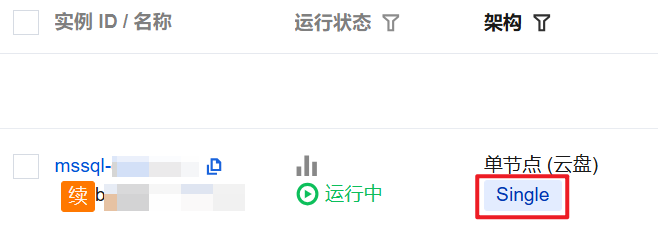
单节点采用单个节点部署,具有较低的使用成本。特点如下:
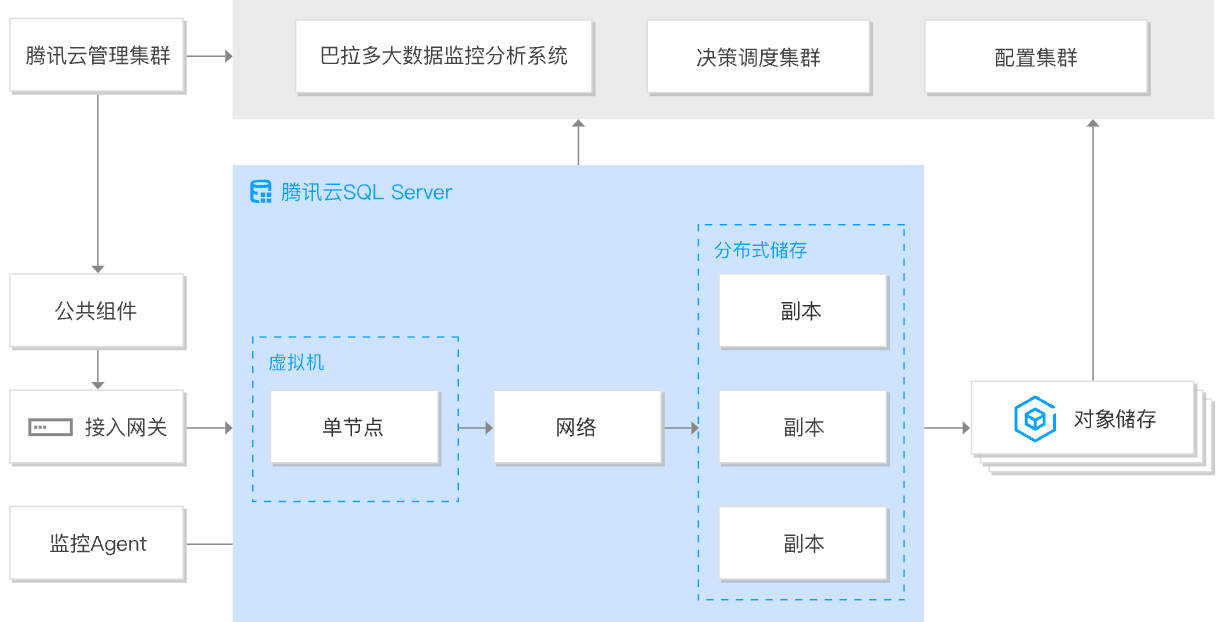
计算与存储分离,若计算节点故障,能够通过更换节点达到快速恢复的效果;底层数据采用云盘三副本存储,有助于提升数据可靠性,硬盘故障时可通过硬盘快照模式快速恢复。
单节点提供针对数据库连接、访问、资源等多维度20余项监控,并可配置对应告警策略,相较于云服务器自建,可减少数据库连接、访问、资源等运维管理工作;同时兼具价格优势,相较于云服务器自建节省成本开销。
单节点底层存储介质使用高性能云盘,适用于90%的 I/O 场景,质优价廉,性能稳定。
注意
单节点适用于个人学习、中小企业的 ISV 软件(如财务、CRM、ERP 等软件客户)、Web 类应用、企业非核心小型系统以及测试环境。
由于单节点是单个节点的架构,当该节点出现故障,恢复时长比云服务器故障恢复稍长(涉及实例启动与数据恢复)。
建议对高可用有要求的业务,使用双节点(原高可用版及集群版)。
单节点架构支持的可用区
地域 | 可用区 | 云盘版单节点 | 云盘版 RO | 本地盘 RO |
广州 ap-guangzhou | 广州三区 ap-guangzhou-3 | ✓ | × | ✓ |
| 广州六区 ap-guangzhou-6 | ✓ | ✓ | × |
| 广州七区 ap-guangzhou-7 | ✓ | ✓ | × |
上海 ap-shanghai | 上海二区 ap-shanghai-2 | ✓ | ✓ | ✓ |
| 上海三区 ap-shanghai-3 | ✓ | × | ✓ |
| 上海四区 ap-shanghai-4 | ✓ | ✓ | ✓ |
| 上海五区 ap-shanghai-4 | ✓ | ✓ | × |
上海金融 ap-shanghai-fsi | 上海金融三区 ap-shanghai-fsi-3 | ✓ | ✓ | × |
| 上海金融四区 ap-shanghai-fsi-4 | ✓ | ✓ | × |
南京 ap-nanjing | 南京一区 ap-nanjing-1 | ✓ | ✓ | ✓ |
| 南京二区 ap-nanjing-2 | ✓ | ✓ | ✓ |
北京 ap-beijing | 北京一区 ap-beijing-1 | × | × | ✓ |
| 北京三区 ap-beijing-3 | ✓ | ✓ | ✓ |
| 北京四区 ap-beijing-4 | ✓ | × | × |
| 北京五区 ap-beijing-5 | ✓ | × | ✓ |
| 北京六区 ap-beijing-6 | ✓ | ✓ | × |
| 北京七区 ap-beijing-7 | ✓ | ✓ | × |
北京金融 ap-beijing-fsi | 北京金融一区 ap-beijing-fsi-1 | ✓ | ✓ | × |
| 北京金融二区 ap-beijing-fsi-2 | ✓ | ✓ | × |
成都 ap-chengdu | 成都一区 ap-chengdu-1 | ✓ | ✓ | × |
| 成都二区 ap-chengdu-2 | ✓ | ✓ | × |
重庆 ap-chongqing | 重庆一区 ap-chongqing-1 | ✓ | ✓ | × |
中国香港 ap-hongkong | 香港一区 ap-hongkong-1 | × | × | ✓ |
| 香港二区 ap-hongkong-2 | ✓ | ✓ | ✓ |
| 香港三区 ap-hongkong-3 | × | ✓ | × |
地域 | 可用区 | 云盘版单节点 | 云盘版 RO | 本地盘 RO |
新加坡 ap-singapore | 新加坡一区 ap-singapore-1 | ✓ | × | × |
| 新加坡二区 ap-singapore-2 | ✓ | × | × |
| 新加坡三区 ap-singapore-3 | × | ✓ | × |
| 新加坡四区 ap-singapore-4 | × | ✓ | × |
雅加达 ap-jakarta | 雅加达一区 ap-jakarta-1 | ✓ | ✓ | × |
| 雅加达二区 ap-jakarta-2 | ✓ | ✓ | × |
曼谷 ap-bangkok | 曼谷一区 ap-bangkok-1 | ✓ | ✓ | × |
| 曼谷二区 ap-bangkok-2 | ✓ | ✓ | × |
新山 ap-johorbahru | 新山一区 ap-johorbahru-1 | ✓ | ✓ | × |
| 新山二区 ap-johorbahru-2 | ✓ | ✓ | × |
首尔 ap-seoul | 首尔一区 ap-seoul-1 | ✓ | ✓ | × |
| 首尔二区 ap-seoul-2 | ✓ | ✓ | × |
东京 ap-tokyo | 东京一区 ap-tokyo-1 | ✓ | ✓ | × |
| 东京二区 ap-tokyo-2 | ✓ | ✓ | × |
地域 | 可用区 | 云盘版单节点 | 云盘版 RO | 本地盘 RO |
弗吉尼亚 na-ashburn | 弗吉尼亚一区 na-ashburn-1 | × | ✓ | × |
| 弗吉尼亚二区 na-ashburn-2 | × | ✓ | × |
法兰克福 eu-frankfurt | 法兰克福一区 eu-frankfurt-1 | × | ✓ | × |
| 法兰克福二区 eu-frankfurt-2 | × | ✓ | × |
硅谷 na-siliconvalley | 硅谷一区 na-siliconvalley-1 | × | ✓ | × |
| 硅谷二区 na-siliconvalley-2 | × | ✓ | × |
圣保罗 sa-saopaulo | 圣保罗一区 sa-saopaulo-1 | × | ✓ | × |
地域 | 可用区 | 云盘版单节点 | 云盘版 RO | 本地盘 RO |
中东地区(利雅得) me-riyadh | 利雅得一区 me-saudi-arabia-1 | ✓ | ✓ | × |
| 利雅得二区 me-saudi-arabia-2 | ✓ | ✓ | × |


