集群架构通过 VIP 封装,在集群模式下提供了单机版的使用体验,对业务的使用带来极大的便利。而运维场景,可能需频繁访问集群中的每个节点来定位异常,自定义命令基于原有命令的参数列表新增一个参数【节点 ID】,命令格式为
COMMAND arg1 arg2 ... [节点 ID],方便获取指定节点的信息。节点 ID 信息,可在 腾讯云分布式缓存数据库控制台 的节点管理页面获取,或者通过 cluster nodes 命令获取。版本说明
Proxy 代理版本5.5.0之前,自定义命令执行需要增加节点 ID,而5.5.0及之后的版本则不需要。
INFO
INFO 命令返回有关服务器的信息和统计信息。
自定义命令格式
info [section] [节点 ID]
其中,可选参数可用于选择特定部分的信息:
server:有关 Redis 服务器的一般信息。clients:客户端连接部分。memory:内存消耗相关信息。persistence:RDB 和 AOF 相关信息。stats:一般统计资料。replication:主/从复制信息。cpu:CPU 消耗统计。commandstats:Redis 命令统计。cluster:Redis 集群部分。keyspace:数据库相关统计。可选参数也可以采用以下值:
all:返回所有部分。default:仅返回默认的一组部分。使用示例
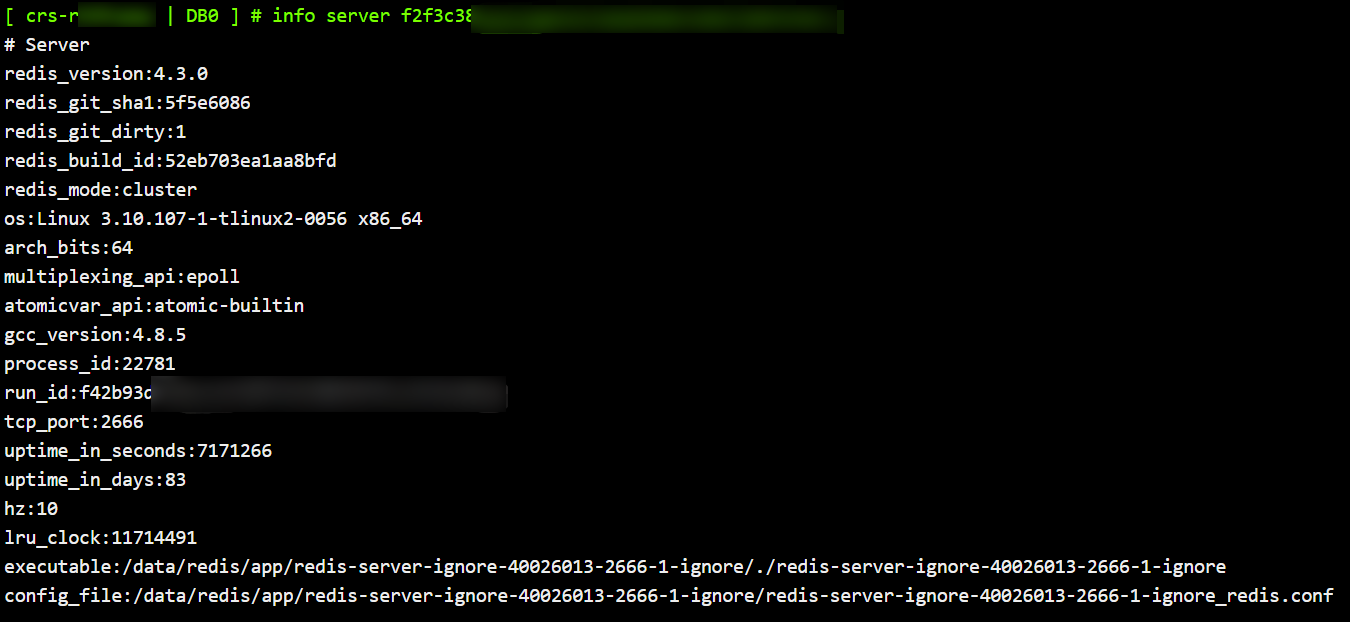
以 section 为 server 为例,执行 INFO 命令,示例如下。
SLOWLOG
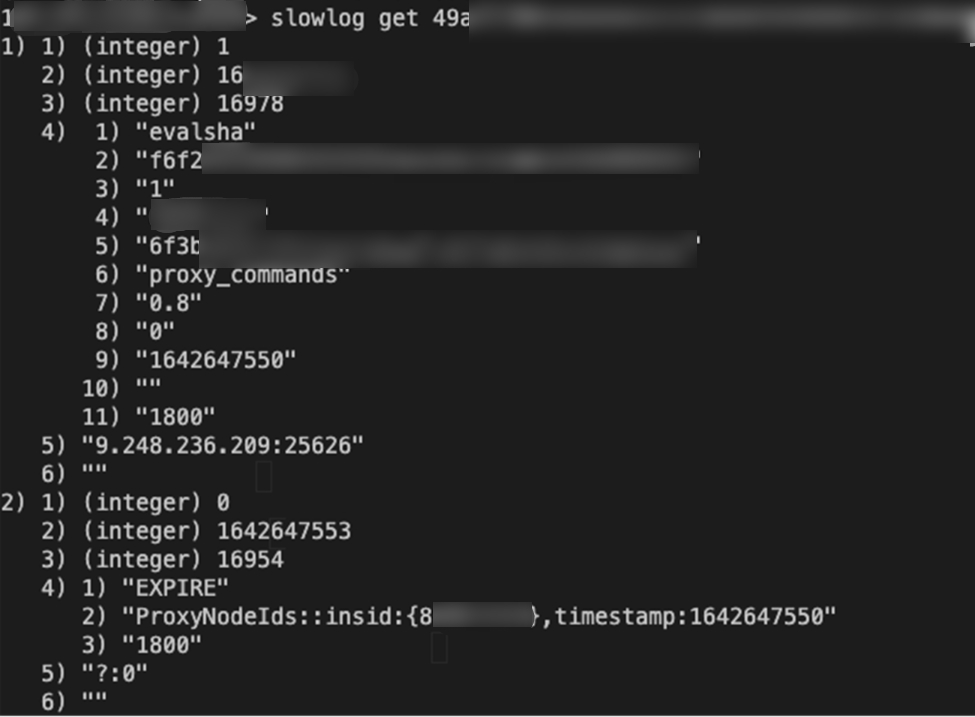
读取慢日志,使用 SLOWLOG GET 命令,该命令将返回慢日志中的每个条目。可以仅返回 N 个最近的条目,并将其他参数传递给该命令(例如 SLOWLOG GET 10)。
自定义命令格式
slowlog get [Redis节点ID]slowlog get [慢日志条目][Redis节点ID]
使用示例
FLUSHDB
删除当前所选数据库的所有键。该命令永远不会失败。
自定义格式
flushdb [Redis节点ID]
使用示例
cd-crs-rhxxxay.sql.tencentcdb.com:24894> flushdb f2f3c387b9fab0e67af02039845c60278b13bed0OK
PING
此命令通常用于测试连接是否仍然存在,或测量延迟。
自定义命令格式
ping [message] [节点ID]
使用示例
[ crs-rh**** | DB0 ] # PING "PONG" f2f3c3************************PONG[ crs-rh**** | DB0 ] # PING "hello world"hello world
KEYS
用于查询所匹配的键。
自定义格式
keys [pattern] [Redis节点ID]
使用示例
keys a* f2f3c3*************************

SCAN
自定义命令格式
scan cursor [MATCH pattern] [COUNT count] [Redis 节点ID]
使用示例
[ crs-******** | DB0 ] # scan 0 f2f3c3*************************1) "2"
IMonitor
IMonitor 是腾讯云分布式缓存数据库提供的增强型监控命令,用于实时监控指定分片节点上执行的命令。相比原生 Redis 的 MONITOR 命令,IMonitor 支持针对特定节点进行监控,更适用于集群架构下的问题排查和性能分析。
说明:
iMonitor 命令要求 Redis 代理版本为5.6.0及以上版本。
原生 Redis 不支持 iMonitor 命令,redis-cli 无法识别该命令,执行 iMonitor 命令需要使用 telnet 工具。
1. 在本地命令行工具中执行以下命令,通过 telnet 连接腾讯云分布式缓存数据库实例。
# 使用 telnet 连接实例telnet <Instance_Host> <Instance_Port>
telnet 10.0.0.12 6379Trying 10.0.0.12...Connected to 10.0.0.12.Escape character is '^]'.
2. 执行 auth 命令,输入实例访问密码。默认账号,直接输入密码;自定义账号,则输入账号@密码;免密码认证访问,则跳过本步骤。
# 连接成功后执行鉴权auth <密码># 返回 +OK 表示鉴权成功# 执行 IMonitor 命令,监控指定节点imonitor <Redis节点ID>
3. 运行 imonitor 命令,监控指定分片节点上执行的命令。
说明:
标准架构:实例仅含1个分片,监控目标唯一,无需指定节点 ID,直接执行 imonitor 即可。
集群架构:实例由多个分片节点组成,每个分片独立承载一部分数据,必须通过节点 ID 指定要监控的目标分片,命令格式为
imonitor <Redis 分片节点 ID>。节点 ID 可在控制台节点管理页面获取,或通过 cluster nodes 命令查询。imonitor 3dba154c67925520ef1a1e2c41d8cc22d7f4****+OK+1680504260.729707 [0 127.0.0.1:6379] "auth" "******"+1680504260.736070 [0 127.0.0.1:6379] "info" "commandstats"
4. 如需退出 imonitor,请输入 quit 命令。


