The content of this page has been automatically translated by AI. If you encounter any problems while reading, you can view the corresponding content in Chinese.
Network quality serves as the first checkpoint for service availability, having a profound impact on user experience. However, the methods for monitoring network quality are not complex. With just a PC and simple command line instructions such as Ping, Dig, and Telnet, network issues can be quickly detected. So why can most businesses still not achieve effective network monitoring? The core obstacles mainly include the following points:
Wide user distribution and diverse network environments - difficult to cover
The first challenge of network monitoring is coverage. For most services targeting end users, the network environment where users connect is the complexity of city × ISP. Domestically, the majority of user traffic is concentrated in over 200 cities, with mainstream and secondary network operators totaling more than 200. Not to mention overseas, where different countries each have 4-5 mainstream operators. User access methods are divided into PC and mobile terminals, and the network environment may be mobile networks or WI-FI. Enterprises hope to establish comprehensive network quality monitoring relying on their own capabilities. Even for top-tier internet giants, this presents an extremely high barrier.
Lack of authoritative data - difficulty in liability determination
Some companies, due to the wide distribution of their Ops teams and resource regions, can leverage internal resources to build a high-coverage network quality detection network. They conduct regular testing on services and domain names, enabling timely detection of network quality issues. However, when it comes to issue feedback and liability determination from various resource providers (CDN, DNS, gateway providers, network operators) within the network, they often face challenges due to detection methods and data processing approaches, leading to doubts about data credibility.
Passive post-event investigation - difficult to reproduce
Most Ops teams detect network faults through feedback from frontline operations (e.g., user complaints, operational observations of a sharp drop in traffic in a specific region). On one hand, this post-event feedback mechanism often fails to compensate for already incurred business losses; at the same time, due to the complex and diverse nature of the network environment and routing uncertainty, even if the corresponding region's machine is found for quick verification, it cannot be guaranteed that the issue can be reproduced to avoid similar problems and continuously mitigate business impact.
How to Help You Perform Network Quality Monitoring?
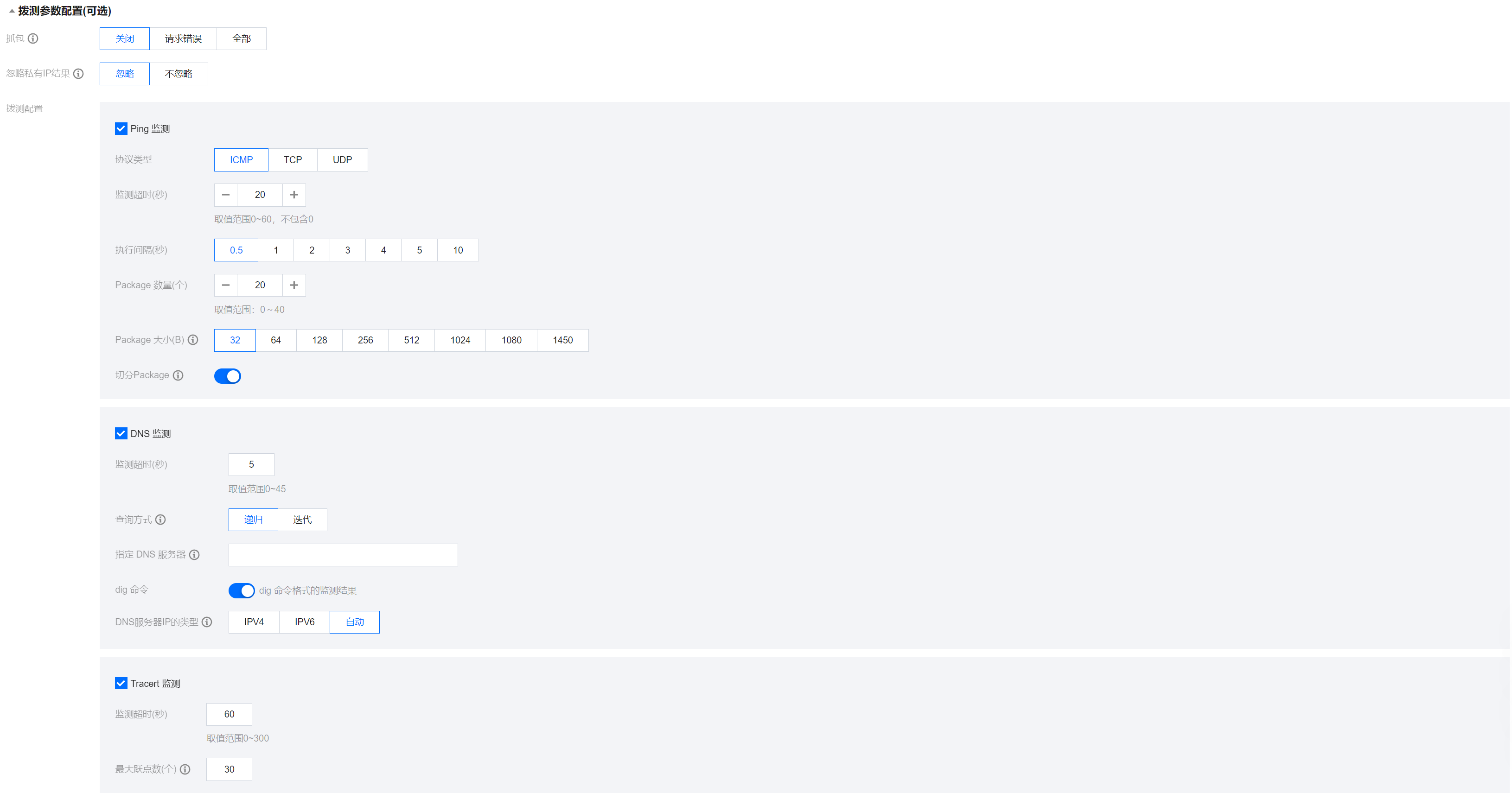
Use cloud CAT in the network quality monitoring scenario to perform Ping, DNS, and Tracert tests on specified servers (IP or domain). Retrieve link node network data and metrics such as latency and packet loss during the monitoring process. Real-time understand network link fluctuations. Effectively reduce issues like invalid website access, lag, slow response, and time-consuming operations, thereby enhancing user experience.
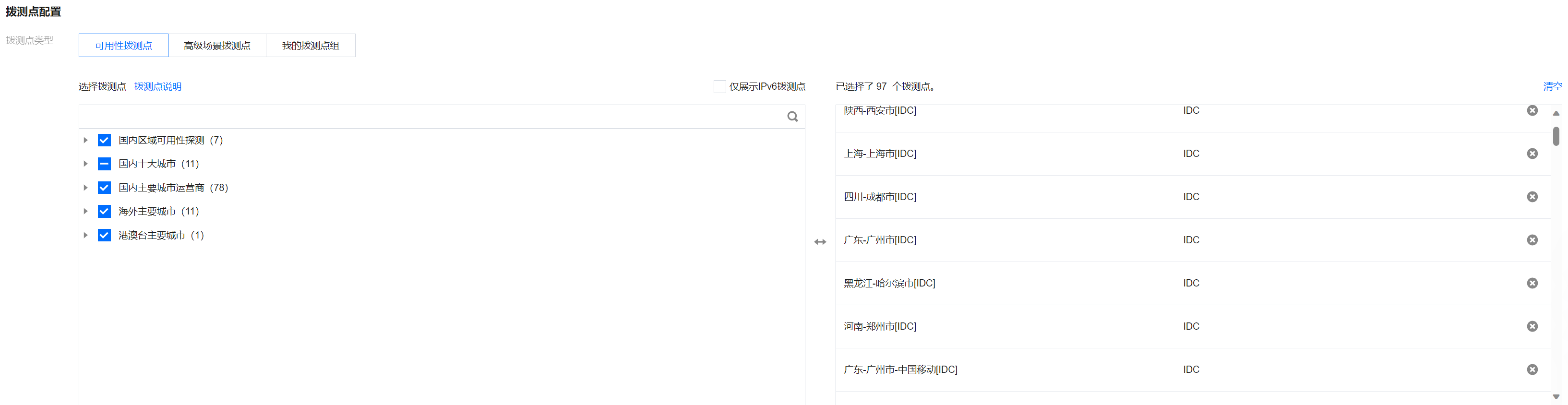
Extensively distributed monitoring points - comprehensive coverage of multiple network environments
Tencent Cloud CAT leverages rich network resources to cover 99% of user access methods and network environments, achieving truly full-coverage monitoring.
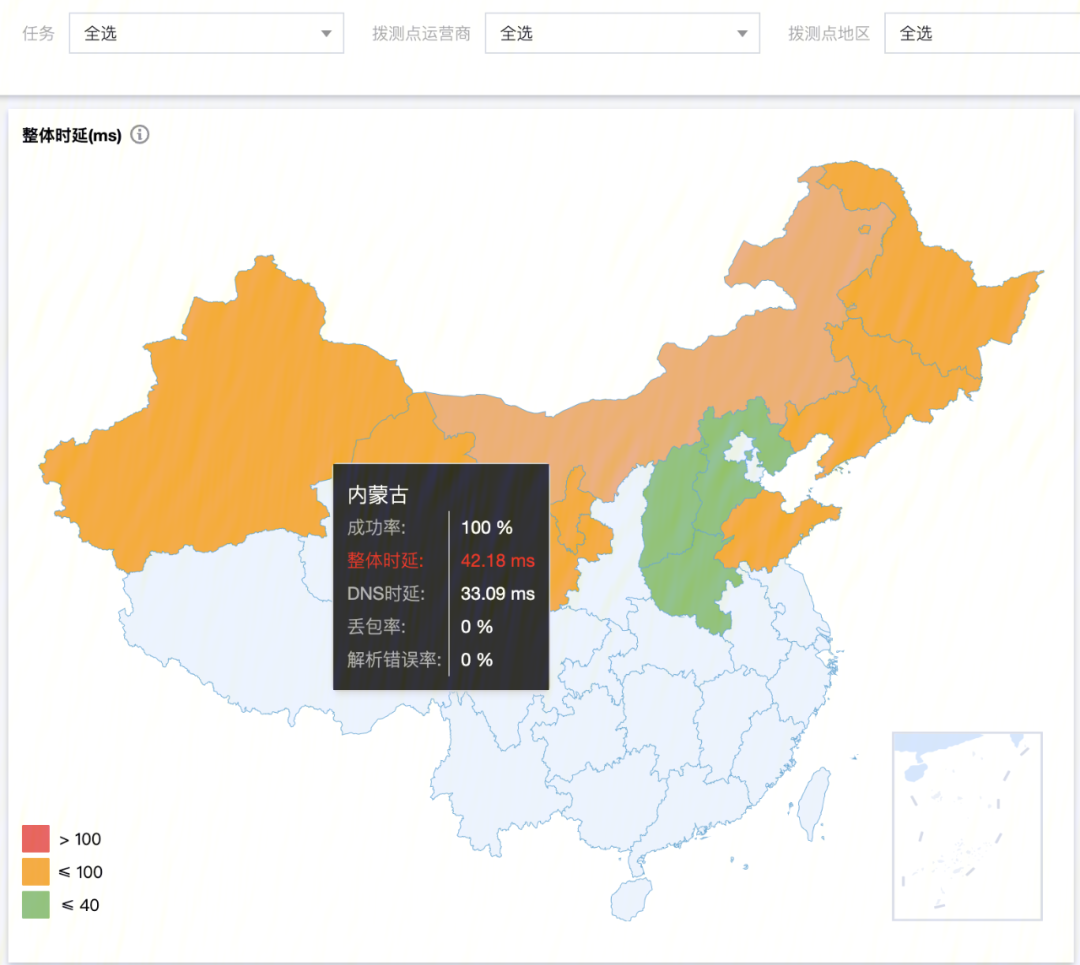
Multi-dimensional aggregation and comparison of regions and operators - Quickly locate impact range
All regions, clear at a glance for ISP network quality comparison. Quickly detect regional and ISP network issues, promptly fix them, and maximize minimizing business impact.
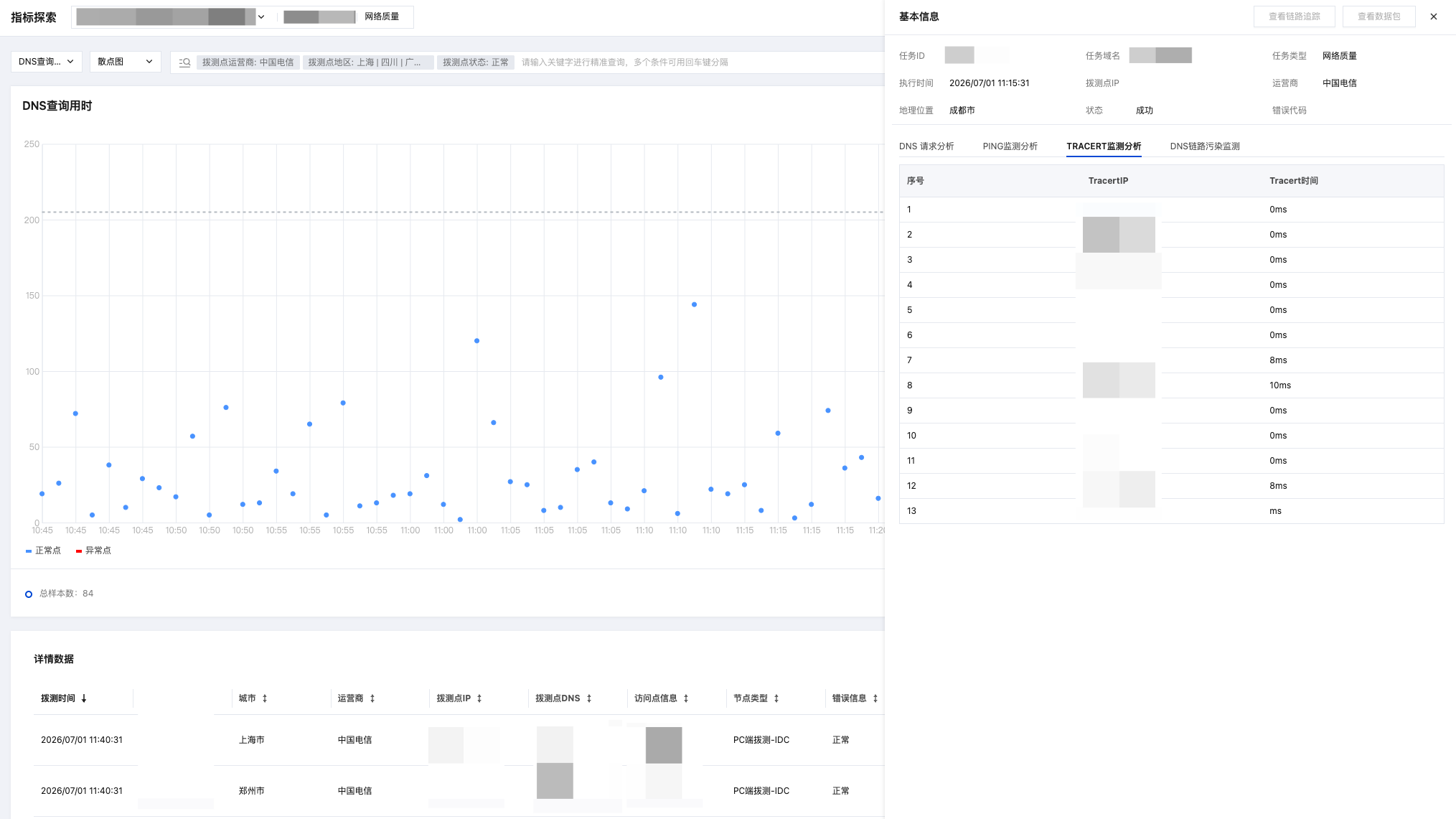
Detailed log information - fully retain failure site
For each probe, Tencent Cloud CAT provides you with basic information of the monitoring point, and fully retains Dig, Ping logs, and hop information. No need to reproduce, directly retain the failure site.
Automatic packet capture - Full-coverage transmission status capture
If detailed logs are insufficient to support fault troubleshooting, packet capture analysis is the ultimate solution. During Tencent Cloud dial test task configuration, it supports automatic packet capture targeting "error requests" or "all requests" during detection. Subsequently, you can download data packages on the detailed log page for in-depth analysis.