Help & Documentation>Tencent Kubernetes Engine

Scheduling Pod to Super Node

Last updated: 2023-09-26 11:22:20

This article primarily discusses how to automatically or manually schedule Pods to supernodes within a Tencent Kubernetes Engine (TKE) cluster.

Automatic scheduling

If a cluster is configured with yearly or monthly subscribed super nodes, Pods that meet the super node scheduling rules will be scheduled equally between the subscribed super nodes and regular nodes.
If a cluster is configured with pay-as-you-go super nodes, Pods will be automatically scheduled to super nodes during peak business hours when the existing yearly or monthly subscribed node resources are insufficient, without the need to purchase servers. When the business returns to normal, the Pod resources in the super nodes will be automatically released, eliminating the need for server return operations.
If both the cluster scaling and pay-as-you-go super node features are enabled for a cluster, Pods will be scheduled to pay-as-you-go super nodes first, and cluster scale-out won't be triggered. If Pods cannot be scheduled to super nodes due to scheduling limits, the scale-out will be triggered normally. When the server node resources are sufficient, the cluster will release Pods on super nodes first.

Manually schedule

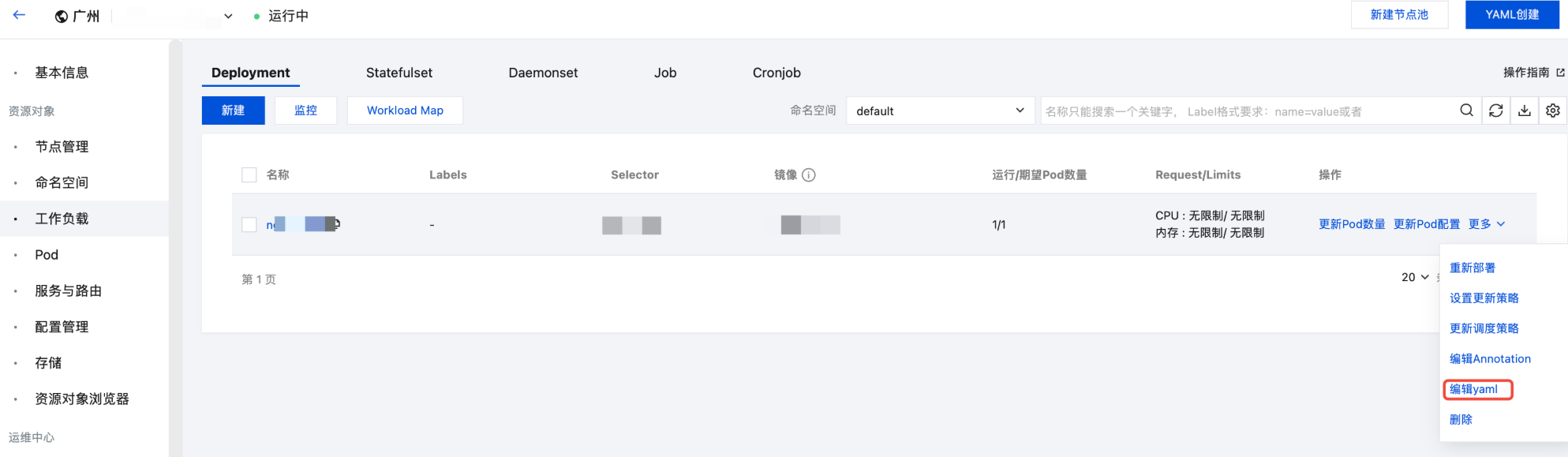
Users can manually schedule Pods to super nodes. By default, pay-as-you-go super nodes automatically add Taints to lower their scheduling priority. To manually schedule Pods to super nodes or specify super node scheduling, you usually need to add corresponding Tolerations to the Pods. However, not all Pods can be scheduled to super nodes. For more information, please refer to Super Node Scheduling Instructions. For ease of use, you can specify a nodeselector in the Pod Spec. An example is provided below:
spec:
nodeSelector:
node.kubernetes.io/instance-type: eklet
TKE's control components will determine whether the Pod can be scheduled to a super node. If not, the Pod won't be scheduled to the super node.
Yearly or monthly subscribed super nodes currently only support scheduling Pods with specified specifications and CPU-to-memory ratios. If the Pods do not meet these rules, the scheduling will not be successful.