C++效率掌握之STL库:list底层剖析及迭代器万字详解


list 的函数用法与 STL 库中其他的大差不差,本文章难度有些上升,将针对前面忽略的迭代器和模版进行深度解析,真正了解到底什么是迭代器,和迭代器的实现原理
1.学习list底层的重要性
list底层是双向带头循环链表,在链表的任意位置进行插入和删除操作的时间复杂度都是 O(1)。这是因为链表插入或删除节点只需要修改相邻节点的指针。例如,在实现一个任务调度系统时,任务可能会随时被添加或移除,如果使用std::list来存储任务,就可以高效地处理这些操作
为了与库里的 list 进行区分,所有的类和函数都放在自定义的命名空间 bit 进行区分
2.节点模版
template<class T>
struct list_node
{
	list_node<T>* _next;
	list_node<T>* _prev;
	T _val;

	list_node(const T& val = T())
		:_next(nullptr)
		, _prev(nullptr)
		, _val(val)
	{}
};经过数据结构的学习我们知道,每个节点都是一个结构体,因为是双向循环链表,所以有 prev 和 next,使用初始化列表进行常规的初始化
🔥值得注意的是:
- 这里使用
struct而不是class,是因为struct的默认访问权限是public,class的默认访问权限是private,虽然用class+友元的方式也是可行的,但不如用struct来的方便 - 构造函数参数部分为
const T& val = T(),而不是常写的0,是因为T无法确定是自定义类型还是内置类型,所以当没有参数传入时就调用各自类型的默认构造函数进行传参
3.迭代器模版及实现
迭代器就是一个桥梁,让容器能通过迭代器实现算法
容器<–>迭代器<–>算法
根据迭代器的容器底层结构决定的性质,可以大致分为三类:
- 单向迭代器(
forward iterator):支持运算符重载++,常用容器为forward_list、unordered_map、unordered_set - 双向迭代器(
bidirectional iterator):支持运算符重载++、--,常用容器为list、map、set - 随机迭代器(
random access iterator):支持运算符重载++、--、+、-,常用容器为vector、string、deque
从下往上为依次包含的关系,比如 list 迭代器为双向,那么既可以用双向,也可以用单向,不能用随机。通常 std 库里的是随机迭代器
因此这也解释了为什么 vector 迭代器可以使用 std::iterator,也可以使用 vector<T>::iterator。但是 list 迭代器不可以使用 std::iterator,一般使用 list<T>::iterator
3.1 初步实现
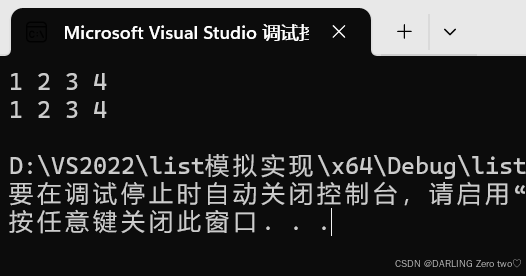
	void test_list1()
	{
		list<int> lt;
		lt.push_back(1);
		lt.push_back(2);
		lt.push_back(3);
		lt.push_back(4);

		list<int>::iterator it = lt.begin();
		while (it != lt.end())
		{
			cout << *it << " ";
			++it;
		}
		cout << endl;

		for (auto e : lt)
		{
			cout << e << " ";
		}
		cout << endl;
	}
剖析底层代码先从功能入手,通常我们实现迭代器如代码所示
3.1.1 迭代器模版
那么要先实现基本的迭代器模版
template<class T>
struct _list_iterator
{
	typedef list_node<T> Node;
	Node* _node;

	_list_iterator(Node* node)
		:_node(node)
	{}
};实现基本的构造函数,_node 是一个指向 Node 类型对象的指针,它用于存储当前迭代器所指向的链表节点
实现 push_back 往链表中放置数据,实现方式还是和双线链表中一样,可以去数据结构专题中回顾
3.1.2 push_back
void push_back(const T& x)
{
	Node* tail = _head->_prev;
	Node* newnode = new Node(x);
	tail->_next = newnode;
	newnode->_prev = tail;
	newnode->_next = _head;
	_head->_prev = newnode;
	//insert(end(), x);
}
3.1.3 begin和end
接下来实现 begin() 和 end() ,还是比较简单的,这里直接展示放在 list 模版中的效果,后续就只单独列出实现功能的代码了
template<class T>
class list
{
	typedef list_node<T> Node;
public:
	typedef _list_iterator<T> iterator;
	iterator begin() const
	{
		return _head->_next;
	}

	iterator end() const
	{
		return _head;
	}

	list()
	{
		_head = new Node;
		_head->_prev = _head;
		_head->_next = _head;
	}

private:
	Node* _head;
};
list 模版有一个头节点,作为哨兵位,实现了双链表的构造函数,看似简单的代码,实则隐藏了很多的细节
🔥值得注意的是:
begin()和end()返回的是iterator类型,C++标准库提供了大量基于迭代器的通用算法(如std::find、std::sort、std::for_each等)。当自定义容器的begin()函数返回迭代器时,这些通用算法可以直接应用到自定义容器上,实现代码的复用iterator是_list_iterator<T>模版的重命名,更符合使用习惯begin()和end()返回的值看似是Node*类型,实际上单参数的函数支持隐式转换,Node*隐式转换为iterator类型,return _head->_next其实是return iterator(_head->_next)begin()和end()函数都用 const 修饰,使函数更具普遍性,包括const变量的情况,普通类型调用也是权限的缩小,两种情况共用一个函数
3.1.4 *解引用运算符重载
T& operator*()
{
	return _node->_val;
}
这里 _node 应该是一个指向链表节点的指针,_val 是链表节点中存储的数据成员。该函数返回节点数据 _val
3.1.5 ++运算符重载
//前置
_list_iterator<T>& operator++()
{
	_node = _node->_next;
	return *this;
}
//后置
_list_iterator<T> operator++(int)
{
	self temp(*this);
	_node = _node->_next;
	return temp;
}
为了区分前置后置,前置 ++ 和后置 ++ 虽然是运算符重载,但是形式上也构成函数重载,后置 ++ 增加这个 int 参数不是为了接受具体的值,仅仅是占位,跟前置 ++ 构成重载, int 这个位置传任何值都可以,实际调用的时候前置 ++ 和后置 ++ 可能分别为 operator++() 和 operator++(0) ,括号内的值是随机的
🔥值得注意的是: 前置 ++ 返回的对象还存在,所以可以用引用,而后置 ++ 返回的对象是个临时对象,所以不能返回引用
3.1.6 !=运算符重载
bool operator!=(const _list_iterator<T>& it) const
{
	return _node != it._node;
}
该函数通过比较当前对象的 _node 成员变量和传入对象 it 的 _node 成员变量来判断两个对象是否不相等。如果 _node 和 it._node 不相等,则返回 true,表示两个对象不相等;否则返回 false,表示两个对象相等
🔥值得注意的是: 调用 end() 时传值返回,具有常性,所以 != 重载要参数加 const
以上就已经基本实现了迭代器,能够跑起来实现正常功能,范围 for 的底层也是迭代器,所以也能够使用了,但是还有很多需要完善的
3.2 再完善实现
通常迭代器分为 iterator 和 const_iterator
那么我们难道再写一个来实现吗,显然是不符合编程范式的,代码就显得太冗余了
有人或许会想到这么写:
typedef _list_iterator<T> iterator;
typedef const _list_const_iterator<T> const_iterator;
这样看起或许可行,但是我们要思考 const 的使用
举个例子:
const T* ptr1;
T* const ptr2;这两段代码的含义分别为:不可以修改指向对象的内容,不可以修改指向别的对象
显然 typedef const _list_const_iterator<T> const_iterator 是第一种 const 的使用,在 ++ 运算符重载中有 _node = _node->_next ,需要通过这段代码来到下一个节点,按照我们这样加 const 就和这段代码冲突了。我们只是不想修改其内容,而不是无法跳转节点
所以发明 STL库的人真是个天才,想到了巧妙的办法:
迭代器模版
template<class T, class Ref>
......
list模版
typedef _list_iterator<T, T&> iterator;
typedef _list_iterator<T, const T&> const_iterator;
iterator 和 const_iterator 的区别就在于 * 运算符重载返回的值是否能够被修改,因此增加一个新的模版参数,当使用对应的迭代器就会调用相应的模版
3.3 最终完善实现
在查看STL库里的list底层代码时,会发现实际上的迭代器代码有三个参数,单纯去看是很难发现为什么要有第三个参数的,必须要结合实际的应用场景
举个例子:
struct A
{
	A(int a1 = 0, int a2 = 0)
		:_a1(a1)
		,_a2(a2)
	{}

	int _a1;
	int _a2;
};

void test_list2()
{
	list<A> lt;
	lt.push_back(A(1, 1));
	lt.push_back(A(2, 2));
	lt.push_back(A(3, 3));
	lt.push_back(A(4, 4));
	list<A>::iterator it = lt.begin();
	while (it != lt.end())
	{
		/*cout << (*it)._a1 << " " << (*it)._a2 << endl;*/
		cout << it->_a1 << " " << it->_a2 << endl;
		++it;
	}
	cout << endl;
}假设有个类A,需要遍历输出,通常我们会写成 cout << (*it)._a1 << " " << (*it)._a2 << endl ,但是这并不符合编程范式
可是为什么写成 cout << it->_a1 << " " << it->_a2 << endl 也能通过?
严格来说,应该写成
it->->_a2,才符合语法,因为运算符重载要求可读性,所以编译器特殊处理,省略一个->
3.3.1 ->运算符重载
所以我们可以写出 -> 运算符重载
Ptr operator->()
{
	return &(_node->_val);
}同样的道理,为了实现iterator 和 const_iterator两种迭代器,再增加一个模版参数,同时因为模版参数有点过多,导致类型太长了,对类型也进行重命名
迭代器模版
template<class T, class Ref, class Ptr>;
typedef _list_iterator<T, Ref, Ptr> self;
......
list模版
typedef _list_iterator<T, T&, T*> iterator;
typedef _list_iterator<T, const T&, const T*> const_iterator;
4.其余list函数功能实现
4.1 析构函数
~list()
{
	clear();
	delete _head;
	_head = nullptr;
}
4.2 拷贝构造函数
list(const list<T>& lt)
{
	_head = new Node;
	_head->_prev = _head;
	_head->_next = _head;
	//万一拷贝的是string、vector等代价就大了,所以用&
	for (auto& x : lt)
	{
		push_back(x);
	}
}
4.3 =运算符重载
list<T>& operator=(list<T> lt)
{
	swap(lt);
	return *this;
}
4.4 swap
void swap(list<T>& lt)
{
	std::swap(_head, lt._head);
}
4.5 clear
void clear()
{
	iterator it = begin();
	while (it != end())
	{
		it = erase(it);
	}
}
4.6 insert
iterator insert(iterator pos, const T& x)
{
	Node* cur = pos._node;
	Node* prev = cur->_prev;
	Node* newnode = new Node(x);

	prev->_next = newnode;
	newnode->_next = cur;
	cur->_prev = newnode;
	newnode->_prev = prev;

	return newnode;
}
4.7 erase
iterator erase(iterator pos)
{
	assert(pos != end());

	Node* cur = pos._node;
	Node* prev = cur->_prev;
	Node* next = cur->_next;

	prev->_next = next;
	next->_prev = prev;

	delete cur;
	return next;
}
4.8 push_front、pop_back、pop_front
void push_front(const T& x)
{
	insert(begin(), x);
}

void pop_back()
{
	erase(--end());
}

void pop_front()
{
	erase(begin());
}
4.9 size
size_t size()
{
	size_t sz = 0;
	iterator it = begin();
	while (it != end())
	{
		++sz;
		++it;
	}
	return sz;
}
4.10 --运算符重载
//前置
self& operator--()
{
	_node = _node->_prev;
	return *this;
}

//后置
self operator--(int)
{
	self temp(*this);
	_node = _node->_prev;
	return temp;
}
4.11 ==运算符重载
bool operator==(const self& it) const
{
	return _node == it._node;
}
5.list模拟实现代码及测试代码展示
#pragma once
#include <iostream>
using namespace std;
#include <assert.h>

namespace bit
{
	//节点模版
	template<class T>
	struct list_node
	{
		list_node<T>* _next;
		list_node<T>* _prev;
		T _val;

		list_node(const T& val = T())
			:_next(nullptr)
			, _prev(nullptr)
			, _val(val)
		{}
	};
	//迭代器模版
	template<class T, class Ref, class Ptr>
	struct _list_iterator
	{
		typedef list_node<T> Node;
		typedef _list_iterator<T, Ref, Ptr> self;
		Node* _node;

		_list_iterator(Node* node)
			:_node(node)
		{}

		//const T& operator*()就可以实现const_iterator
		Ref& operator*()
		{
			return _node->_val;
		}

		Ptr operator->()
		{
			return &(_node->_val);
		}
		//前置
		self& operator++()
		{
			_node = _node->_next;
			return *this;
		}

		self& operator--()
		{
			_node = _node->_prev;
			return *this;
		}

		//后置
		self operator++(int)
		{
			self temp(*this);
			_node = _node->_next;
			return temp;
		}

		self operator--(int)
		{
			self temp(*this);
			_node = _node->_prev;
			return temp;
		}

		bool operator!=(const self& it) const
		{
			return _node != it._node;
		}

		bool operator==(const self& it) const
		{
			return _node == it._node;
		}
	};
	//list类模版
	template<class T>
	class list
	{
		typedef list_node<T> Node;
	public:
		typedef _list_iterator<T, T&, T*> iterator;
		typedef _list_iterator<T, const T&, const T*> const_iterator;
		//typedef const _list_const_iterator<T> const_iterator;
		//不能这样写,因为++没法next,就没法遍历了
		iterator begin() const
		{
			return iterator(_head->_next);
			//单参数的函数支持隐式转换
		}

		iterator end() const
		{
			return _head;
		}

		list()
		{
			_head = new Node;
			_head->_prev = _head;
			_head->_next = _head;
		}

		list(const list<T>& lt)
		{
			_head = new Node;
			_head->_prev = _head;
			_head->_next = _head;
			//万一拷贝的是string、vector等代价就大了,所以用&
			for (auto& x : lt)
			{
				push_back(x);
			}
		}

		void swap(list<T>& lt)
		{
			std::swap(_head, lt._head);
		}

		list<T>& operator=(list<T> lt)
		{
			swap(lt);
			return *this;
		}

		~list()
		{
			clear();
			delete _head;
			_head = nullptr;
		}

		void clear()
		{
			iterator it = begin();
			while (it != end())
			{
				it = erase(it);
			}
		}

		void push_back(const T& x)
		{
			/*Node* tail = _head->_prev;
			Node* newnode = new Node(x);
			tail->_next = newnode;
			newnode->_prev = tail;
			newnode->_next = _head;
			_head->_prev = newnode;*/
			insert(end(), x);
		}

		void push_front(const T& x)
		{
			insert(begin(), x);
		}

		void pop_back()
		{
			erase(--end());
		}

		void pop_front()
		{
			erase(begin());
		}

		iterator insert(iterator pos, const T& x)
		{
			Node* cur = pos._node;
			Node* prev = cur->_prev;
			Node* newnode = new Node(x);

			prev->_next = newnode;
			newnode->_next = cur;
			cur->_prev = newnode;
			newnode->_prev = prev;

			return newnode;
		}

		iterator erase(iterator pos)
		{
			assert(pos != end());

			Node* cur = pos._node;
			Node* prev = cur->_prev;
			Node* next = cur->_next;

			prev->_next = next;
			next->_prev = prev;

			delete cur;
			return next;
		}

		size_t size()
		{
			size_t sz = 0;
			iterator it = begin();
			while (it != end())
			{
				++sz;
				++it;
			}
			return sz;
		}
	private:
		Node* _head;
	};

	void test_list1()
	{
		list<int> lt;
		lt.push_back(1);
		lt.push_back(2);
		lt.push_back(3);
		lt.push_back(4);

		list<int>::iterator it = lt.begin();
		//调用end的函数时传值返回,具有常性,所以!=重载要参数加const
		while (it != lt.end())
		{
			cout << *it << " ";
			++it;
		}
		cout << endl;

		for (auto e : lt)
		{
			cout << e << " ";
		}
		cout << endl;
	}

	struct A
	{
		A(int a1 = 0, int a2 = 0)
			:_a1(a1)
			,_a2(a2)
		{}

		int _a1;
		int _a2;
	};

	void test_list2()
	{
		list<A> lt;
		lt.push_back(A(1, 1));
		lt.push_back(A(2, 2));
		lt.push_back(A(3, 3));
		lt.push_back(A(4, 4));
		//严格来说,应该写成it->->_a2,才符合语法
		//因为运算符重载要求可读性,所以编译器特殊处理,省略一个->
		list<A>::iterator it = lt.begin();
		while (it != lt.end())
		{
			/*cout << (*it)._a1 << " " << (*it)._a2 << endl;*/
			cout << it->_a1 << " " << it->_a2 << endl;
			++it;
		}
		cout << endl;
	}

	void test_list3()
	{
		list<int> lt;
		lt.push_back(1);
		lt.push_back(2);
		lt.push_back(3);
		lt.push_back(4);
		lt.push_front(5);
		lt.push_front(6);
		lt.push_front(7);
		lt.push_front(8);

		lt.pop_front();
		lt.pop_back();

		for (auto e : lt)
		{
			cout << e << " ";
		}
		cout << endl;

		lt.clear();
		lt.push_back(10);
		lt.push_back(20);
		lt.push_back(30);
		lt.push_back(40);
		for (auto e : lt)
		{
			cout << e << " ";
		}
		cout << endl;
		cout << lt.size() << endl;
	}

	void test_list4()
	{
		list<int> lt1;
		lt1.push_back(1);
		lt1.push_back(2);
		lt1.push_back(3);
		lt1.push_back(4);
		for (auto e : lt1)
		{
			cout << e << " ";
		}
		cout << endl;
		list<int> lt2;
		lt2 = lt1;
		for (auto e : lt2)
		{
			cout << e << " ";
		}
		cout << endl;
	}
}
希望读者们多多三连支持
小编会继续更新
你们的鼓励就是我前进的动力!
本文参与 腾讯云自媒体同步曝光计划,分享自作者个人站点/博客。
原始发表:2025-02-24,如有侵权请联系 cloudcommunity@tencent.com 删除
目录
腾讯云开发者

Copyright © 2013 - 2026 Tencent Cloud. All Rights Reserved. 腾讯云 版权所有
深圳市腾讯计算机系统有限公司 ICP备案/许可证号:粤B2-20090059  粤公网安备44030502008569号
腾讯云计算(北京)有限责任公司 京ICP证150476号 | 京ICP备11018762号