档案馆环境系统组态调试:传感器数据校准与设备联动时序控制
原创
档案馆环境系统组态调试:传感器数据校准与设备联动时序控制
原创
BJ盛世宏博小程
发布于 2026-09-28 14:14:55
发布于 2026-09-28 14:14:55
档案馆环境系统组态调试:传感器数据校准与设备联动时序控制
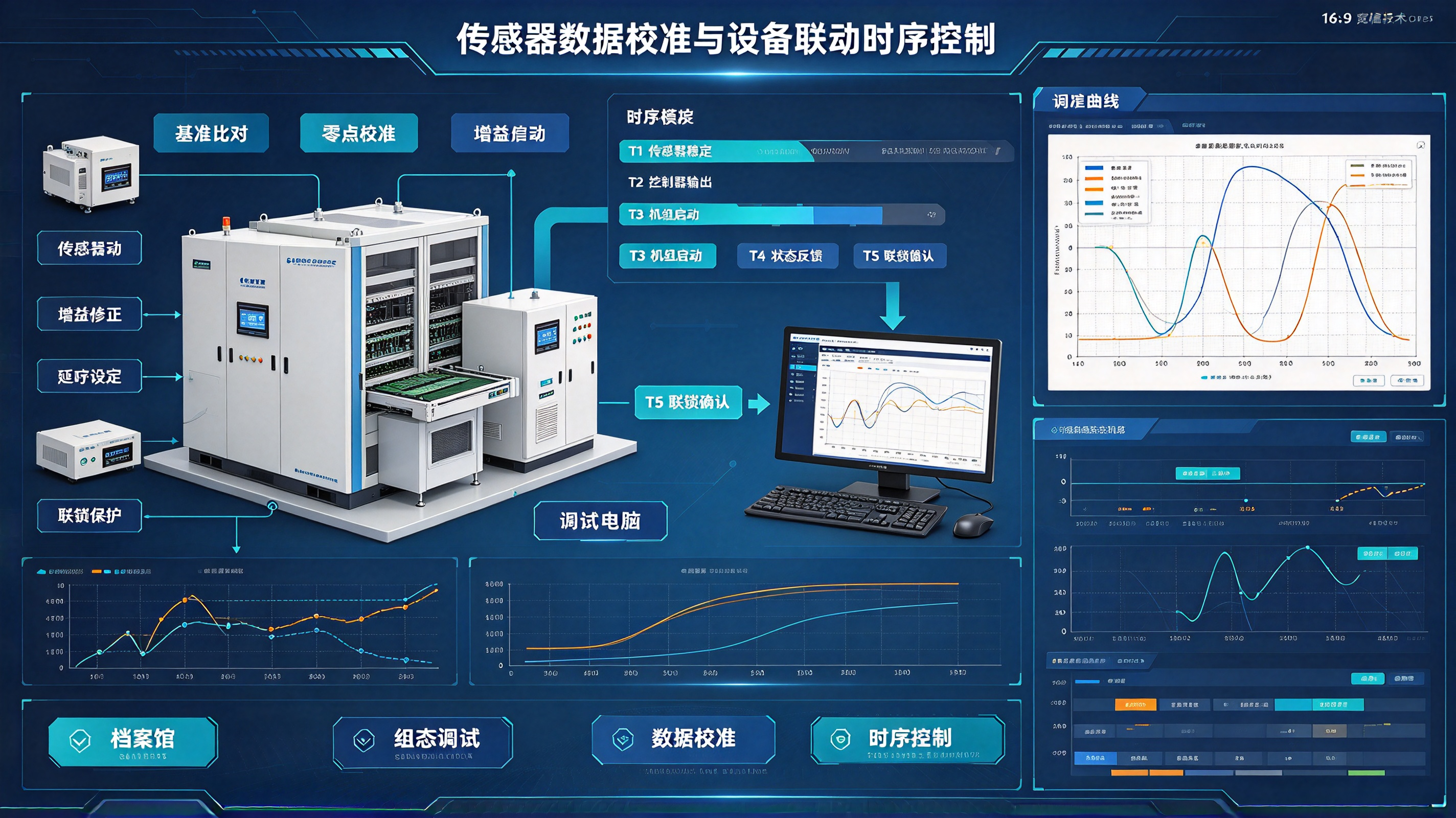
一、组态调试:被低估的"最后一公里"
档案馆环境系统的交付流程中,组态调试往往是周期最长、返工最多、责任最模糊的环节。
为什么?因为硬件安装是确定性的(拧螺丝、布线),软件配置是经验性的(调参数、对逻辑)。一套档案馆环境系统涉及几十上百个传感器、空调、除湿机、加湿机、新风机、风阀,这些设备之间的联动逻辑不是"写代码"能解决的,而是需要工程师在现场反复调试、观察、修正。
1.1 组态调试的典型工作内容
阶段 | 工作内容 | 耗时占比 | 常见返工原因 |
|---|---|---|---|
设备接入 | 传感器点位绑定、通信参数配置、地址映射 | 15% | 图纸与现场不一致 |
数据校准 | 零点漂移修正、量程映射、多传感器一致性比对 | 25% | 未考虑温湿度交叉影响 |
联动逻辑 | 设备启停条件、优先级、互锁、延时 | 35% | 现场工况与设计方案偏差 |
时序调试 | 设备切换间隔、防抖延时、状态确认等待 | 15% | 设备响应速度未实测 |
验收测试 | 模拟场景、连续运行验证 | 10% | 联动逻辑遗漏边界条件 |
核心矛盾:设计阶段用"理想工况"画逻辑图,调试阶段面对的是"真实物理世界"——设备有惯性、传感器有延迟、网络有抖动、环境有滞后。
二、传感器数据校准:从"能读到数"到"数读得准"
2.1 校准的本质问题
传感器出厂时的精度标称(如±0.3℃)是在标准实验室环境下测得的。现场安装后,以下因素会导致实际偏差远大于标称值:
偏差来源 | 机理 | 典型影响 |
|---|---|---|
自热效应 | 传感器电路工作时发热,影响温度测量 | +0.2~0.5℃ |
安装位置气流死区 | 密集架内部空气不流通,传感器读数滞后 | 滞后5~15分钟 |
太阳辐射/热辐射 | 靠近窗户或灯具,辐射热影响 | +1~3℃ |
湿度传感器老化 | 电容式湿度传感器随使用时间漂移 | +2~5%RH/年 |
温湿度交叉敏感 | 湿度变化影响温度测量(反之亦然) | ±0.1~0.2℃ |
多节点一致性差 | 同一批次传感器个体差异 | 节点间偏差0.5~1.5℃ |
2.2 校准策略:三级校准体系
┌─────────────────────────────────────────────────────────────────────┐
│ 第一级:出厂校准(传感器厂商完成)                                 │
│  - 标准温湿度箱中标定                                              │
│  - 记录校准曲线/补偿系数                                           │
│  - 写入传感器EEPROM                                                │
├─────────────────────────────────────────────────────────────────────┤
│ 第二级:现场单点校准(安装完成后)                                 │
│  - 使用便携式高精度参考仪器(如Rotronic HC2)                     │
│  - 在档案馆现场环境下对比读数                                      │
│  - 计算偏移量并写入系统补偿参数                                    │
├─────────────────────────────────────────────────────────────────────┤
│ 第三级:运行期动态校准(长期运行)                                 │
│  - 定期(季度/半年)与参考仪器比对                                 │
│  - 基于历史数据的漂移趋势分析                                      │
│  - 自动更新补偿参数                                                │
└─────────────────────────────────────────────────────────────────────┘
2.3 现场校准操作流程
┌─────────────────────────────────────────────────────────────────────┐
│ 现场单点校准流程                                                   │
│                                                                     │
│  Step 1: 选择校准环境                                              │
│  ├── 选择有代表性的点位(库房中心、角落、密集架内)                │
│  ├── 确保环境相对稳定(空调已运行≥2小时)                         │
│  └── 避开阳光直射、风口、热源                                      │
│                                                                     │
│  Step 2: 参考仪器部署                                              │
│  ├── 将参考仪器(Rotronic HC2等)放置在校准点位                    │
│  ├── 等待参考仪器稳定(≥15分钟)                                   │
│  └── 记录参考值:T_ref, H_ref                                      │
│                                                                     │
│  Step 3: 被测传感器读取                                            │
│  ├── 同时读取被测传感器当前值:T_raw, H_raw                        │
│  ├── 连续读取3次取平均,排除瞬时波动                               │
│  └── 记录原始值                                                    │
│                                                                     │
│  Step 4: 计算补偿参数                                              │
│  ├── 偏移量法:offset = T_ref - T_raw                              │
│  ├── 比例法:gain = T_ref / T_raw                                  │
│  └── 线性拟合法:T_cal = a × T_raw + b(多点校准)                 │
│                                                                     │
│  Step 5: 写入补偿参数                                              │
│  ├── 在组态软件中配置补偿公式                                      │
│  ├── 验证:读取补偿后的值,与参考值比对                            │
│  └── 误差应在允许范围内(温度±0.2℃,湿度±2%RH)                   │
│                                                                     │
│  Step 6: 多点验证                                                  │
│  ├── 在量程范围内选择3~5个点验证                                   │
│  ├── 如误差超标,改用多点线性拟合                                  │
│  └── 生成校准报告                                                  │
└─────────────────────────────────────────────────────────────────────┘
2.4 校准数据模型与代码实现
# calibration.py
import numpy as np
from dataclasses import dataclass
from typing import List, Optional, Tuple

@dataclass
class CalibrationPoint:
    """单个校准点"""
    raw_value: float       # 传感器原始值
    reference_value: float  # 参考仪器值
    timestamp: float        # 校准时间

@dataclass
class CalibrationResult:
    """校准结果"""
    method: str            # 校准方法:offset / gain / linear / polynomial
    parameters: dict       # 校准参数
    error_before: float    # 校准前误差
    error_after: float     # 校准后误差
    max_deviation: float   # 最大偏差
    is_valid: bool         # 是否通过验证

class SensorCalibrator:
    """传感器校准器"""

    def __init__(self, sensor_id: str, sensor_type: str = "temperature"):
        self.sensor_id = sensor_id
        self.sensor_type = sensor_type
        self.points: List[CalibrationPoint] = []
        self.result: Optional[CalibrationResult] = None

    def add_point(self, raw: float, reference: float) -> None:
        """添加校准点"""
        self.points.append(CalibrationPoint(
            raw_value=raw,
            reference_value=reference,
            timestamp=time.time()
        ))

    def calibrate_offset(self) -> CalibrationResult:
        """偏移量校准(单点)"""
        if not self.points:
            raise ValueError("No calibration points")

        # 取所有点的平均值
        avg_raw = np.mean([p.raw_value for p in self.points])
        avg_ref = np.mean([p.reference_value for p in self.points])
        offset = avg_ref - avg_raw

        # 计算校准前后误差
        errors_before = [abs(p.raw_value - p.reference_value) for p in self.points]
        errors_after = [abs((p.raw_value + offset) - p.reference_value) for p in self.points]

        result = CalibrationResult(
            method="offset",
            parameters={"offset": offset},
            error_before=np.mean(errors_before),
            error_after=np.mean(errors_after),
            max_deviation=max(errors_after),
            is_valid=max(errors_after) <= (0.2 if self.sensor_type == "temperature" else 2.0)
        )
        self.result = result
        return result

    def calibrate_linear(self) -> CalibrationResult:
        """线性拟合校准(多点)"""
        if len(self.points) < 2:
            raise ValueError("Need at least 2 points for linear calibration")

        raw_values = np.array([p.raw_value for p in self.points])
        ref_values = np.array([p.reference_value for p in self.points])

        # 线性拟合: y = ax + b
        coeffs = np.polyfit(raw_values, ref_values, 1)
        a, b = coeffs[0], coeffs[1]

        # 计算校准前后误差
        errors_before = np.abs(raw_values - ref_values)
        calibrated = a * raw_values + b
        errors_after = np.abs(calibrated - ref_values)

        result = CalibrationResult(
            method="linear",
            parameters={"gain": a, "offset": b},
            error_before=np.mean(errors_before),
            error_after=np.mean(errors_after),
            max_deviation=max(errors_after),
            is_valid=max(errors_after) <= (0.2 if self.sensor_type == "temperature" else 2.0)
        )
        self.result = result
        return result

    def calibrate_polynomial(self, degree: int = 2) -> CalibrationResult:
        """多项式拟合校准(多点高精度)"""
        if len(self.points) < degree + 1:
            raise ValueError(f"Need at least {degree + 1} points for degree {degree}")

        raw_values = np.array([p.raw_value for p in self.points])
        ref_values = np.array([p.reference_value for p in self.points])

        # 多项式拟合
        coeffs = np.polyfit(raw_values, ref_values, degree)

        # 计算校准前后误差
        errors_before = np.abs(raw_values - ref_values)
        calibrated = np.polyval(coeffs, raw_values)
        errors_after = np.abs(calibrated - ref_values)

        result = CalibrationResult(
            method=f"polynomial_degree_{degree}",
            parameters={"coefficients": coeffs.tolist()},
            error_before=np.mean(errors_before),
            error_after=np.mean(errors_after),
            max_deviation=max(errors_after),
            is_valid=max(errors_after) <= (0.2 if self.sensor_type == "temperature" else 2.0)
        )
        self.result = result
        return result

    def apply_calibration(self, raw_value: float) -> float:
        """应用校准参数"""
        if not self.result or not self.result.is_valid:
            return raw_value

        params = self.result.parameters
        if self.result.method == "offset":
            return raw_value + params["offset"]
        elif self.result.method == "linear":
            return params["gain"] * raw_value + params["offset"]
        elif self.result.method.startswith("polynomial"):
            coeffs = np.array(params["coefficients"])
            return np.polyval(coeffs, raw_value)
        else:
            return raw_value

    def generate_report(self) -> str:
        """生成校准报告"""
        if not self.result:
            return "No calibration performed"

        report = f"=== 传感器校准报告 ===\n"
        report += f"传感器ID: {self.sensor_id}\n"
        report += f"传感器类型: {self.sensor_type}\n"
        report += f"校准方法: {self.result.method}\n"
        report += f"校准参数: {self.result.parameters}\n"
        report += f"校准前平均误差: {self.result.error_before:.3f}\n"
        report += f"校准后平均误差: {self.result.error_after:.3f}\n"
        report += f"最大偏差: {self.result.max_deviation:.3f}\n"
        report += f"校准状态: {'通过' if self.result.is_valid else '未通过'}\n"
        report += f"\n校准数据点 ({len(self.points)}):\n"
        for i, p in enumerate(self.points):
            calibrated = self.apply_calibration(p.raw_value)
            report += f"  {i+1}. 原始: {p.raw_value:.2f}, 参考: {p.reference_value:.2f}, 校准后: {calibrated:.2f}\n"

        return report
2.5 多传感器一致性比对
档案馆同一区域内通常部署多个传感器,用于冗余和均值计算。调试时需要确保这些传感器的读数一致性:
# consistency_check.py
import numpy as np
from typing import List, Dict, Tuple

class ConsistencyChecker:
    """多传感器一致性检查"""

    def __init__(self, max_deviation: float = 0.5):
        self.max_deviation = max_deviation  # 最大允许偏差(℃或%RH)

    def check_consistency(self, readings: Dict[str, float]) -> Dict:
        """
        检查一组传感器的读数一致性
        readings: {sensor_id: value}
        """
        if len(readings) < 2:
            return {"consistent": True, "reason": "insufficient_sensors"}

        values = list(readings.values())
        mean_val = np.mean(values)
        std_val = np.std(values)
        max_val = max(values)
        min_val = min(values)
        range_val = max_val - min_val

        # 判断一致性
        is_consistent = range_val <= self.max_deviation

        # 找出异常传感器
        outliers = []
        for sensor_id, value in readings.items():
            if abs(value - mean_val) > self.max_deviation / 2:
                outliers.append({
                    "sensor_id": sensor_id,
                    "value": value,
                    "deviation": value - mean_val
                })

        return {
            "consistent": is_consistent,
            "mean": mean_val,
            "std": std_val,
            "range": range_val,
            "max": max_val,
            "min": min_val,
            "outliers": outliers,
            "recommendation": self._get_recommendation(is_consistent, outliers)
        }

    def _get_recommendation(self, consistent: bool, outliers: List[Dict]) -> str:
        if consistent:
            return "传感器一致性良好,无需调整"

        if len(outliers) == 1:
            return f"传感器 {outliers[0]['sensor_id']} 读数异常,建议校准或检查安装位置"
        elif len(outliers) > 1:
            return "多个传感器读数异常,建议检查环境均匀性或通信干扰"
        else:
            return "建议重新校准所有传感器"
三、设备联动时序控制:从"逻辑正确"到"物理可行"
3.1 档案馆环境设备联动的复杂性
档案馆环境系统通常包含以下设备:
设备类型 | 数量 | 控制方式 | 响应时间 | 物理惯性 |
|---|---|---|---|---|
精密空调 | 2~8台 | 开关量/Modbus | 启停30秒,温度响应10~30分钟 | 大 |
除湿机 | 2~6台 | 开关量/RS485 | 启停10秒,湿度响应20~60分钟 | 大 |
加湿机 | 1~3台 | 开关量/模拟量 | 启停5秒,湿度响应10~30分钟 | 中 |
新风机 | 1~4台 | 变频器/开关量 | 变频响应30秒,换气5~15分钟 | 中 |
风阀 | 若干 | 开关量/模拟量 | 开闭10~30秒 | 小 |
排风机 | 1~2台 | 开关量 | 启停10秒 | 小 |
核心挑战:这些设备的物理惯性差异巨大。空调从启动到出风需要30秒,从出风到改变室温需要10~30分钟。如果联动逻辑不考虑这些时间尺度,就会出现:
- 震荡:温度刚到设定值就关空调,10分钟后温度又回升,空调再次启动
- 冲突:除湿机在除湿(放热),空调在降温,两者互相抵消
- 竞态:多个设备同时启动,电流冲击导致跳闸
- 滞后:传感器检测到超限时,实际环境已经超限很久了
3.2 联动逻辑设计模式
3.2.1 死区控制(Deadband Control)
最基础的防震荡策略:设定一个"不动作区间",只有超出这个区间才触发设备动作。
温度设定值: 22℃
死区上限: 22.5℃  → 启动空调
死区下限: 21.5℃  → 关闭空调

湿度设定值: 50%RH
死区上限: 55%RH  → 启动除湿
死区下限: 45%RH  → 启动加湿
3.2.2 延时确认(Debounce Delay)
防止瞬时波动导致误动作:
传感器读数 > 阈值 且 持续 ≥ 延时时间 → 触发动作
传感器读数 < 阈值 且 持续 ≥ 延时时间 → 取消动作
3.2.3 设备优先级与互锁
┌─────────────────────────────────────────────────────────────────────┐
│ 设备优先级矩阵                                                     │
│                                                                     │
│  优先级1(最高):安全相关                                          │
│  ├── 消防联动:火灾信号 → 关闭所有空调、新风机,打开排烟阀         │
│  ├── 水浸检测:漏水信号 → 关闭加湿机、除湿机                      │
│  └── 温湿度超限:极端温度(>30℃或<10℃) → 强制启动所有空调         │
│                                                                     │
│  优先级2(高):环境保障                                            │
│  ├── 温度控制:空调启停                                             │
│  ├── 湿度控制:除湿机/加湿机启停                                    │
│  └── 新风控制:新风机变频                                           │
│                                                                     │
│  优先级3(低):节能优化                                            │
│  ├── 谷电时段预冷/预热                                             │
│  ├── 夜间节能模式                                                   │
│  └── 设备轮巡(均衡运行时间)                                       │
│                                                                     │
│  互锁规则:                                                         │
│  ├── 除湿机与加湿机不能同时运行(硬件互锁+软件互锁)               │
│  ├── 新风机全开时,空调回风阀应关闭                                 │
│  ├── 排风机与新风机关联(保持正压/负压)                            │
│  └── 消防信号触发时,所有设备立即停止                              │
└─────────────────────────────────────────────────────────────────────┘
3.2.4 时序控制状态机
以"空调+除湿机"联动为例:
┌─────────────────────────────────────────────────────────────────────┐
│ 空调+除湿机联动时序状态机                                          │
│                                                                     │
│  ┌─────────────┐   温度>22.5℃    ┌─────────────┐                  │
│  │   IDLE      │─────────────────▶│  AC_RUNNING │                  │
│  │  (待机)     │                  │  (空调运行)  │                  │
│  └─────────────┘                  └──────┬──────┘                  │
│        ▲                                 │                          │
│        │                                 │ 温度<21.5℃              │
│        │                                 │ 且持续5分钟              │
│        │                                 ▼                          │
│        │                         ┌─────────────┐                  │
│        │                         │  AC_COOLDOWN│                  │
│        │                         │ (空调延时关闭)│                  │
│        │                         └──────┬──────┘                  │
│        │                                │ 延时5分钟                │
│        │                                ▼                          │
│        │                         ┌─────────────┐                  │
│        │                         │   IDLE      │◀──────────┐      │
│        │                         └─────────────┘           │      │
│        │                                                    │      │
│        │  湿度>55%                  ┌─────────────┐         │      │
│        └────────────────────────────│ DEH_RUNNING │─────────┘      │
│                                     │ (除湿机运行) │  湿度<45%     │
│                                     └─────────────┘  且持续10分钟  │
│                                            │                        │
│                                            │ 湿度<45%               │
│                                            │ 且持续10分钟           │
│                                            ▼                        │
│                                     ┌─────────────┐                │
│                                     │ DEH_COOLDOWN│                │
│                                     │(除湿机延时关)│                │
│                                     └──────┬──────┘                │
│                                            │ 延时3分钟              │
│                                            ▼                        │
│                                     ┌─────────────┐                │
│                                     │   IDLE      │                │
│                                     └─────────────┘                │
│                                                                     │
│  互锁条件:                                                         │
│  - 除湿机运行时,如果温度<20℃,暂停除湿机(除湿放热)              │
│  - 空调运行时,如果湿度<40%,暂停空调(防过度除湿)                 │
│  - 消防信号触发时,所有状态立即回到IDLE                            │
└─────────────────────────────────────────────────────────────────────┘
3.3 联动时序控制代码实现
# linkage_controller.py
import time
import threading
from dataclasses import dataclass, field
from enum import Enum
from typing import Dict, List, Callable, Optional

class DeviceType(Enum):
    AC = "ac"                    # 空调
    DEHUMIDIFIER = "dehumidifier" # 除湿机
    HUMIDIFIER = "humidifier"     # 加湿机
    FRESH_AIR = "fresh_air"       # 新风机
    EXHAUST = "exhaust"           # 排风机
    VALVE = "valve"               # 风阀

class DeviceState(Enum):
    OFF = 0
    ON = 1
    STARTING = 2      # 启动中(延时确认)
    STOPPING = 3      # 关闭中(延时确认)
    FAULT = 4         # 故障

@dataclass
class DeviceConfig:
    """设备配置"""
    device_id: str
    device_type: DeviceType
    priority: int              # 优先级(数字越小越高)
    start_delay: float = 5.0   # 启动延时(秒)
    stop_delay: float = 5.0    # 关闭延时(秒)
    min_runtime: float = 300.0 # 最短运行时间(秒),防止频繁启停
    cooldown_time: float = 180.0 # 冷却时间(秒),关闭后多久可以再次启动

@dataclass
class DeviceStatus:
    """设备状态"""
    config: DeviceConfig
    state: DeviceState = DeviceState.OFF
    last_command_time: float = 0.0
    last_state_change: float = 0.0
    runtime: float = 0.0
    fault_reason: Optional[str] = None

class LinkageController:
    """设备联动控制器"""

    def __init__(self):
        self.devices: Dict[str, DeviceStatus] = {}
        self.sensor_readings: Dict[str, float] = {}
        self.interlocks: List[Callable] = []
        self.running = False
        self._thread = None
        self.lock = threading.RLock()

        # 环境设定值
        self.temp_setpoint = 22.0
        self.temp_deadband = 0.5
        self.humi_setpoint = 50.0
        self.humi_deadband = 5.0

        # 防震荡参数
        self.temp_debounce_time = 300.0   # 5分钟
        self.humi_debounce_time = 600.0   # 10分钟

        # 状态跟踪
        self.temp_above_threshold_since = 0.0
        self.temp_below_threshold_since = 0.0
        self.humi_above_threshold_since = 0.0
        self.humi_below_threshold_since = 0.0

    def register_device(self, config: DeviceConfig):
        """注册设备"""
        with self.lock:
            self.devices[config.device_id] = DeviceStatus(config=config)
            print(f"Device {config.device_id} registered")

    def update_sensor(self, sensor_id: str, value: float):
        """更新传感器读数"""
        with self.lock:
            self.sensor_readings[sensor_id] = value

    def add_interlock(self, interlock_func: Callable):
        """添加互锁规则"""
        self.interlocks.append(interlock_func)

    def start(self):
        """启动控制器"""
        self.running = True
        self._thread = threading.Thread(target=self._control_loop, daemon=True)
        self._thread.start()

    def stop(self):
        """停止控制器"""
        self.running = False
        if self._thread:
            self._thread.join()

    def _control_loop(self):
        """主控制循环"""
        while self.running:
            with self.lock:
                self._evaluate_temperature()
                self._evaluate_humidity()
                self._check_interlocks()
                self._update_device_runtimes()
            time.sleep(10)  # 每10秒评估一次

    def _evaluate_temperature(self):
        """评估温度控制"""
        # 获取温度读数(假设传感器ID为"temp_main")
        temp = self.sensor_readings.get("temp_main")
        if temp is None:
            return

        now = time.time()
        upper_threshold = self.temp_setpoint + self.temp_deadband
        lower_threshold = self.temp_setpoint - self.temp_deadband

        # 检查是否需要启动空调
        if temp > upper_threshold:
            if self.temp_above_threshold_since == 0:
                self.temp_above_threshold_since = now
            elif now - self.temp_above_threshold_since >= self.temp_debounce_time:
                # 持续超过防抖时间,启动空调
                self._start_ac_if_needed()
        else:
            self.temp_above_threshold_since = 0

        # 检查是否需要关闭空调
        if temp < lower_threshold:
            if self.temp_below_threshold_since == 0:
                self.temp_below_threshold_since = now
            elif now - self.temp_below_threshold_since >= self.temp_debounce_time:
                # 持续低于下限,关闭空调
                self._stop_ac_if_needed()
        else:
            self.temp_below_threshold_since = 0

    def _evaluate_humidity(self):
        """评估湿度控制"""
        humi = self.sensor_readings.get("humi_main")
        if humi is None:
            return

        now = time.time()
        upper_threshold = self.humi_setpoint + self.humi_deadband
        lower_threshold = self.humi_setpoint - self.humi_deadband

        # 湿度控制逻辑(类似温度)
        if humi > upper_threshold:
            if self.humi_above_threshold_since == 0:
                self.humi_above_threshold_since = now
            elif now - self.humi_above_threshold_since >= self.humi_debounce_time:
                self._start_dehumidifier_if_needed()
        else:
            self.humi_above_threshold_since = 0

        if humi < lower_threshold:
            if self.humi_below_threshold_since == 0:
                self.humi_below_threshold_since = now
            elif now - self.humi_below_threshold_since >= self.humi_debounce_time:
                self._start_humidifier_if_needed()
        else:
            self.humi_below_threshold_since = 0

    def _start_ac_if_needed(self):
        """启动空调"""
        ac_devices = [d for d in self.devices.values()
                     if d.config.device_type == DeviceType.AC]
        for ac in ac_devices:
            if ac.state == DeviceState.OFF:
                # 检查冷却时间
                if time.time() - ac.last_state_change < ac.config.cooldown_time:
                    continue
                self._send_start_command(ac)

    def _stop_ac_if_needed(self):
        """关闭空调"""
        ac_devices = [d for d in self.devices.values()
                     if d.config.device_type == DeviceType.AC]
        for ac in ac_devices:
            if ac.state == DeviceState.ON:
                # 检查最短运行时间
                if ac.runtime < ac.config.min_runtime:
                    continue
                self._send_stop_command(ac)

    def _start_dehumidifier_if_needed(self):
        """启动除湿机"""
        deh_devices = [d for d in self.devices.values()
                      if d.config.device_type == DeviceType.DEHUMIDIFIER]
        for deh in deh_devices:
            if deh.state == DeviceState.OFF:
                if time.time() - deh.last_state_change < deh.config.cooldown_time:
                    continue
                self._send_start_command(deh)

    def _start_humidifier_if_needed(self):
        """启动加湿机"""
        hum_devices = [d for d in self.devices.values()
                      if d.config.device_type == DeviceType.HUMIDIFIER]
        for hum in hum_devices:
            if hum.state == DeviceState.OFF:
                if time.time() - hum.last_state_change < hum.config.cooldown_time:
                    continue
                self._send_start_command(hum)

    def _send_start_command(self, device: DeviceStatus):
        """发送启动命令"""
        print(f"Sending START command to {device.config.device_id}")
        device.state = DeviceState.STARTING
        device.last_command_time = time.time()
        # 实际项目中这里会调用设备驱动接口
        # driver.start_device(device.config.device_id)

    def _send_stop_command(self, device: DeviceStatus):
        """发送停止命令"""
        print(f"Sending STOP command to {device.config.device_id}")
        device.state = DeviceState.STOPPING
        device.last_command_time = time.time()
        # driver.stop_device(device.config.device_id)

    def _check_interlocks(self):
        """检查互锁条件"""
        for interlock_func in self.interlocks:
            interlock_func(self.devices, self.sensor_readings)

    def _update_device_runtimes(self):
        """更新设备运行时间"""
        now = time.time()
        for device in self.devices.values():
            if device.state == DeviceState.ON:
                device.runtime = now - device.last_state_change

    def add_default_interlocks(self):
        """添加默认互锁规则"""

        # 互锁1: 除湿机与加湿机不能同时运行
        def dehumidifier_humidifier_interlock(devices, sensors):
            deh_running = any(d.config.device_type == DeviceType.DEHUMIDIFIER
                            and d.state == DeviceState.ON for d in devices.values())
            hum_running = any(d.config.device_type == DeviceType.HUMIDIFIER
                            and d.state == DeviceState.ON for d in devices.values())
            if deh_running and hum_running:
                # 关闭加湿机(除湿优先)
                for d in devices.values():
                    if d.config.device_type == DeviceType.HUMIDIFIER and d.state == DeviceState.ON:
                        self._send_stop_command(d)

        # 互锁2: 温度过低时暂停除湿机(除湿放热)
        def low_temp_dehumidifier_interlock(devices, sensors):
            temp = sensors.get("temp_main", 25.0)
            if temp < 20.0:
                for d in devices.values():
                    if d.config.device_type == DeviceType.DEHUMIDIFIER and d.state == DeviceState.ON:
                        self._send_stop_command(d)

        # 互锁3: 湿度过低时暂停空调(防过度除湿)
        def low_humi_ac_interlock(devices, sensors):
            humi = sensors.get("humi_main", 50.0)
            if humi < 40.0:
                for d in devices.values():
                    if d.config.device_type == DeviceType.AC and d.state == DeviceState.ON:
                        self._send_stop_command(d)

        self.add_interlock(dehumidifier_humidifier_interlock)
        self.add_interlock(low_temp_dehumidifier_interlock)
        self.add_interlock(low_humi_ac_interlock)
四、组态调试实战:典型问题排查
4.1 调试问题速查表
现象 | 可能原因 | 排查步骤 | 解决方案 |
|---|---|---|---|
空调频繁启停(<10分钟/次) | 死区设置过小 | 检查设定值和死区参数 | 增大死区至±0.5℃ |
除湿机启动后湿度反而上升 | 除湿机放热导致温度上升,相对湿度下降(但实际含湿量未变) | 检查温度是否同时上升 | 联动空调降温 |
新风机开启后温度骤升/骤降 | 室外空气未经处理直接进入 | 检查是否有预处理段 | 增加热回收或预处理 |
多个传感器读数差异>1℃ | 安装位置不当或传感器漂移 | 用参考仪器比对 | 重新校准或调整安装位置 |
联动逻辑不触发 | 传感器数据未更新或阈值设置错误 | 检查传感器状态和阈值 | 修复传感器或调整阈值 |
设备启动后无响应 | 通信故障或设备本身故障 | 检查通信状态和设备电源 | 修复通信或更换设备 |
4.2 调试记录模板
# 档案馆环境系统组态调试记录

## 基本信息
- 项目: XX省档案馆
- 区域: 库房区A
- 调试日期: 2025-01-20
- 调试工程师: 张三
- 天气: 晴,室外温度15℃,湿度45%

## 传感器校准记录
| 传感器ID | 安装位置 | 原始温度 | 参考温度 | 补偿值 | 校准后温度 | 状态 |
|----------|---------|---------|---------|--------|-----------|------|
| T-001 | 密集架A1 | 22.8℃ | 22.3℃ | -0.5℃ | 22.3℃ | 通过 |
| T-002 | 密集架A2 | 21.9℃ | 22.2℃ | +0.3℃ | 22.2℃ | 通过 |
| T-003 | 密集架A3 | 23.1℃ | 22.3℃ | -0.8℃ | 22.3℃ | 通过 |
| 传感器ID | 安装位置 | 原始湿度 | 参考湿度 | 补偿值 | 校准后湿度 | 状态 |
|----------|---------|---------|---------|--------|-----------|------|
| H-001 | 密集架A1 | 53%RH | 51%RH | -2%RH | 51%RH | 通过 |
| H-002 | 密集架A2 | 48%RH | 50%RH | +2%RH | 50%RH | 通过 |
| H-003 | 密集架A3 | 55%RH | 51%RH | -4%RH | 51%RH | 通过 |

## 联动逻辑测试记录
| 测试项 | 设定值 | 触发条件 | 预期动作 | 实际动作 | 结果 |
|--------|--------|---------|---------|---------|------|
| 空调启动 | 22℃±0.5℃ | 温度>22.5℃持续5分钟 | 启动空调 | 启动空调 | 通过 |
| 空调关闭 | 22℃±0.5℃ | 温度<21.5℃持续5分钟 | 关闭空调 | 关闭空调 | 通过 |
| 除湿启动 | 50%RH±5% | 湿度>55%持续10分钟 | 启动除湿机 | 启动除湿机 | 通过 |
| 加湿启动 | 50%RH±5% | 湿度<45%持续10分钟 | 启动加湿机 | 启动加湿机 | 通过 |
| 互锁测试 | - | 除湿机运行时启动加湿机 | 加湿机不启动 | 加湿机未启动 | 通过 |

## 问题与处理
| 问题 | 原因 | 处理措施 | 状态 |
|------|------|---------|------|
| 传感器T-003读数偏高 | 靠近照明灯具 | 调整安装位置 | 已解决 |
| 除湿机启动后湿度先升后降 | 除湿机放热导致温度上升 | 联动空调同时降温 | 已解决 |

## 调试结论
- 传感器校准完成,一致性良好
- 联动逻辑测试通过,时序控制正常
- 互锁功能验证通过
- 系统可投入试运行
五、经验总结
- 校准不是一次性的工作,而是持续的过程。传感器在安装后的前三个月漂移最明显,建议每月校准一次;之后每季度校准一次。建立校准档案,追踪每个传感器的漂移趋势。
- 联动逻辑的核心是"时间"。设备有物理惯性,环境有热滞后,联动逻辑必须考虑这些时间因素。死区、延时确认、最短运行时间、冷却时间,这些参数比逻辑本身更重要。
- 互锁是安全底线。除湿机和加湿机不能同时开、消防信号必须能切断所有设备、低温时不能启动除湿机——这些互锁规则必须在软件、硬件两个层面同时实现。
- 调试记录是交付物的一部分。调试记录不仅是给客户看的,更是给未来运维人员看的。当系统运行一年后出现问题,调试记录能帮助快速定位是"当初就没调好"还是"后来发生了变化"。
- 组态调试的终极目标是"无人干预"。调试完成后,系统应该能在无人值守的情况下稳定运行。如果还需要人工频繁调整参数,说明联动逻辑还不够完善。
关键词:档案馆,环境系统,组态调试,传感器校准,数据校准,设备联动,时序控制,死区控制,互锁,防震荡
标签:#档案馆 #环境系统 #组态调试 #传感器校准 #数据校准 #设备联动 #时序控制 #死区控制 #互锁 #防震荡
原创声明:本文系作者授权腾讯云开发者社区发表,未经许可,不得转载。
如有侵权,请联系 cloudcommunity@tencent.com 删除。
目录
腾讯云开发者

Copyright © 2013 - 2026 Tencent Cloud. All Rights Reserved. 腾讯云 版权所有
深圳市腾讯计算机系统有限公司 ICP备案/许可证号:粤B2-20090059  粤公网安备44030502008569号
腾讯云计算(北京)有限责任公司 京ICP证150476号 | 京ICP备11018762号