
如何从P5.js中立方体的每个面中提取纹理
如何从P5.js中立方体的每个面中提取纹理
提问于 2022-04-25 15:48:28
我一直在用perlin噪音做一些P5.js的工作。我已经做了一个立方体与perlin噪声纹理到处都是。但我的问题是:我能分开每张脸的纹理吗?
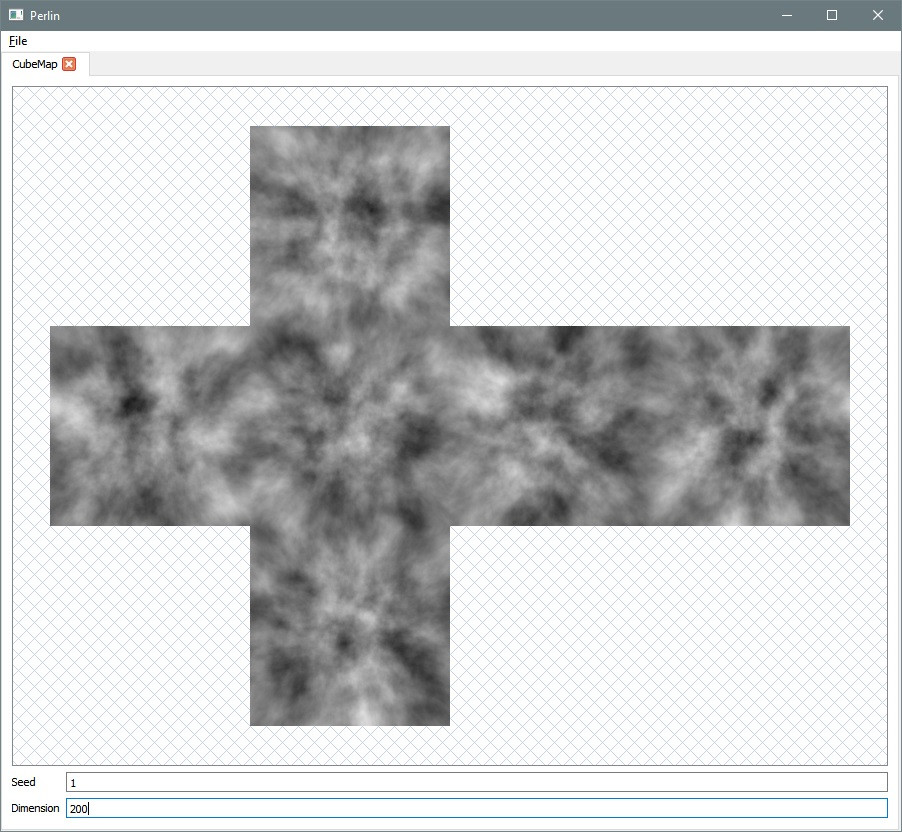
你可能想知道我为什么需要这个。我需要做一个立体地图,所以我需要每个脸的纹理,并建立图像。
我想我会用图像把这件事弄清楚。
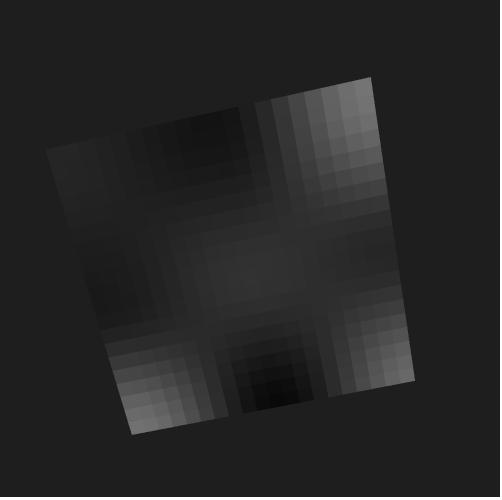
这是我的立方体。
我要做这样的事
现在我给你看我的代码
function setup() {

    createCanvas(500,500, WEBGL);
    angleMode(DEGREES)
    noiseDetail(1)

    //noLoop();
}

function draw() {

    background(30);
    noStroke();

    translate(0,0, -width)

    rotateX(frameCount * 3)
    rotateY(frameCount * 3)


    translate(-width/2, -height/2, -width/2);

    let space = width / 20;
    let indexX = 0;

    for (let x = 0; x < width; x += space) {

        let indexY = 0;
        for(let y = 0; y < height; y += space) {

            let indexZ = 0
            for (let z = 0; z < width; z += space) {

                push();

                let h = noise(indexX, indexY, indexZ) * 255;

                fill(h);

                translate(x,y,z)

                box(space);

                pop();

                indexZ += 0.1;
            }

        indexY += 0.1;

     }
     indexX += 0.1;
    }


}回答 1
Stack Overflow用户
发布于 2022-04-26 03:09:12
无论何时计算h,都应该将其与indexX、indexY、indexZ (或x、y、z )一起保存?我不确定哪个变量表示代码中每个像素在数组中的位置。你可能会得到这样的结果:
const myArray =
[
  {
    h: 123123,
    indexX: 234,
    indexY: 345,
    indexZ: 456,
  },
  ...
]现在,您有了关于您希望在每个位置放置什么h的信息,您只需要了解如何将立方体表面上的每个点映射到像您所链接的二维地图上。
页面原文内容由Stack Overflow提供。腾讯云小微IT领域专用引擎提供翻译支持
原文链接:
https://stackoverflow.com/questions/72002268
复制相关文章
相似问题
腾讯云开发者

Copyright © 2013 - 2026 Tencent Cloud. All Rights Reserved. 腾讯云 版权所有
深圳市腾讯计算机系统有限公司 ICP备案/许可证号:粤B2-20090059  粤公网安备44030502008569号
腾讯云计算(北京)有限责任公司 京ICP证150476号 | 京ICP备11018762号