DLC supports querying and analyzing unmanaged data. Currently supported data sources include: MySQL, EMR Hive(COS), EMR Hive(HDFS), EMR Hive(CHDFS), PostgreSQL, SQL Server, ClickHouse, and TCHouse-D. Users can add and manage other data sources through the DLC console. This document uses querying TCHouse-D as an example.
Prerequisites
Creating a Network Connection
1. Log in to the DLC console and select the region where the service is located.
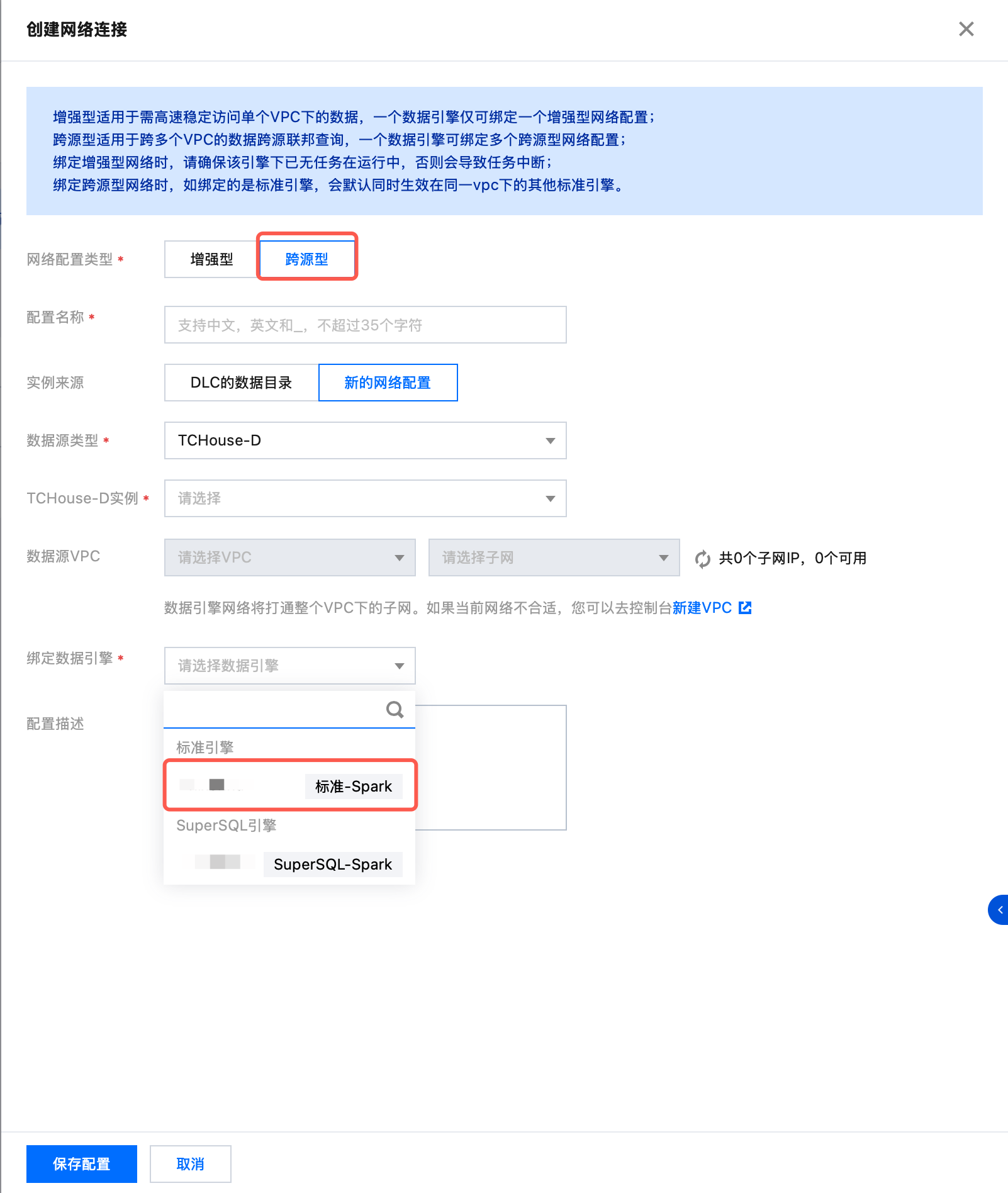
2. Click Network Connection Configuration in the left sidebar to create a new network connection. Select Cross-Source as the network configuration type, select New Network Configuration as the instance source, select Tencent Cloud TCHouse-D as the data source type, select the Tencent Cloud TCHouse-D instance you want to query, select Standard Spark Engine in the data engine binding area, and save the configuration. If the connection status displays as normal, the creation succeeds.
Adding a Data Catalog
1. Log in to the DLC console and select the region where the service is located. The logged-in user must have the permission to create data catalogs.
Solution 1: Go to the Data Explore page, hover over "+" next to the database and table, and click Create data catalog.
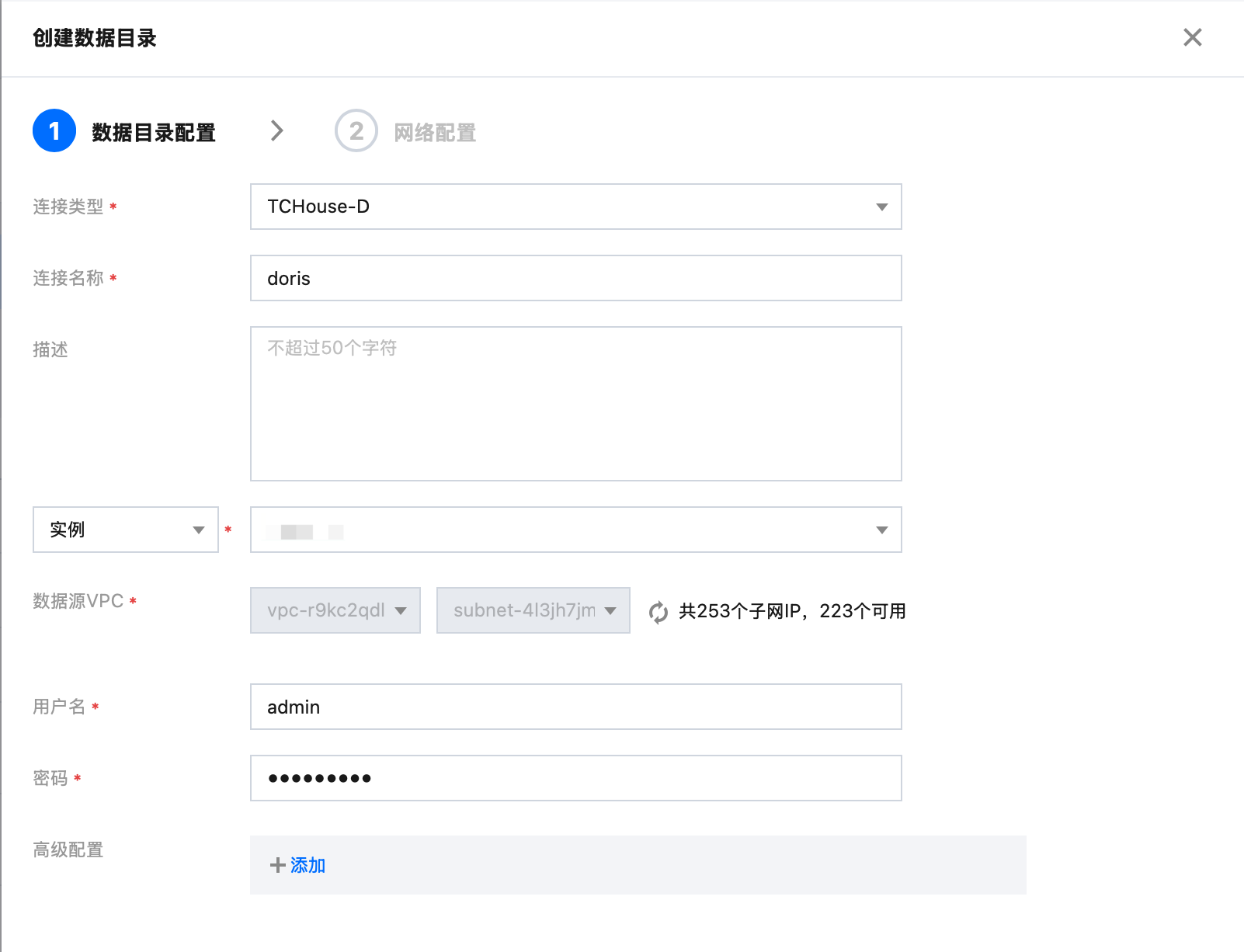
2. After selecting Tencent Cloud TCHouse-D as the data source type, select the corresponding instance to associate with.
3. Enter verification information of the data source and click Next and then Confirm. When the creation status of the data catalog displays as successful, you can query and perform other operations in data exploration.
Data Management
Currently, DLC supports the database information viewing and data table preview features for unmanaged data.
Viewing Database Information
Solution 1: View on the Data Explore Page
1. Log in to the DLC console and select the region where the service is located. The logged-in user must have the permission to view data tables.
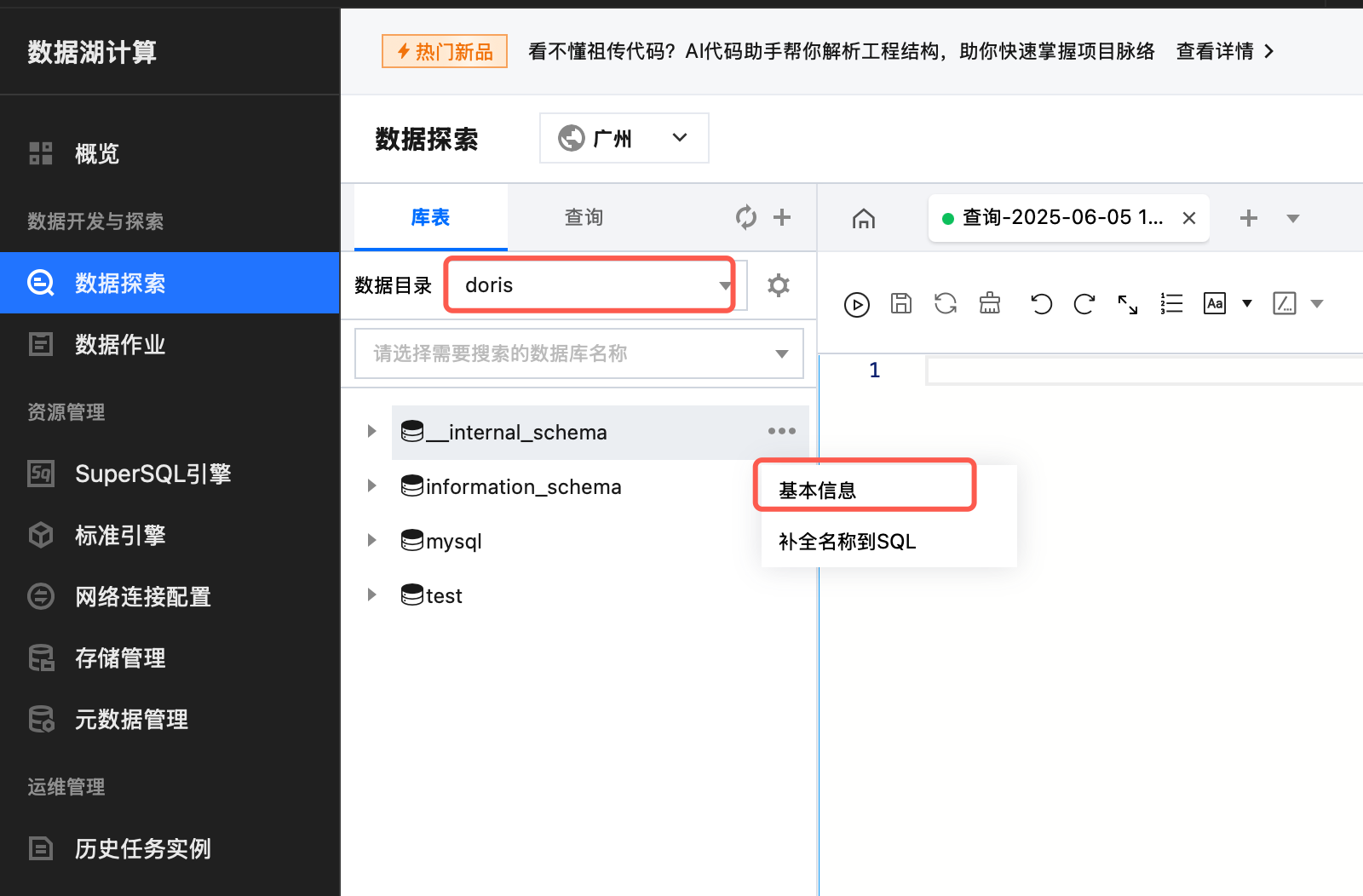
2. Go to the Data Exploration page, select the data catalog to be queried, move the pointer over a database name to display a menu, select Basic Info, and view the basic database information in the displayed pop-up window.
Solution 2: View on the Data Management Page
1. Log in to the DLC console and select the region where the service is located. The logged-in user must have the permission to view data tables.
2. Go to the Data Explore page. You can go to the details page to view database and table information based on the data catalog name.
Previewing Data Table Data
1. Log in to the DLC console and select the region where the service is located. The logged-in user must have the permission to view data tables.
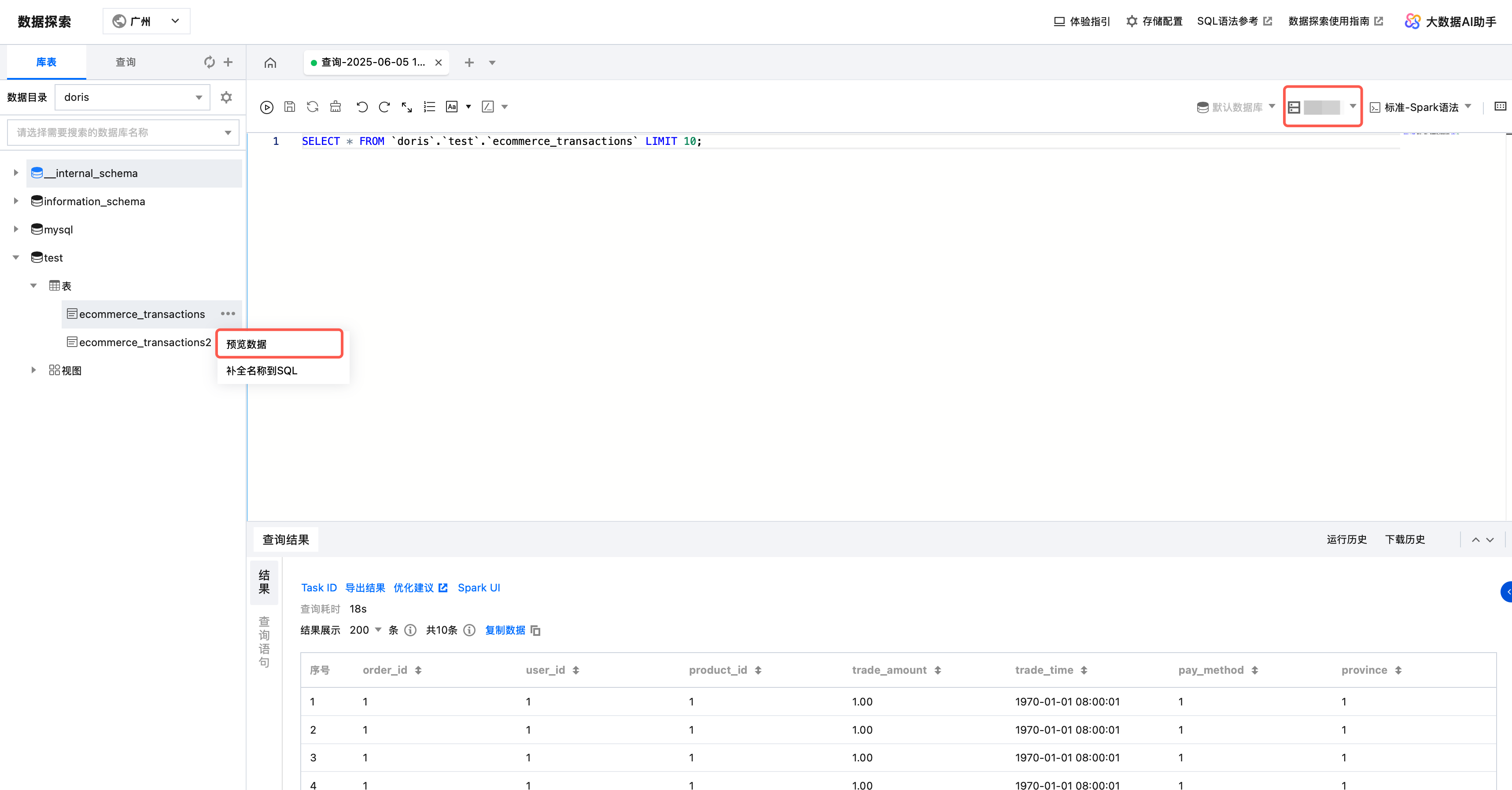
2. Go to the Data Exploration page, move the pointer over a data table name to display a menu, click Preview Data, and execute an SQL statement to query and display the data from the data table.
Note:
You need to select the data engine bound to the VPC network configuration of the data source to query.