This article introduces how to use the Graphical Editor in the Build Plan settings.
Prerequisites
Before configuring the CODING-CI build environment, you must activate the CODING DevOps service for your Tencent Cloud account. For details, please refer to Activate Services.
Open Project
1. log in to CODING console, click Team Domain to enter the CODING page.
2. After entering the target project, click on the left side Continuous Integration, click Build Plan > Text Editor and arrange within it.
Description of the Feature
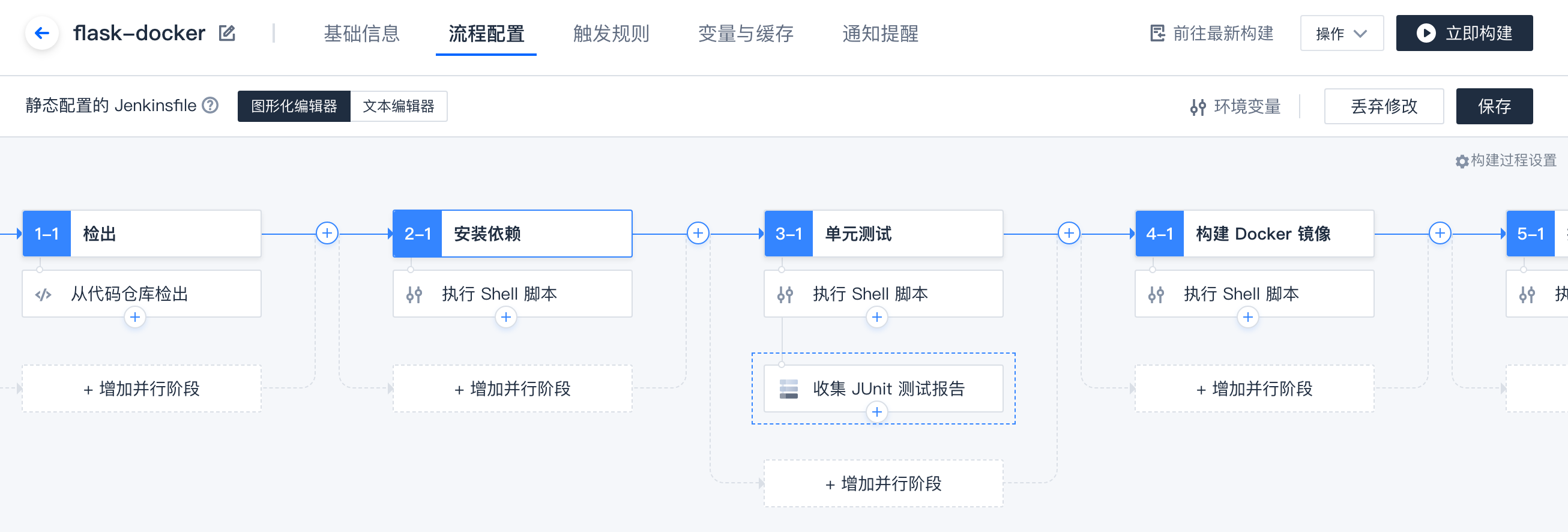
Editing a Jenkinsfile (a file that describes a build process) using a command-line editor is the most basic mode of human-computer interaction. Based on its core text editing function, CODING has been designed with an innovative graphical editor that is compatible with most custom command-line operations. Enjoy an intuitive WYSIWYG editing experience as you can view while building.
In Build Plan Settings > Process Configuration, select Graphical Editor to use.

Build Process Concepts
Regardless of being graphical or textual, editors are fundamentally designed to facilitate users in viewing and editing the core of the build process— Jenkinsfile (Process Description File). Therefore, understanding the important concepts of the "Process Description File" is necessary before discussing editors.
This document focuses on the syntax rules for declarative files.
Pipeline
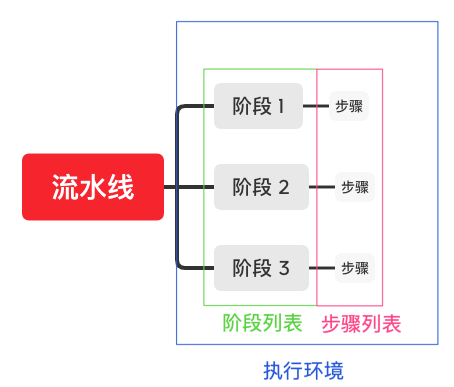
The pipeline is a self-definition work model. It defines the complete process of delivering software, generally including phases such as build, test, and deployment.
Execution Environment
The execution environment describes the execution environment of the entire process or a certain stage of executing a pipeline. It must appear in the top grid of a descriptive file or at every stage.
Is it necessary | Yes |
Parameter list | See below |
Permitted location | Must appear at the top of the description file or in each phase |
Stage
A stage defines a series of closely related steps. Each stage takes on an independent and clear responsibility within the entire pipeline. For example, "Build stage", "Test stage", or "Deployment stage". Generally speaking, all the actual build processes are placed within these stages.
Is it necessary | At least one |
Parameter list | A required string parameter that specifies the name of a stage |
Permitted location | Inside the stage block |
Stage List
The stage list includes a series of phases, with at least one phase in a stage list. There should be one and only one stage list in the pipeline.
Is it necessary | Yes |
Parameter list | No |
Permitted location | Can only appear once in the pipeline |
Step List
The step list describes what exactly needs to be done within a stage, and which commands need to be executed. For example, there is a step that requires the system to print a "Building..." message, which is executed with the command echo ' Building...'.
Is it necessary | Yes |
Parameter list | No |
Permitted location | In every stage block |
Parallel
Parallel is used to declare several stages that will execute concurrently, typically suited when there are no dependencies between these stages to speed up execution. Note that stages within any parallel block cannot set an execution environment.

Sample File
pipeline { agent any stages { stage('Detection') { steps { sh 'ci-init' checkout([$class: 'GitSCM', branches: [[name: env.GIT_BUILD_REF]], userRemoteConfigs: [[url: env.GIT_REPO_URL]]]) } } stage('Build') { steps { echo 'Building...' sh 'make' echo 'Build complete.' } } stage('Testing') { steps { echo 'Running unit tests...' sh 'make check' junit 'reports/**/*.xml' echo 'Unit tests complete.' } } stage('Deployment') { steps { echo 'Deploying...' sh 'make publish' echo 'Deployment complete.' } } } }
Switching Between Editors
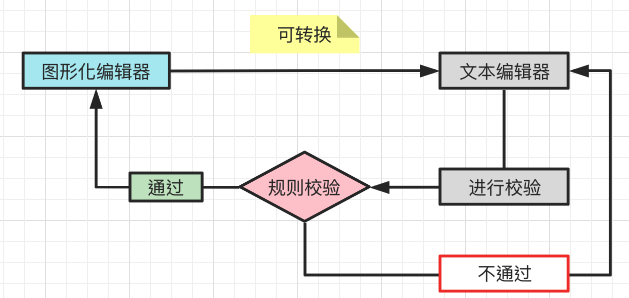
In essence, the graphical editor is preset code, allowing you to switch seamlessly to the text editor. However, you cannot switch from the text editor to the graphical editor. Code added or deleted in the text editor must pass a "rule check" before it can be converted into an editable view.

The text editor supports a wider range of custom operations than the graphical editor. As the graphical editor is preset with numerous commonly used steps, you can use it for pattern-based and standardized work. The text editor has no limitations and only requires conformance to Jenkins syntax, lending itself to specific and special tasks.