The content of this page has been automatically translated by AI. If you encounter any problems while reading, you can view the corresponding content in Chinese.

Functionality

Last updated: 2025-02-27 11:53:07

How Often Are the Virus and Vulnerability Libraries Updated?

Virus library: updated at 00:00 every day. Vulnerability library: updated from time to time.

Why May the Detection Results Be Different Between Multiple Scans Of the Vulnerabilities Of Jar Packages?

The detection of Jar package vulnerabilities, for example, Struts2 vulnerability highly dependent on whether the Jar package is loaded. The vulnerability cannot be detected when the package is not loaded. When the service is running, the Webserver loads the Jar package in two modes — dynamic loading and static loading. In the dynamic loading mode, the Struts2 vulnerability can only be detected when the Jar package is running, so the check results are different between periods. It is recommended to scan for high-risk Jar package vulnerabilities multiple times to improve the accuracy of the check results.

What Is the Scan Frequency Of the Host Security?

Host Security Basic Version: Provides one-time detection.
CWPP Professional Version: Supports Customized Cycle.
Host Security Flagship Version: Supports Customized Cycle.

How To Handle a Trojan File?

On the Malicious File Scan page, you can handle Trojan files as follows:
Delete: Click

to copy the trojan file path, locate the trojan, and manually delete the file.

Trust: You can perform a trust operation, and Host Security will no longer detect this file on the machine.
Isolation: Currently, intercepting Trojans is not supported. Only real-time or post-event detection and alarms are available. However, you can perform an isolation operation on the file to prevent it from being launched again.

What Is the Security Scoring Mechanism On the Overview Page?

For more information on the security scoring mechanism on the overview page, see the Security Overview document.

How To Back Up Data Automatically Using Snapshots?

Snapshot is a data backup method provided by Tencent Cloud. It can create a fully-available duplicate of the specified cloud disk, whose lifecycle is independent of the lifecycle of the original cloud disk. You can create snapshots regularly to quickly recover data in case of accidental data loss. You can create a snapshot in the console as instructed below:
1. Log in to the CBS console.
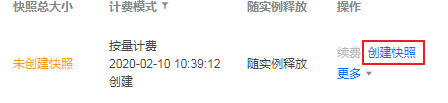
2. On the Cloud Disk page, find the row of the instance for which you need to create a snapshot, and click Create Snapshot.


3. On the create snapshot page, confirm the information, enter the snapshot name, click Submit, and wait for the snapshot to be created.
For more information, see the Snapshot Overview and Creating Snapshots documents.

How Long Does It Take For Security Baselines To Take Effect Once They Are Configured In the Product?

The security baselines take effect immediately after the product is configured.

What Should Be Done If the Result Of a Security Baseline Check Item Is "Failed"?

1. Go to the Security Baseline page, select the failed detection item, click View Details in the action column to enter the details page of the detection item.


2. On the details page, select the required server IP, and click Details to enter the Detection Detail Page.


3. On the Detection Detail Page, hover the mouse over

to view the processing suggestion for the baseline.


Will I Be Notified If the Host Security Detects Attacks Such As Vulnerabilities and Trojans?

Yes. You will get alarms if CWP detects attacks such as Trojans, emergency vulnerabilities, or other attacks, and will be notified via internal messages, SMS, email, or WeCom. You can set your notification channel in the Message Center.