相关资源
SDK 示例 Demo 地址:XML JavaScript SDK Demo。
SDK 更新日志请参见: ChangeLog。
SDK 常见问题请参见:JavaScript SDK 常见问题。
说明:
如果您在使用 XML 版本 SDK 时遇到函数或方法不存在等错误,请先将 XML 版本 SDK 升级到最新版再重试。如果您仍在使用 JSON 版本 SDK,请 升级到 XML JavaScript SDK。
环境配置与准备
1. JavaScript SDK 需浏览器支持基本的 HTML5 特性(支持 IE10 以上浏览器),以便支持 AJAX 上传文件和计算文件 MD5 值。
3. 登录 访问管理控制台 ,获取您的项目 SecretId 和 SecretKey。
4. 配置 CORS 规则,AllowHeader 需配成
*,ExposeHeaders 需要 ETag、Content-Length 以及其他 JS 需要读取的 header 字段,如下图所示。操作详情请参见 设置跨域访问 文档。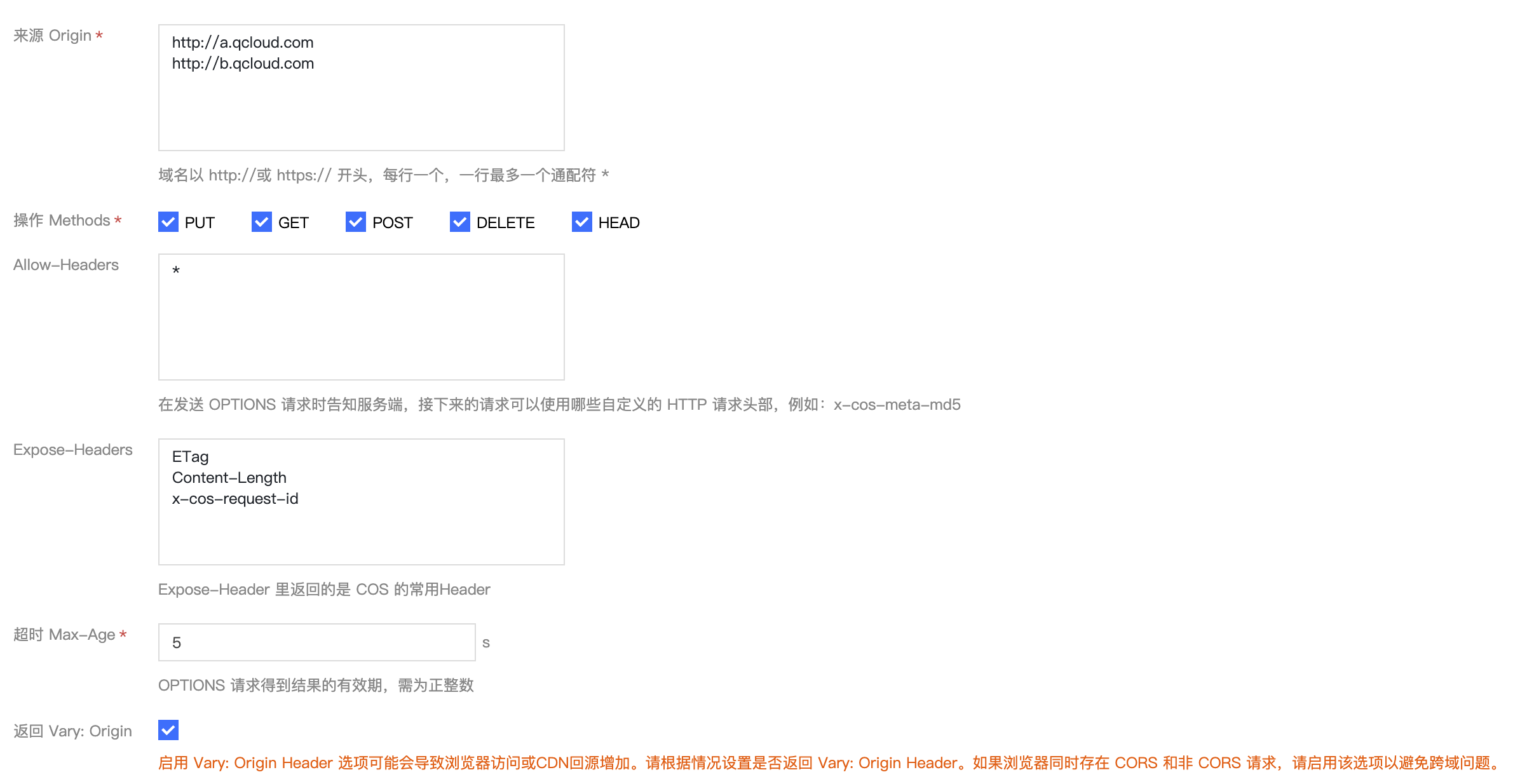
说明:
关于本文中出现的 SecretId、SecretKey、Bucket 等名称的含义和获取方式请参见 COS 术语信息。
关于跨端框架(例如 uni-app)的使用说明,使用 JavaScript SDK 开发后无法打包成正常使用的移动应用,例如 Android App、iOS App,需要使用对应的 Android SDK、iOS SDK。
使用 Next.js、Nuxt.js 等服务端渲染技术时,请忽略警告“cos-js-sdk-v5 不支持 Node.js 环境使用,请改用 cos-nodejs-sdk-v5”,可正常使用JavaScript SDK。
安装 SDK
您可以通过以下方式安装 SDK:
方式一:script 引入
<!--src 为本地路径 根据自己项目目录结构来调整--><script src="../dist/cos-js-sdk-v5.min.js"></script>
在 script 标签引用 SDK 时,SDK 占用了全局变量名 COS,通过它的构造函数可以创建 SDK 实例。
方式二:Webpack 引入方式
通过
npm i cos-js-sdk-v5 --save 安装 SDK 依赖,支持 Webpack 打包的场景,您可以用 npm 引入作为模块,代码如下:const COS = require('cos-js-sdk-v5');// 或import COS from 'cos-js-sdk-v5';
初始化 COS 服务
获取临时密钥
由于固定密钥放在前端会有安全风险,正式部署时我们推荐使用临时密钥的方式,实现过程为:前端首先请求服务端,服务端使用固定密钥调用 STS 服务申请临时密钥(具体内容请参见 临时密钥生成和使用指引 文档),然后返回临时密钥到前端使用。
注意:
如果站点有登录态,这个获取临时密钥的接口,还需要加上登录态校验。
初始化 COS 实例
必须引入 SDK 完成初始化 cos 实例,才可以调用 sdk 的方法,例如 cos.uploadFile、cos.getObject。
SDK 内部需要通过密钥生成签名,密钥相关的初始化请参考以下示例。
适用于单次上传动作,适合无需考虑临时密钥过期的场景,该密钥仅用于本次 COS 操作。
import COS from 'cos-js-sdk-v5';// console.log(COS.version); sdk 版本需要不低于 1.8.3const cos = new COS({SecretId: 'your_tmpSecretId', // sts服务下发的临时 secretIdSecretKey: 'your_tmpSecretKey', // sts服务下发的临时 secretKeySecurityToken: 'your_sessionToken', // sts服务下发的临时 SessionTokenStartTime: 1720770679403, // 建议传入服务端时间,可避免客户端时间不准导致的签名错误ExpiredTime: 1720771991367, // 临时密钥过期时间});
上传文件实践:
采用回调的方式给 COS SDK 提供获取临时密钥的方法,SDK 会在首次和缓存的临时密钥快过期时使用该回调重新获取临时密钥。
适用于全局初始化一个 cos 实例,方便进行上传文件的队列控制,暂停 、重启等操作。
import COS from 'cos-js-sdk-v5';const cos = new COS({getAuthorization: async function (options, callback) {const data = await fetchSts('xxxx'); // 需自行实现获取临时密钥逻辑callback({TmpSecretId: data.credentials.tmpSecretId,TmpSecretKey: data.credentials.tmpSecretKey,SecurityToken: data.credentials.sessionToken,// 建议返回服务器时间作为签名的开始时间,避免客户端本地时间偏差过大导致签名错误StartTime: data.startTime, // 时间戳,单位秒,如:1580000000ExpiredTime: data.expiredTime, // 时间戳,单位秒,如:1580000000ScopeLimit: true, // 细粒度控制权限需要设为 true,会限制密钥只在相同请求时重复使用});}});
例如新建一个 utils/cos.js,项目内全局使用:
import COS from 'cos-js-sdk-v5';const cos = new COS({// 其他配置项可参考下方 初始化配置项// getAuthorization 必选参数getAuthorization: function (options, callback) {// 初始化时不会调用,只有调用 cos 方法(例如 cos.putObject)时才会进入// 异步获取临时密钥// 服务端 JS 示例:https://github.com/tencentyun/cos-js-sdk-v5/blob/master/server/// 服务端其他语言参考 COS STS SDK :https://github.com/tencentyun/qcloud-cos-sts-sdk// STS 详细文档指引看:https://cloud.tencent.com/document/product/436/14048const stsUrl = 'http://example.com/server/sts'; // stsUrl 替换成您自己的后端服务fetch(stsUrl).then(response => response.json()).then(data => {if (!data || !data.credentials) {return console.error('credentials invalid:\\n' + JSON.stringify(data, null, 2))}// 检查credentials格式const { credentials } = data;console.log(credentials);callback({TmpSecretId: credentials.tmpSecretId,TmpSecretKey: credentials.tmpSecretKey,SecurityToken: credentials.sessionToken,// 建议返回服务器时间作为签名的开始时间,避免客户端本地时间偏差过大导致签名错误StartTime: data.startTime, // 时间戳,单位秒,如:1580000000ExpiredTime: data.expiredTime, // 时间戳,单位秒,如:1580000000ScopeLimit: true, // 细粒度控制权限需要设为 true,会限制密钥只在相同请求时重复使用});}).catch(error => {console.error('获取临时密钥失败', error);});}});export default cos;
pageA.js 引用上方导出的 cos 实例
import cos from 'utils/cos';let taskId;// 上传文件,file为选择的文件async function upload(file) {try {const data = await cos.uploadFile({Bucket: 'examplebucket-1250000000', // 填写自己的 bucket,必须字段Region: 'COS_REGION', // 存储桶所在地域,必须字段Key: '1.jpg', // 存储在桶里的对象键(例如1.jpg,a/b/test.txt),必须字段Body: file, // 上传文件对象SliceSize: 1024 * 1024 * 5, // 触发分块上传的阈值,超过5MB 使用分块上传,小于5MB使用简单上传。可自行设置,非必须onProgress: function(progressData) {console.log('上传进度:', progressData);},onTaskReady: function(id) { // 非必须taskId = id;},});console.log('上传成功', data);} catch (e) {console.error('上传失败', e);}}// 监听上传队列cos.on('update-list', data => {console.log(data);});// 暂停上传任务cos.pauseTask(taskId);// 重启上传任务cos.restartTask(taskId);// 取消上传任务cos.cancelTask(taskId)
您可以使用腾讯云的永久密钥来进行开发阶段的本地调试。由于该方式存在泄露密钥的风险,请务必在上线前替换为临时密钥的方式。
import COS from 'cos-js-sdk-v5';// SECRETID 和 SECRETKEY 请登录 https://console.cloud.tencent.com/cam/capi 进行查看和管理const cos = new COS({SecretId: process.env.SecretId, // 推荐使用环境变量获取;用户的 SecretId,建议使用子账号密钥,授权遵循最小权限指引,降低使用风险。子账号密钥获取可参考https://cloud.tencent.com/document/product/598/37140SecretKey: process.env.SecretKey, // 推荐使用环境变量获取;用户的 SecretKey,建议使用子账号密钥,授权遵循最小权限指引,降低使用风险。子账号密钥获取可参考https://cloud.tencent.com/document/product/598/37140});
配置项说明
初始化参数请参考以下 new COS(options) 构造函数参数说明。
参数名 | 参数描述 | 类型 | 是否必填 |
SecretId | 用户的 SecretId,传永久密钥时建议只在前端调试时使用,避免暴露密钥。 | String | 否 |
SecretKey | 用户的 SecretKey,传永久密钥时建议只在前端调试时使用,避免暴露密钥。 | String | 否 |
SecurityToken | 获取回来的临时密钥的 sessionToken(v1.8.3 版本开始支持)。当 SecretId、SecretKey 传入临时密钥时,SecurityToken 必填。 | String | 否 |
StartTime | 获取回来的临时密钥的有效起始时间戳(v1.8.3 版本开始支持),单位:秒。当 SecretId、SecretKey 传入临时密钥时,建议传入 StartTime。 | Number | 否 |
ExpiredTime | 获取回来的临时密钥的有效过期时间戳(v1.8.3 版本开始支持),单位:秒。当 SecretId、SecretKey 传入临时密钥时,建议传入 ExpiredTime。 | Number | 否 |
FileParallelLimit | 同一个实例下上传的文件并发数,默认值3。 | Number | 否 |
ChunkParallelLimit | 同一个上传文件的分块并发数,默认值3。 | Number | 否 |
ChunkRetryTimes | 分块上传及分块复制时,出错重试次数,默认值2(加第一次,请求共3次)。 | Number | 否 |
ChunkSize | 分块上传时,每片的字节数大小,默认值1048576(1MB)。 | Number | 否 |
SliceSize | 使用 uploadFiles 批量上传时,文件大小大于该数值将使用分块上传,否则将调用简单上传,单位 Byte,默认值1048576(1MB)。 | Number | 否 |
CopyChunkParallelLimit | 进行分块复制操作中复制分块上传的并发数,默认值20。 | Number | 否 |
CopyChunkSize | 使用 sliceCopyFile 分块复制文件时,每片的大小字节数,默认值10485760(10MB)。 | Number | 否 |
CopySliceSize | 使用 sliceCopyFile 分块复制文件时,文件大小大于该数值将使用分块复制 ,否则将调用简单复制,默认值10485760(10MB)。 | Number | 否 |
ProgressInterval | 上传进度的回调方法 onProgress 的回调频率,单位 ms ,默认值1000。 | Number | 否 |
Protocol | 发请求时用的协议,可选项 https:、http:,默认判断当前页面是 http: 时使用 http:,否则使用 https:。 | String | 否 |
Domain | 调用操作存储桶和对象的 API 时自定义请求域名。可以使用模板,如 "{Bucket}.cos.{Region}.myqcloud.com" ,即在调用 API 时会使用参数中传入的 Bucket 和 Region 进行替换。 | String | 否 |
UploadQueueSize | 上传队列最长大小,超出的任务如果状态不是 waiting、checking、uploading 会被清理,默认10000。 | Number | 否 |
UploadCheckContentMd5 | 上传文件时校验 Content-MD5,默认 false。如果开启,上传文件时会对文件内容计算 MD5,大文件耗时较长。 | Boolean | 否 |
UploadAddMetaMd5 | 上传文件时校验 Content-MD5,默认 false。开启后上传请求头里会新增 x-cos-meta-md5。 | Boolean | 否 |
getAuthorization | 获取签名的回调方法,如果没有 SecretId、SecretKey 时,这个参数必选。 注意: 该回调方法在初始化实例时传入,在使用实例调用接口时才会执行并获取签名。 | Function | 否 |
Timeout | 超时时间,单位毫秒,默认为0,即不设置超时时间。 | Number | 否 |
UseAccelerate | Boolean | 否 |
getAuthorization: function(options, callback) { ... }
getAuthorization 的回调参数说明:
参数名 | 参数描述 | 类型 |
options | 获取临时密钥需要的参数对象 | Object |
- Bucket | 存储桶的名称,命名格式为 BucketName-APPID,此处填写的存储桶名称必须为此格式 | String |
- Region | String | |
callback | 临时密钥获取完成后的回传方法 | Function |
获取完临时密钥后,callback 回传一个对象,回传对象的属性列表如下:
属性名 | 参数描述 | 类型 | 是否必填 |
TmpSecretId | 获取回来的临时密钥的 tmpSecretId | String | 是 |
TmpSecretKey | 获取回来的临时密钥的 tmpSecretKey | String | 是 |
SecurityToken | 获取回来的临时密钥的 sessionToken,对应 header 的 x-cos-security-token 字段 | String | 是 |
StartTime | 密钥获取的开始时间,即获取时刻的时间戳,单位秒,startTime,如:1580000000,用于签名的开始时间,传入该参数可避免前端时间偏差签名过期问题 | String | 否 |
ExpiredTime | 获取回来的临时密钥的 expiredTime,超时时刻的时间戳,单位秒,如:1580000900 | String | 是 |
获取鉴权凭证
实例本身的鉴权凭证可以通过实例化时传入的参数控制如何获取,有三种获取方式:
1. 实例化时,传入 SecretId、SecretKey,每次需要签名都由实例内部计算。
2. 实例化时,传入 getAuthorization 回调,每次需要签名通过这个回调计算完,返回签名至实例。
3. 实例化时,传入 getAuthorization 回调,调用回调时返回临时密钥凭证,在临时密钥凭证过期后会再次调用该回调。
开启 Beacon 上报(可选)
说明:
腾讯灯塔只对 COS 侧的请求性能进行监控,不会上报业务侧数据。
若是想开启该功能,请先确保 SDK 版本升级到1.7.1及以上,然后在初始化中传入 BeaconReporter。
// 完整demo可参考:https://github.com/tencentyun/cos-js-sdk-v5/blob/master/demo/index.htmlconst Beacon = require('./lib/beacon_mp.min');new COS({...BeaconReporter: Beacon,})
使用方式
示例默认使用回调方式,相关代码如下。
注意:
cos.getObjectUrl 目前只支持回调方式。
// 这里省略初始化过程和上传参数var cos = new COS({ ... });cos.uploadFile({ ... }, function(err, data) {if (err) {console.log('上传出错', err);} else {console.log('上传成功', data);}});
// 这里省略初始化过程和上传参数var cos = new COS({ ... });cos.uploadFile({ ... }).then(data => {console.log('上传成功', data);}).catch(err => {console.log('上传出错', err);});
async function upload() {// 这里省略初始化过程和上传参数var cos = new COS({ ... });try {var data = await cos.uploadFile({ ... });return { err: null, data: data }} catch (err) {return { err: err, data: null };}}// 可以同步拿到请求的返回值,这里举例说明,实际返回的数据格式可以自定义var uploadResult = await upload();if (uploadResult.err) {console.log('上传出错', uploadResult.err);} else {console.log('上传成功', uploadResult.data);}// JavaScript 的 async 和 await(使用时请注意浏览器兼容性)
访问 COS 服务
/* vue 项目举例 *//* 新建一个 cos.js,导出 cos 实例 */import COS from 'cos-js-sdk-v5'; // 通过 npm 安装的 SDKconst cos = new COS({SecretId: '您的 SecretId',SecretKey: '您的 SecretKey',});export default cos;/* 单页面里 page.vue */<template><div><button @click="getBucketFiles">查询目录a下的文件</button><div v-if="fileList.length"><h4>目录a下的文件列表:</h4><ul><li v-for="(file, i) in fileList" :key="i">{{ file.Key }}</li></ul></div><p v-if="error" style="color: red;">{{ error }}</p></div></template><script>import cos from '@/utils/cos';export default {data() {return {fileList: [],error: ''};},methods: {getBucketFiles() {cos.getBucket({Bucket: 'examplebucket-1250000000', // 您的bucketRegion: 'COS_REGION', // 您的地域(如ap-guangzhou)Prefix: 'a/' // 只查a目录下的文件}, (err, data) => {if (err) {this.error = '查询失败:' + err.Message;this.fileList = [];} else {this.error = '';this.fileList = data.Contents || []; // 展示文件路径(Key)}});}}};</script>
<template><div><input type="file" @change="handleUpload" /></div></template><script>// 直接引入cos-js-sdk-v5(npm 安装)import COS from 'cos-js-sdk-v5';export default {methods: {handleUpload(e) {const file = e.target.files[0];if (!file) return;// 直接在组件内初始化 COS 实例const cos = new COS({SecretId: '您的 SecretId', // 替换实际 SecretIdSecretKey: '您的 SecretKey' // 替换实际 SecretKey});// 调用上传方法cos.uploadFile({Bucket: 'examplebucket-1250000000',Region: 'ap-guangzhou',Key: `upload/${Date.now()}-${file.name}`,Body: file,SliceSize: 1024 * 1024 * 5}, (err, data) => {err ? console.error('上传失败', err) : console.log('上传成功', data);e.target.value = ''; // 清空选择});}}};</script>
浏览器里通过生成预签名 url 并触发浏览器下载的方式实现。
<template><div><input type="text" v-model="fileKey" placeholder="输入文件Key(如a/1.jpg)" /><button @click="getDownloadUrl">下载</button></div></template><script>import COS from 'cos-js-sdk-v5';export default {data() {return {fileKey: '',cos: new COS({SecretId: '您的 SecretId',SecretKey: '您的 SecretKey'})};},methods: {getDownloadUrl() {if (!this.fileKey) return;this.cos.getObjectUrl({Bucket: 'examplebucket-1250000000',Region: 'COS_REGION',Key: this.fileKey}, (err, data) => {if (err) return console.error(err);// 构建强制下载链接const downloadUrl = data.Url + (data.Url.includes('?') ? '&' : '?') + 'response-content-disposition=attachment';window.open(downloadUrl);});}}};</script>
<template><div><input type="text" v-model="fileKey" placeholder="输入要删除的文件Key(如a/1.jpg)" /><button @click="deleteFile">删除文件</button></div></template><script>import COS from 'cos-js-sdk-v5';export default {data() {return {fileKey: '',cos: new COS({SecretId: '您的 SecretId',SecretKey: '您的 SecretKey'})};},methods: {deleteFile() {if (!this.fileKey.trim()) return;this.cos.deleteObject({Bucket: 'examplebucket-1250000000',Region: 'COS_REGION',Key: this.fileKey.trim()}, (err, data) => {if (err) {console.error('删除失败', err);} else {console.log('删除成功', data);this.fileKey = ''; // 清空输入}});}}};</script>


