简介
COS 会对新上传的对象进行 CRC64计算,并将结果作为对象的属性进行存储,随后在返回的响应头部中携带 x-cos-hash-crc64ecma,该头部表示上传对象的 CRC64值,根据 ECMA-182标准 计算得到。对于 CRC64特性上线前就已经存在于 COS 的对象,COS 不会对其计算 CRC64值,所以获取此类对象时不会返回其 CRC64值。
说明:
CRC64(循环冗余校验64位)是一种高效的数据完整性验证算法,通过多项式除法生成64位校验值。相比传统 MD5校验,CRC64具备以下优势:
抗碰撞性更强:64位校验码空间更大,重复概率低。
计算效率更高:流式处理特性适合大文件校验,内存占用仅为常数级别。
支持片段合并:适合异步边下载边计算,节省计算时间。
行业认可度高:被 ISO、ITU-T 等国际标准广泛采用,腾讯云 COS 选用 ECMA-182标准实现。
COS API 支持 CRC64校验
目前支持 CRC64的 API 如下:
简单上传接口
分块上传接口
Upload Part:用户可以根据 COS 返回的 CRC64值与本地计算的数值进行比较验证。
Complete Multipart Upload:如果每个分块都有 CRC64属性,则会返回整个对象的 CRC64值,如果某些分块不具备 CRC64值,则不返回。
执行 Upload Part - Copy 时,会返回对应的 CRC64值。
执行 PUT Object - Copy 时,如果源对象存在 CRC64值,则返回 CRC64,否则不返回。
执行 HEAD Object 和 GET Object 时,如果对象存在 CRC64,则返回。用户可以根据 COS 返回的 CRC64值和本地计算的 CRC64进行比较验证。
查看 COS 对象 CRC64值
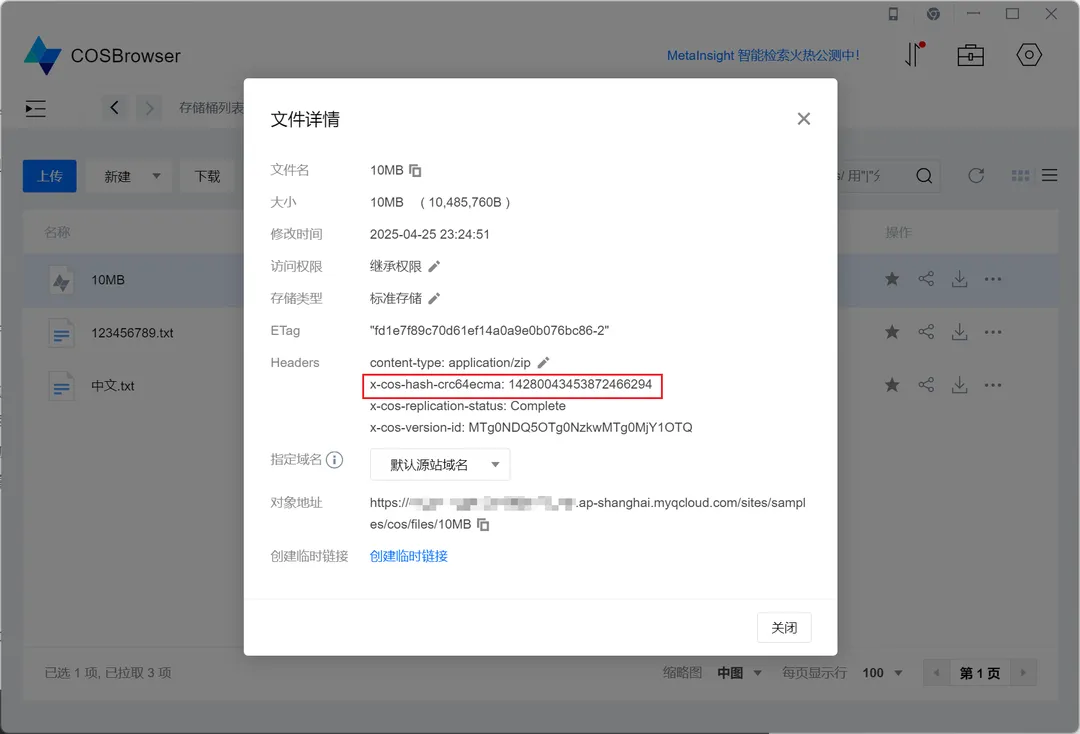
方式一:通过 COSBrowser PC/Web 查看
安装 并登录 COSBrowser PC 客户端或访问 COSbrowser Web 版本,进入存储桶后,选择对象并右键单击详情。在对象详情中,Headers 对应的 x-cos-hash-crc64ecma 头部值就是 CRC64校验值。
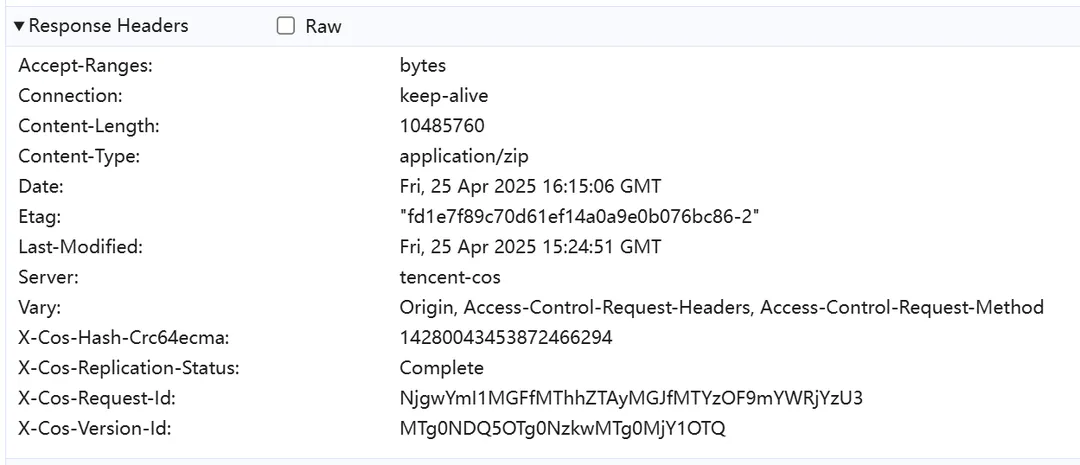
方式二:通过浏览器查看
在浏览器打开 DevTools 开发者工具,访问对象临时签名地址,然后在 Network 里可以看到对象的 Response Headers,对应的 x-cos-hash-crc64ecma 头部值就是当前访问对象的 CRC64校验值。
计算本地文件 CRC64值
方式一:使用 COSCLI 工具计算 CRC64值
下载工具后,可以使用
./coscli hash ./filename 命令计算得到本地文件 CRC64校验值。Window、Linux 示例如下: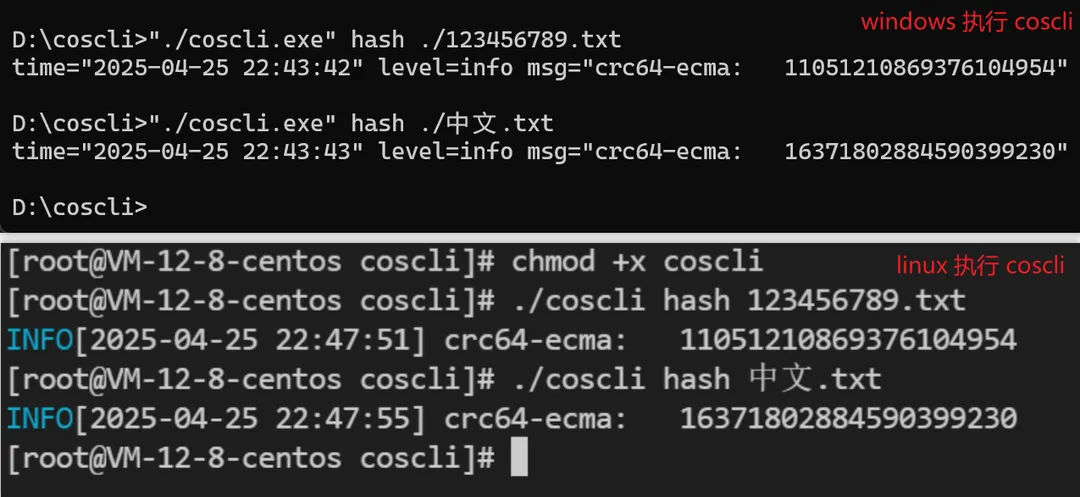
方式二:使用 Web 页面计算 CRC64值
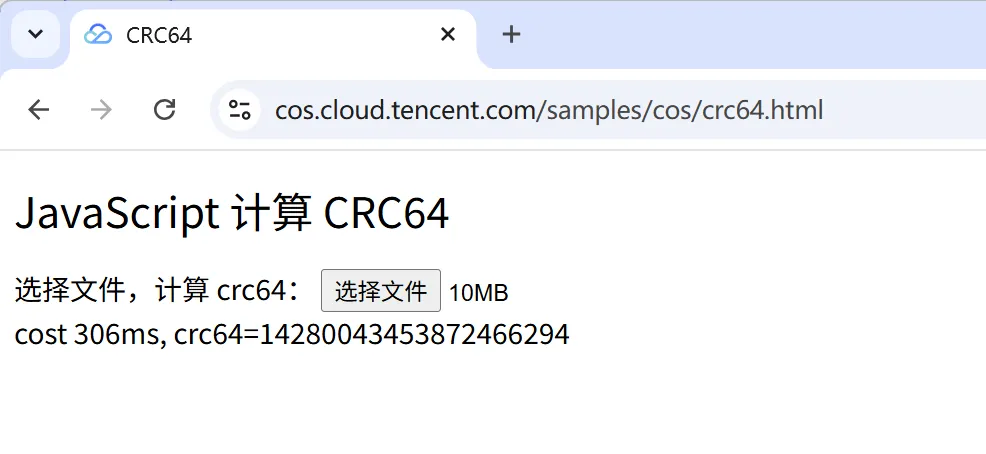
API 接口示例
分块上传响应
下面为用户发出 Upload Part 请求后得到的响应示例。x-cos-hash-crc64ecma 头部表示分块的 CRC64值,用户可以通过该值与本地计算的 CRC64值进行比较,从而校验分块完整性。
HTTP/1.1 200 OKcontent-length: 0connection: closedate: Thu, 05 Dec 2019 01:58:03 GMTetag: "358e8c8b1bfa35ee3bd44cb3d2cc416b"server: tencent-cosx-cos-hash-crc64ecma: 15060521397700495958x-cos-request-id: NWRlODY0MmJfMjBiNDU4NjRfNjkyZl80ZjZi****
完成分块上传响应
下面为用户发出 Complete Multipart Upload 请求后得到的响应示例。x-cos-hash-crc64ecma 头部表示整个对象的 CRC64值,用户可以通过该值与本地计算的 CRC64值进行比较,从而校验对象完整性。
HTTP/1.1 200 OKcontent-type: application/xmltransfer-encoding: chunkedconnection: closedate: Thu, 05 Dec 2019 02:01:17 GMTserver: tencent-cosx-cos-hash-crc64ecma: 15060521397700495958x-cos-request-id: NWRlODY0ZWRfMjNiMjU4NjRfOGQ4Ml81MDEw****[Object Content]
SDK 使用示例
Python SDK
下面以 Python SDK 为例演示如何校验对象,完整的示例代码如下。
说明:
1. 初始化配置
设置用户属性,包括 SecretId、SecretKey 和 Region,并创建客户端对象。
# -*- coding=utf-8from qcloud_cos import CosConfigfrom qcloud_cos import CosS3Clientfrom qcloud_cos import CosServiceErrorfrom qcloud_cos import CosClientErrorimport sysimport osimport loggingimport hashlibimport crcmodlogging.basicConfig(level=logging.INFO, stream=sys.stdout)# 设置用户属性, 包括 SecretId, SecretKey, Region# APPID 已在配置中移除,请在参数 Bucket 中带上 APPID。Bucket 由 BucketName-APPID 组成secret_id = os.environ['COS_SECRET_ID'] # 用户的 SecretId,建议使用子账号密钥,授权遵循最小权限指引,降低使用风险。子账号密钥获取可参见 https://cloud.tencent.com/document/product/598/37140secret_key = os.environ['COS_SECRET_KEY'] # 用户的 SecretKey,建议使用子账号密钥,授权遵循最小权限指引,降低使用风险。子账号密钥获取可参见 https://cloud.tencent.com/document/product/598/37140region = 'ap-beijing' # 替换为您的 Region, 这里以北京为例token = None # 使用临时密钥需要传入 Token,默认为空,可不填config = CosConfig(Region=region, SecretId=secret_id, SecretKey=secret_key, Token=token) # 获取配置对象client = CosS3Client(config)
2. 计算对象的校验值
模拟对象分块,并计算整个对象的 CRC64校验值。
OBJECT_PART_SIZE = 1024 * 1024 #模拟每个分块的大小OBJECT_TOTAL_SIZE = OBJECT_PART_SIZE * 1 + 123 #对象的总大小object_body = '1' * OBJECT_TOTAL_SIZE #对象内容#计算整个对象 CRC64校验值c64 = crcmod.mkCrcFun(0x142F0E1EBA9EA3693, initCrc=0, xorOut=0xffffffffffffffff, rev=True)local_crc64 =str(c64(object_body.encode()))
3. 初始化分块上传
#初始化分块上传response = client.create_multipart_upload(Bucket='examplebucket-1250000000', #替换为您的 Bucket 名称,examplebucket 是一个举例的存储桶,1250000000 为举例的 APPIDKey='exampleobject', #替换为您上传的对象 Key 值StorageClass='STANDARD', #对象的存储类型)#获取分块上传的 UploadIdupload_id = response['UploadId']
4. 分块上传对象
分块上传对象,通过将对象切分成多个块进行上传,最多支持10000分块,每个分块大小为1MB - 5GB,最后一个分块可以小于1MB。上传分块时,需要设置每个分块的 PartNumber(编号),并计算每个分块的 CRC64值,在分块上传成功后,可以通过返回的 CRC64值与本地计算的数值进行校验。
#分块上传对象,每个分块大小为 OBJECT_PART_SIZE ,最后一个分块可能不足 OBJECT_PART_SIZEpart_list = list()position = 0left_size = OBJECT_TOTAL_SIZEpart_number = 0while left_size > 0:part_number += 1if left_size >= OBJECT_PART_SIZE:body = object_body[position:position+OBJECT_PART_SIZE]else:body = object_body[position:]position += OBJECT_PART_SIZEleft_size -= OBJECT_PART_SIZElocal_part_crc64 = str(c64(body)) #本地计算 CRC64response = client.upload_part(Bucket='examplebucket-1250000000',Key='exampleobject',Body=body,PartNumber=part_number,UploadId=upload_id,)part_crc_64 = response['x-cos-hash-crc64ecma'] # 服务器返回的 CRC64if local_part_crc64 != part_crc_64: # 数据检验print 'crc64 check FAIL'# print('crc64 check FAIL') # Python 3.x 版本的 print 语句exit(-1)etag = response['ETag']part_list.append({'ETag' : etag, 'PartNumber' : part_number})
5. 完成分块上传
在所有分块上传完成后,需要进行完成分块上传操作。可以通过 COS 返回的 CRC64和本地对象的 CRC64进行比较验证。
#完成分块上传response = client.complete_multipart_upload(Bucket='examplebucket-1250000000', #替换为您的 Bucket 名称,examplebucket 是一个举例的存储桶,1250000000 为举例的 APPIDKey='exampleobject', #对象的 Key 值UploadId=upload_id,MultipartUpload={ #要求每个分块的 ETag 和 PartNumber 一一对应'Part' : part_list},)crc64ecma = response['x-cos-hash-crc64ecma']if crc64ecma != local_crc64: # 数据检验print 'check crc64 Failed'# print('crc64 check FAIL') # Python 3.x 版本的 print 语句exit(-1)
Java SDK
如何在本地计算文件的 CRC64值
String calculateCrc64(File localFile) throws IOException {CRC64 crc64 = new CRC64();try (FileInputStream stream = new FileInputStream(localFile)) {byte[] b = new byte[1024 * 1024];while (true) {final int read = stream.read(b);if (read <= 0) {break;}crc64.update(b, read);}}return Long.toUnsignedString(crc64.getValue());}
如何获得 COS 对象的 CRC64值,并与本地文件做校验
// COSClient 的创建参考:[快速入门](https://cloud.tencent.com/document/product/436/10199);ObjectMetadata cosMeta = COSClient().getObjectMetadata(bucketName, cosFilePath);String cosCrc64 = cosMeta.getCrc64Ecma();String localCrc64 = calculateCrc64(localFile);if (cosCrc64.equals(localCrc64)) {System.out.println("ok");} else {System.out.println("fail");}
iOS SDK
如何计算本地文件的 CRC64值
Objective-C 示例:
uint64_t localCrc64 = [[[NSMutableData alloc] initWithContentsOfFile:@"本地文件路径"] qcloud_crc64];NSString *localCrc64Str = [NSString stringWithFormat:@"%llu",localCrc64];
Swift 示例:
let localCrc64 = NSMutableData.init(contentsOfFile: "本地文件路径")?.qcloud_crc64();let localCrc64Str = String(format: "%llu", localCrc64 ?? 0);
如何获得 COS 对象的 CRC64值, 并与本地文件做校验
Objective-C 示例:
// 上传完成的回调中,进行获取上传文件的 CRC64值[request setFinishBlock:^(QCloudUploadObjectResult *result, NSError *error) {NSDictionary * dic = [result __originHTTPURLResponse__].allHeaderFields;NSString * crc64 = dic[@"x-cos-hash-crc64ecma"];}];
Swift 示例:
// 上传完成的回调中,进行获取上传文件的 CRC64值uploadRequest.setFinish { (result, error) inlet dic = result?.__originHTTPURLResponse__.allHeaderFields;let crc64 = dic?["x-cos-hash-crc64ecma"];}
下载接口校验
腾讯云 COS iOS SDK 下载接口已经支持 CRC64校验,并默认开启,用户无需手动计算。
校验过程为异步分段校验,减少大文件 CRC64校验造成的耗时。
校验失败后会重试三次,重试后还是失败则会下载失败并在失败回调中给出 CRC64校验失败的异常。
续传时会先校验本地已下载的文件是否符合 CRC64校验结果,如果不一致则重新下载,以免全部下载完才发现不一致,造成用户时间、流量的浪费。
Android SDK
您在上传或者下载成功后,可以在响应头部中获取 CRC64值。
注意:
COS Android SDK 版本需要大于等于 v5.7.5。
上传请求示例
// 1. 初始化 TransferService。在相同配置的情况下,您应该复用同一个 TransferServiceTransferConfig transferConfig = new TransferConfig.Builder().build();TransferService transferService = new TransferService(cosXmlService, transferConfig);// 2. 初始化 PutObjectRequest// 存储桶名称,由 bucketname-appid 组成,appid 必须填入,可以在 COS 控制台查看存储桶名称。 https://console.cloud.tencent.com/cos5/bucketString bucket = "examplebucket-1250000000";String cosPath = "exampleobject"; //对象在存储桶中的位置标识符,即称对象键String srcPath = "examplefilepath"; //本地文件的绝对路径PutObjectRequest putObjectRequest = new PutObjectRequest(bucket,cosPath, srcPath);// 3. 调用 upload 方法上传文件final COSUploadTask uploadTask = transferService.upload(putObjectRequest);uploadTask.setCosXmlResultListener(new CosXmlResultListener() {@Overridepublic void onSuccess(CosXmlRequest request, CosXmlResult result) {// 上传成功,可以在这里拿到文件的 CRC64String crc64 = result.getHeader("x-cos-hash-crc64ecma");}// 如果您使用 kotlin 语言来调用,请注意回调方法中的异常是可空的,否则不会回调 onFail 方法,即:// clientException 的类型为 CosXmlClientException?,serviceException 的类型为 CosXmlServiceException?@Overridepublic void onFail(CosXmlRequest request,@Nullable CosXmlClientException clientException,@Nullable CosXmlServiceException serviceException) {if (clientException != null) {clientException.printStackTrace();} else {serviceException.printStackTrace();}}});
说明:
下载请求示例
腾讯云 COS Android SDK 下载接口已经支持 CRC64校验,并默认开启,用户无需手动计算。
校验过程为异步分段校验,减少大文件 CRC64校验造成的耗时。
校验失败后会重试三次,重试后还是失败则会下载失败并在失败回调中给出 CRC64校验失败的异常。
续传时会先校验本地已下载的文件是否符合 CRC64校验结果,如果不一致则重新下载,以免全部下载完才发现不一致,造成用户时间、流量的浪费。
// 1. 初始化 TransferService。在相同配置的情况下,您应该复用同一个 TransferServiceTransferConfig transferConfig = new TransferConfig.Builder().build();TransferService transferService = new TransferService(cosXmlService, transferConfig);// 2. 初始化 GetObjectRequest// 存储桶名称,由bucketname-appid 组成,appid必须填入,可以在COS控制台查看存储桶名称。 https://console.cloud.tencent.com/cos5/bucketString bucket = "examplebucket-1250000000";String cosPath = "exampleobject"; //对象在存储桶中的位置标识符,即称对象键String savePathDir = context.getCacheDir().toString(); //本地目录路径//本地保存的文件名,若不填(null),则与 COS 上的文件名一样String savedFileName = "exampleobject";GetObjectRequest getObjectRequest = new GetObjectRequest(bucket,cosPath, savePathDir, savedFileName);// 3. 调用 download 方法下载文件final COSDownloadTask downloadTask = transferService.download(getObjectRequest);downloadTask.setCosXmlResultListener(new CosXmlResultListener() {@Overridepublic void onSuccess(CosXmlRequest request, CosXmlResult result) {// 下载成功,可以在这里拿到 COS 上的文件 CRC64String cosCRC64 = result.getHeader("x-cos-hash-crc64ecma");}// 如果您使用 kotlin 语言来调用,请注意回调方法中的异常是可空的,否则不会回调 onFail 方法,即:// clientException 的类型为 CosXmlClientException?,serviceException 的类型为 CosXmlServiceException?@Overridepublic void onFail(CosXmlRequest request,@Nullable CosXmlClientException clientException,@Nullable CosXmlServiceException serviceException) {if (clientException != null) {clientException.printStackTrace();} else {serviceException.printStackTrace();}}});
说明:
CRC64校验
通过
TransferService 进行上传和下载时,SDK 默认进行了数据校验的工作,如果您仍然希望能够自己进行 CRC64校验,可以参考如下代码。// 1. 参考以上上传或者下载请求示例代码获取 COS 对象的 CRC64值String cosCRC64 = "examplecoscrc64";// 2. 计算本地文件的 CRC64File localFile = new File("examplefilepath");String localCRC64 = DigestUtils.getCRC64String(localFile);// 3. 比对 localCRC64 和 cos CRC64 是否一致if (localCRC64.equals(cosCRC64)) {// CRC64 对比正确}
说明:
CRC64各语言示例代码
若需要自定义 CRC64校验,我们也提供了主流语言(Node.js、Java、Go、PHP、C++、C、.NET(C#)、Android、iOS 等)的 CRC64校验示例代码。
使用示例:
// 1. CRC64计算 字符串、Buffer// 结果:11051210869376104954crc64('123456789')// 2. 流式计算// 结果:11051210869376104954const hash21 = crc64Calculator().update('123').update('456').update('789').digest();// 3. 追加计算// 结果:11051210869376104954const hash3 = crc64Concat(crc64('123456'), crc64('789'), 3);// 4. 合并计算// // 结果:11051210869376104954const hash4 = crc64Combine([ {hash: crc64('12'), size: 2}, {hash: crc64('345'), size: 3}, {hash: crc64('6789'), size: 4},]);// 5. 计算文件crc64File('your_file_path', (err, hash5) => { console.log('5.', hash5);});
// 1、计算字符串// 结果 11051210869376104954testString("123456789");private static void testString(String str) {CRC64Calculator crc = new CRC64Calculator();byte[] data = str.getBytes(StandardCharsets.UTF_8);crc.update(data);System.out.printf("%s: %s\\n", str, Long.toUnsignedString(crc.getVlue(),10));}// 2、流式计算// 结果 11051210869376104954private static void testStream() {CRC64Calculator crc = new CRC64Calculator();crc.update("123456".getBytes(StandardCharsets.UTF_8));crc.update("789".getBytes(StandardCharsets.UTF_8));System.out.println("流式校验123456789: " + Long.toUnsignedString(crc.getVlue(),10));}// CRC64合并// 结果 11051210869376104954private static void testCombine() {CRC64Calculator part1 = new CRC64Calculator();part1.update("123456".getBytes(StandardCharsets.UTF_8));long crc1 = part1.getVlue();CRC64Calculator part2 = new CRC64Calculator();part2.update("789".getBytes(StandardCharsets.UTF_8));long crc2 = part2.getVlue();long combined = combine(crc1, crc2, 3);System.out.println("合并结果: " + Long.toUnsignedString(combined,10));}// 4、计算文件fileCRC("your_file_path")
func main() {// 测试字符串计算testCRC64("123456789", 11051210869376104954)testCRC64("中文", 16371802884590399230) // 需要实际测试值// 流式处理测试testStreamCRC()// 文件校验测试if crc, err := FileCRC("your_file_path"); err == nil {fmt.Printf("文件校验结果: %d\\n", crc)}// 合并测试testCombineCRC()}func testCRC64(data string, expected uint64) {crc := NewCRC64().(*CRC64)crc.Update([]byte(data))result := crc.Sum64()fmt.Printf("%s: %d (%v)\\n", data, result, result == expected)}func testStreamCRC() {crc := NewCRC64().(*CRC64)crc.Update([]byte("123456"))crc.Update([]byte("789"))result := crc.Sum64()fmt.Printf("流式校验: %d\\n", result)}func testCombineCRC() {crc1 := NewCRC64().(*CRC64)crc1.Update([]byte("123456"))sum1 := crc1.Sum64()crc2 := NewCRC64().(*CRC64)crc2.Update([]byte("789"))sum2 := crc2.Sum64()combined := CombineCRC64(sum1, sum2, 3)fmt.Printf("合并结果: %d\\n", combined)}
// 测试文件计算$file_result = file_crc64("your_file_path");echo "文件 CRC: " . $file_result[0] . PHP_EOL;// 标准测试数据$data_crc = data_crc64("123456789");echo "数据 CRC: " . $data_crc . PHP_EOL;// 合并测试$crc1 = data_crc64("123456");$crc2 = data_crc64("789");$combined = combine_crc64($crc1, $crc2, 3);echo "合并结果: " . $combined . PHP_EOL;?>
// 计算字符串const char* test_str1 = "123456789";CRC64_ECMA crc1;crc1.update(test_str1, strlen(test_str1));std::cout << "123456789: "<< std::dec << crc1.finalize() << std::endl;const char* test_str = "中文";CRC64_ECMA crc;crc.update(test_str, strlen(test_str));std::cout << "中文: "<< std::dec << crc.finalize() << std::endl;// 流式计算CRC64_ECMA stream_crc;stream_crc.update("123456", 6);stream_crc.update("789", 3);std::cout << "流式校验123456789: "<< std::dec << stream_crc.finalize() << std::endl;// 文件校验try {std::cout << "文件校验: "<< std::dec << file_crc("your_file_path") << std::endl;} catch (const std::exception& e) {std::cerr << e.what() << std::endl;}// 合并测试CRC64_ECMA part1, part2;part1.update("123456", 6);part2.update("789", 3);uint64_t combined = CRC64_ECMA::combine(part1.finalize(),part2.finalize(),3 // 第二个数据块长度);std::cout << "合并结果: " << std::dec << combined << std::endl;return 0;
CRC64_CTX ctx;// 测试字符串 "123456789"crc64_init(&ctx);const char *test_str1 = "123456789";crc64_update(&ctx, test_str1, strlen(test_str1));printf("123456789: %llu\\n", (unsigned long long)crc64_final(&ctx));// 测试中文crc64_init(&ctx);const char *test_str = "中文";crc64_update(&ctx, test_str, strlen(test_str));printf("中文: %llu\\n", (unsigned long long)crc64_final(&ctx));// 流式处理测试crc64_init(&ctx);crc64_update(&ctx, "123456", 6);crc64_update(&ctx, "789", 3);printf("流式校验123456789: %llu\\n", (unsigned long long)crc64_final(&ctx));// 文件校验测试const char *filename = "your_file_path";printf("文件校验 %s: %llu\\n", filename, (unsigned long long)file_crc(filename));// 合并测试CRC64_CTX part1, part2;crc64_init(&part1);crc64_update(&part1, "123456", 6);uint64_t crc1 = crc64_final(&part1);crc64_init(&part2);crc64_update(&part2, "789", 3);uint64_t crc2 = crc64_final(&part2);uint64_t combined = crc64_combine(crc1, crc2, 3);printf("合并结果: %llu\\n", (unsigned long long)combined);
// 标准测试TestString("123456789", 11051210869376104954);TestString("中文", 16371802884590399230); // 需要实际测试值// 流式处理测试TestStream();// 文件校验测试TestFile("your_file_path");// 合并测试TestCombine();static void TestString(string data, ulong expected){CRC64Calculator crc = new CRC64Calculator();byte[] bytes = Encoding.UTF8.GetBytes(data);crc.Update(bytes);ulong result = crc.Final();Console.WriteLine($"{data}: {result} ({(result == expected ? "通过" : "失败")})");}static void TestStream(){CRC64Calculator crc = new CRC64Calculator();crc.Update(Encoding.ASCII.GetBytes("123456"));crc.Update(Encoding.ASCII.GetBytes("789"));ulong result = crc.Final();Console.WriteLine($"流式校验: {result}");}static void TestFile(string path){try{ulong crc = CRC64Calculator.ComputeFile(path);Console.WriteLine($"文件 {path} 的 CRC64: {crc}");}catch (Exception ex){Console.WriteLine($"文件校验失败: {ex.Message}");}}static void TestCombine(){CRC64Calculator crc1 = new CRC64Calculator();crc1.Update(Encoding.ASCII.GetBytes("123456"));ulong sum1 = crc1.Final();CRC64Calculator crc2 = new CRC64Calculator();crc2.Update(Encoding.ASCII.GetBytes("789"));ulong sum2 = crc2.Final();ulong combined = CRC64Calculator.Combine(sum1, sum2, 3);Console.WriteLine($"合并结果: {combined}");}
// 整体计算文件的 crc64InputStream inputStream1 = new FileInputStream("your_file_path");// 计算整个文件的CRC64值long wholeFileCRC = CRC64Calculator.getCRC64(inputStream1);System.out.println("整个文件的CRC64值: " + wholeFileCRC);inputStream1.close();// 分段计算文件的crc64InputStream inputStream2 = new FileInputStream("your_file_path");// 定义分段大小(例如1MB)long partSize = 1024 * 1024;long totalCRC = 0;long totalLength = 0;long remaining = inputStream2.available();// 分段计算while (remaining > 0) {long currentPartSize = Math.min(partSize, remaining);// 计算当前分段的CRClong partCRC = CRC64Calculator.getCRC64(inputStream2, 0, currentPartSize);// 合并CRC值totalCRC = CRC64Calculator.combineCRC64(totalCRC, partCRC, currentPartSize);totalLength += currentPartSize;remaining = inputStream2.available();}System.out.println("分段计算合并后的CRC64值: " + totalCRC);inputStream2.close();
#import "QCloudCRC64Tools.h"// 执行文件计算uint64_t result = [QCloudCRC64Tools crc64_filePath:@"your_file_path"];NSLog(@"文件:%llu",result);NSString *part1 = @"123456";NSString *part2 = @"789";// 计算分块 CRCuint64_t crc1 = [QCloudCRC64Tools qcloud_crc64:[part1 dataUsingEncoding:NSUTF8StringEncoding]];uint64_t crc2 = [QCloudCRC64Tools qcloud_crc64:[part2 dataUsingEncoding:NSUTF8StringEncoding]];// 合并 CRCuint64_t combined = [QCloudCRC64Tools qcloud_crc64ForCombineCRC1:crc1 CRC2:crc2 length:part2.length];NSLog(@"合并:%llu",combined);// 计算整体 CRCuint64_t fullCRC = [QCloudCRC64Tools qcloud_crc64:[@"123456789" dataUsingEncoding:NSUTF8StringEncoding]];NSLog(@"fullCRC:%llu",fullCRC);uint64_t fullCRC1 = [QCloudCRC64Tools qcloud_crc64:[@"中文" dataUsingEncoding:NSUTF8StringEncoding]];NSLog(@"fullCRC:%llu",fullCRC1);


