概述
TI-ONE 平台支持针对 LLM&MLLM 大模型数据集进行标注,支持用户自定义数据集的 schema 信息来灵活搭建定制的标注操作台。
新建标注任务
在数据中心 > 数据集管理模块,选择已新建好的大模型数据集,单击“操作-标注”按钮,后台会自动依据该数据集的 schema 配置信息创建对应的标注操作台。
重要的注意事项:
数据中心仅仅是将该数据集关联到用户的 cfs 路径上,数据中心并不会将用户的原始数据文件进行复制、转存。
用户在 TI-ONE 平台对该数据集进行标注时,标注结果会直接且实时的写到您数据集的原始文件中。所以,若您不希望原始文件被修改,请提前完成原始文件备份。
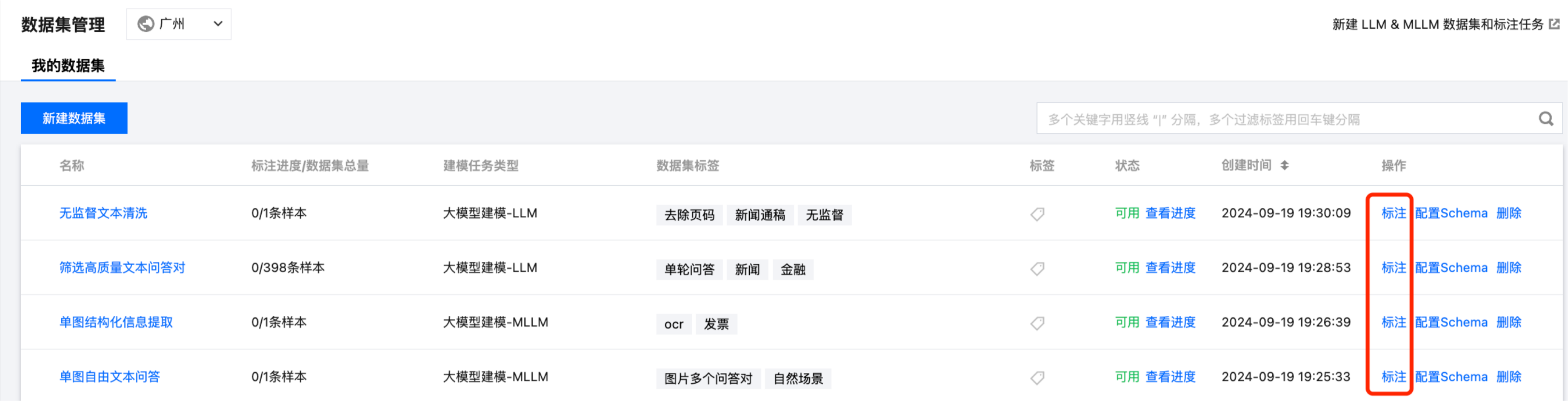
大模型标注操作台
TI-ONE 平台灵活的 schema 能支持的标注场景包括但不限于:高质量文本问答对筛选、文本数据清洗、图片问答对审核/修改、图片问答竞品评测、图片多轮问答、多模态阅读理解图片文本描述等。
以下给出 3 个不同 schema 配置对应的标注操作台示例:
1. 针对多图的多轮问答
desc: 多图多轮问答
record_fields:
  - name: img  # 标注工作台展示的标注组件名称
    key: img  # 导出标注结果的json字段名称
    type: ImageListInput  # 组件类型
    help: "请添加字段描述"  # 组件帮助说明
    value:
      {{- range .Values.img }}  # 使用循环引用图片列表
      - {{ . }}
      {{- end }}
  - name: target  # 标注工作台展示的标注组件名称
    key: target  # 导出标注结果的json字段名称
    type: List  # 组件类型
    help: "请添加字段描述"  # 组件帮助说明
    value:
      {{- range .Values.target }}  # 使用循环展开List列表内容
    -
      - name: 问题  # 标注工作台展示的标注组件名称
        key: question  # 导出标注结果的json字段名称
        type: TextInput  # 组件类型
        help: "请添加字段描述"  # 组件帮助说明
        value: "{{ .question }}"
        size: MultiLine
      - name: 答案  # 标注工作台展示的标注组件名称
        key: answer  # 导出标注结果的json字段名称
        type: TextInput  # 组件类型
        help: "请添加字段描述"  # 组件帮助说明
        value: "{{ .answer }}"
        size: LongArticle
      {{- end }}
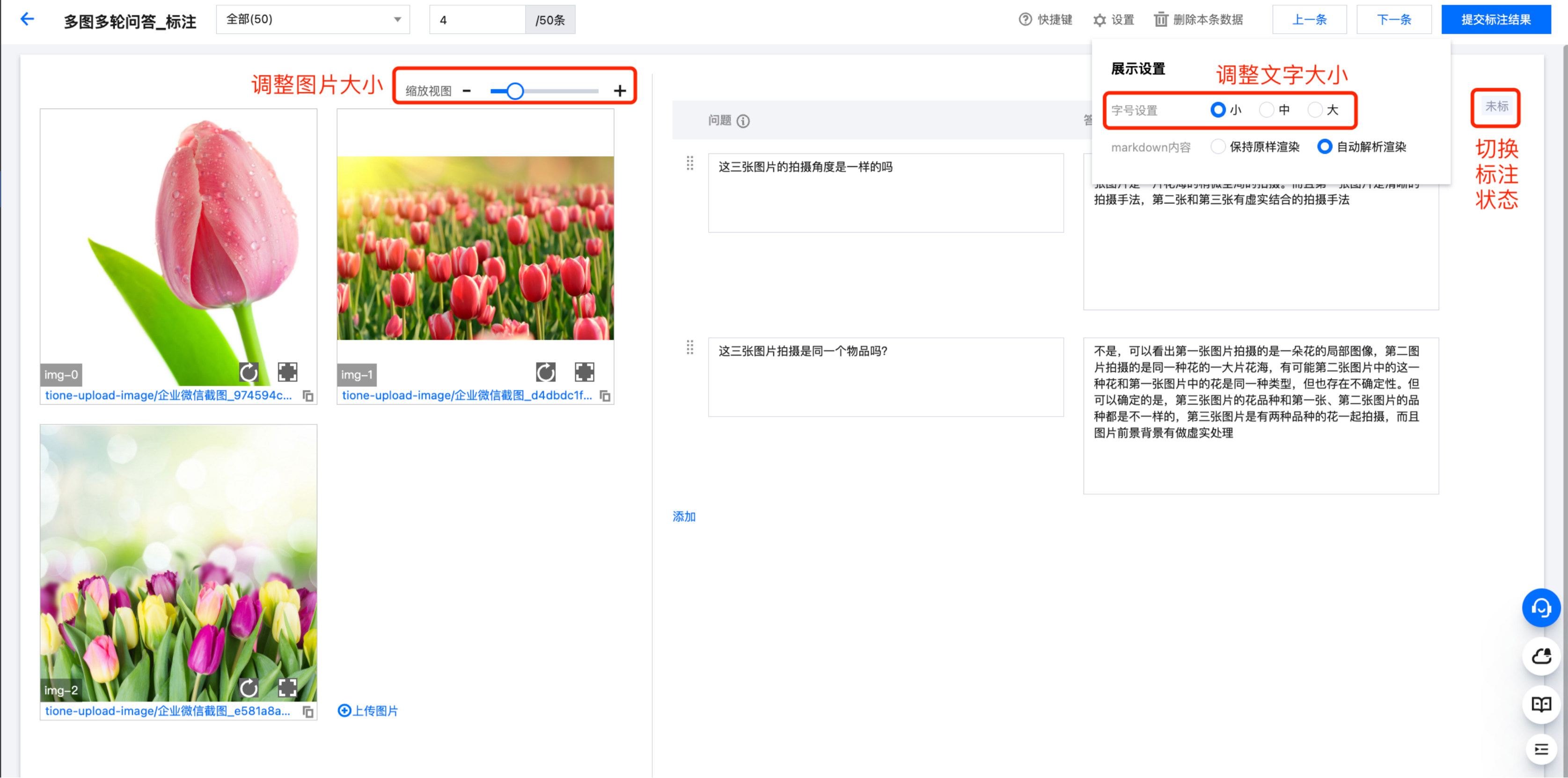
在该场景下,可以配置 schema 实现多张图片的展示、问题和答案问答对配对展示,同时支持对问答对进行删除和添加,也支持调整问答对的先后顺序;同时用户还可以依据“问题、答案”两个字段不同的文本长度设置不同的输入框大小。
标注操作台功能细节:
可单击左侧图片区域上方的“缩放视图”调整图片展示大小。
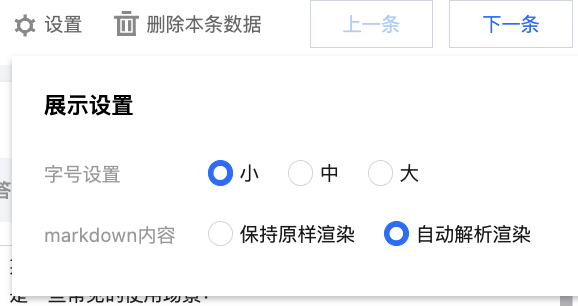
可单击标题栏处右侧的“设置”按钮,设置字号大小以及文本中的 markdown 内容是否要展示。
可单击切换标注状态“未标/已标”;若当前样本有标注内容的修改,则后台会自动将状态流转为“已标”,若当前样本无任何修改,用户也可以手动单击“未标”按钮来切换成“已标”状态。
2. 针对单图的多模型评测
desc: 自动生成的YAML
record_fields:
  - name: 图片  # 标注工作台展示的标注组件名称
    key: Images  # 导出标注结果的json字段名称(支持英文字母下划线,不能以数字开头)
    type: ImageViewer  # 组件类型
    help: "请添加字段描述"  # 组件帮助说明
    value: "{{ .Values.Images }}"
  - name: 问题  # 标注工作台展示的标注组件名称
    key: Query  # 导出标注结果的json字段名称(支持英文字母下划线,不能以数字开头)
    type: TextInput  # 组件类型
    help: "请添加字段描述"  # 组件帮助说明
    value: "{{ .Values.Query }}"
    size: MultiLine
  - name: 参考答案  # 标注工作台展示的标注组件名称
    key: sn_vl_0_6_0_10b_8k_beta_0624  # 导出标注结果的json字段名称(支持英文字母下划线,不能以数字开头)
    type: TextInput  # 组件类型
    help: "请添加字段描述"  # 组件帮助说明
    value: "{{ .Values.gtmodel }}"
    size: LongArticle
  - name: 选择最好的模型                # 标注工作台展示的标注组件名称
    key: correct_model             # 导出json标注结果时候该组件对应的json字段key
    type: StringSelector            # 表明该组件类型是字符串选择组件
    option: SingleSelector           # 表明该组件是多选。字段取值范围:SingleSelector/MultiSelector
    help: 模型评测             # 组件帮助说明
    choices:                        # 指定选项的内容
      - 模型1
      - 模型2
      - 模型3
      - 都舍弃
  - name: 模型1的答案  # 标注工作台展示的标注组件名称
    key: kzx2npurd5  # 导出标注结果的json字段名称(支持英文字母下划线,不能以数字开头)
    type: TextInput  # 组件类型
    help: "请添加字段描述"  # 组件帮助说明
    value: '{{ index .Values.model1 }}'
    size: MultiLine
  - name: 模型2的答案  # 标注工作台展示的标注组件名称
    key: FT_qw15_sft_0626_v100_800  # 导出标注结果的json字段名称(支持英文字母下划线,不能以数字开头)
    type: TextInput  # 组件类型
    help: "请添加字段描述"  # 组件帮助说明
    value: "{{ .Values.model2 }}"
    size: MultiLine
  - name: 模型3的答案  # 标注工作台展示的标注组件名称
    key: V4_FT_qw15_sft_0726_temp_old_500  # 导出标注结果的json字段名称(支持英文字母下划线,不能以数字开头)
    type: TextInput  # 组件类型
    help: "请添加字段描述"  # 组件帮助说明
    value: "{{ .Values.model3 }}"
    size: MultiLine
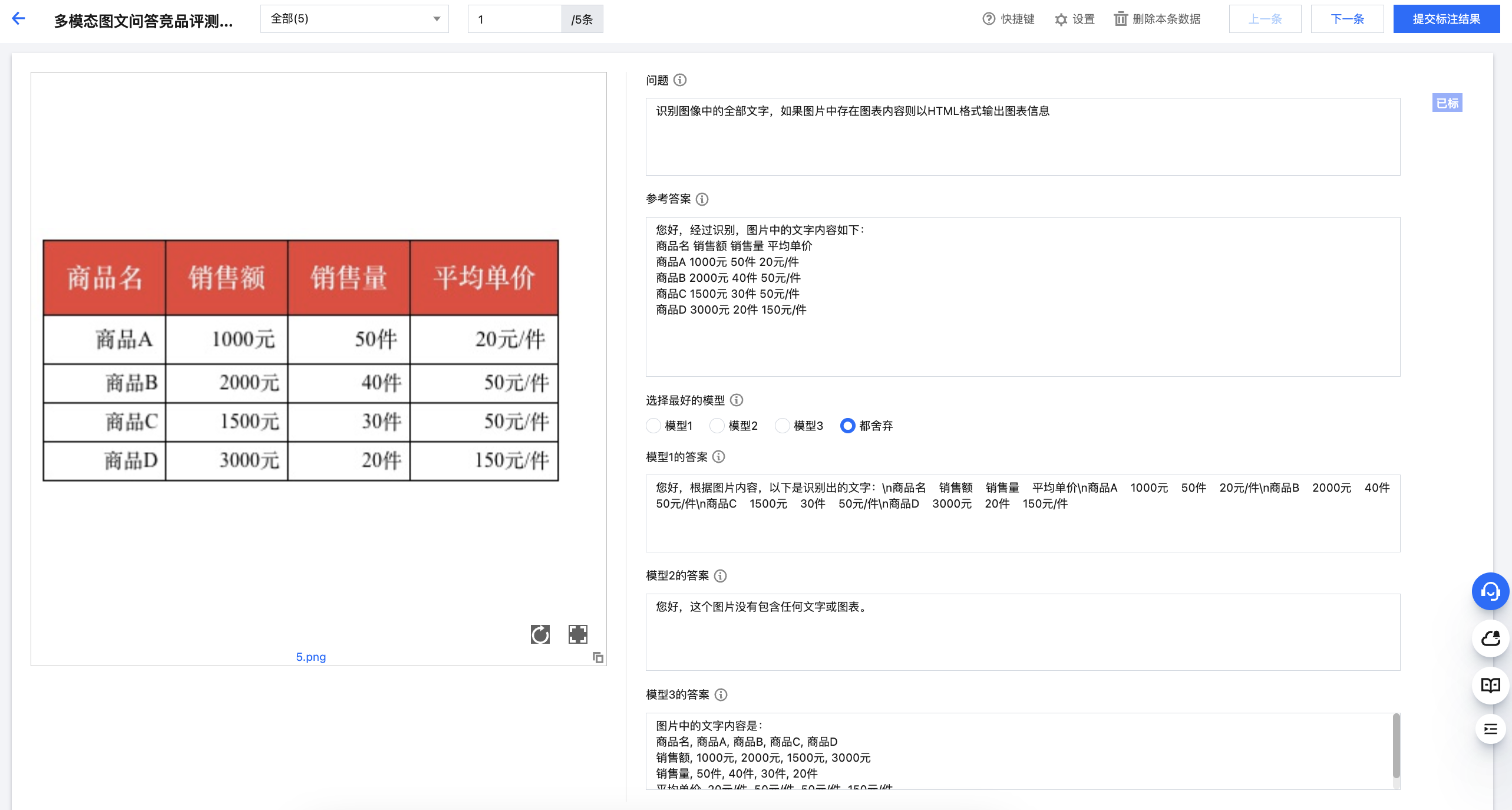
在该场景下,可以配置 schema 实现展示单张测试图片,以及配置展示不同模型的推理结果、设置待评测选择的模型名称。
3. 筛选高质量的文本问答对
desc: 筛选高质量的大模型训练数据record_fields:# 标注工作台展示的第一个组件定义- name: question # 标注工作台展示的标注组件名称key: question # 导出json标注结果时候该组件对应的json字段keyhelp: 请参考以下问题 # 组件帮助说明type: TextViewer # 表明该组件类型是文本展示框,不可编辑size: SingleLine # 表明该字段是单行文本框,字段取值范围:SingleLine/MultiLine/LongArticlevalue: "{{ .Values.question }}" # 表明该字段的内容来源是单个json样本中的question字段# 标注工作台展示的第二个组件定义- name: answer # 标注工作台展示的标注组件名称key: answer # 导出json标注结果时候该组件对应的json字段keytype: TextInput # 表明该组件类型是文本输入框help: 请修正问题答案 # 组件帮助说明size: MultiLine # 表明该字段是多行行文本框,字段取值范围:SingleLine/MultiLine/LongArticlevalue: "{{ .Values.answer }}" # 表明该字段的默认内容来源是单个json样本中的answer字段# 标注工作台展示的第三个组件定义- name: 是否正确 # 标注工作台展示的标注组件名称key: correct # 导出json标注结果时候该组件对应的json字段keytype: StringSelector # 表明该组件类型是字符串选择组件help: 请判断答案是否正确 # 组件帮助说明option: SingleSelector # 表明该组件是单选。字段取值范围:SingleSelector/MultiSelectorlayout: RadioButton # 通过layout字段指定单选组件样式:RadioButton(点选框)或DropdownList(下拉单选框),选项较多时建议使用DropdownList避免文字溢出choices: # 指定选项的内容- 正确- 舍弃- 存疑value: # 可以指定默认选中的选项,数组类型,单选为1个,多选可设置多个。- 正确# 标注工作台展示的第四个组件定义- name: 舍弃存疑原因 # 标注工作台展示的标注组件名称key: correct_reason # 导出json标注结果时候该组件对应的json字段keytype: StringSelector # 表明该组件类型是字符串选择组件option: MultiSelector # 表明该组件是多选。字段取值范围:SingleSelector/MultiSelectorhelp: 答案不正确的原因 # 组件帮助说明layout: Checkbox # 通过layout字段指定单选组件样式:CheckBox(点选框)或DropdownList(下拉多选框),选项较多时建议使用DropdownList避免文字溢出choices: # 指定选项的内容- 无错误- 逻辑错误- 答非所问- 缺失内容value: # 指定默认选中的选项,数组类型,单选为1个,多选可设置多个。- 逻辑错误- 缺失内容
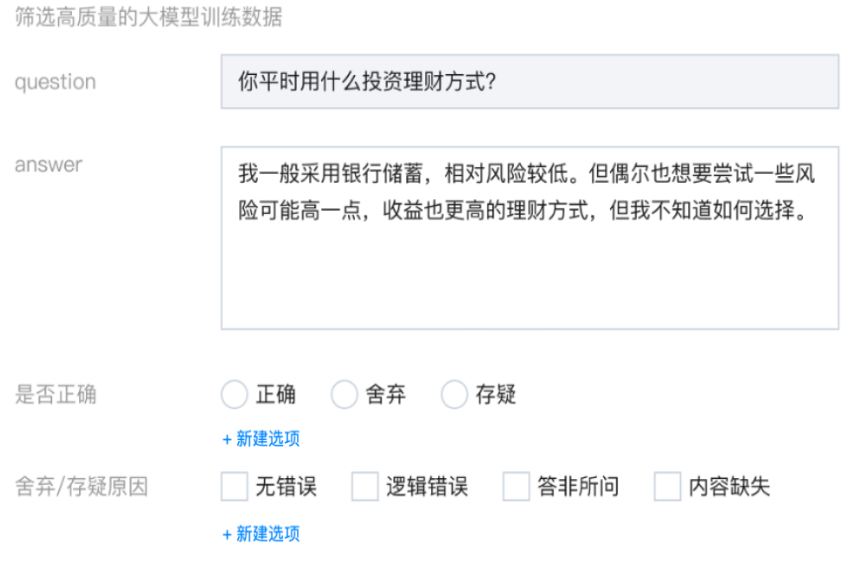
在该场景下,可以配置 schema 实现展示不可编辑修改的“question”字段,防止标注人员在标注过程中的误操作,可设置“answer”字段为可编辑字段,同时支持用户配置自定义的筛选枚举值“正确、舍弃、存疑”,并设置以勾选的方式多选存疑或舍弃的原因。对于多选或单选组件,不仅可以自定义选择框的样式为平铺或下拉,还可以支持在标注过程中新增其他选项,无需重新修改标注任务配置。


