【数据结构】环形、相交、回文、分割、合并、反转链表


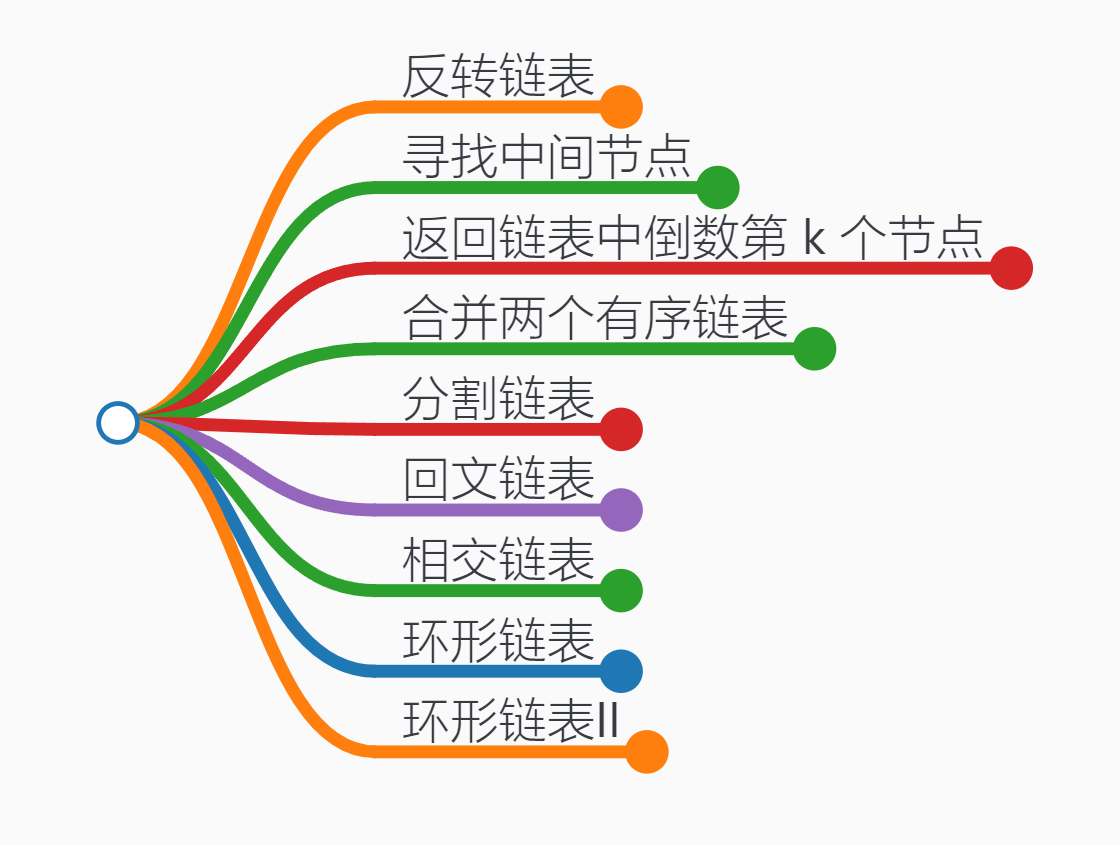
image.png
反转链表
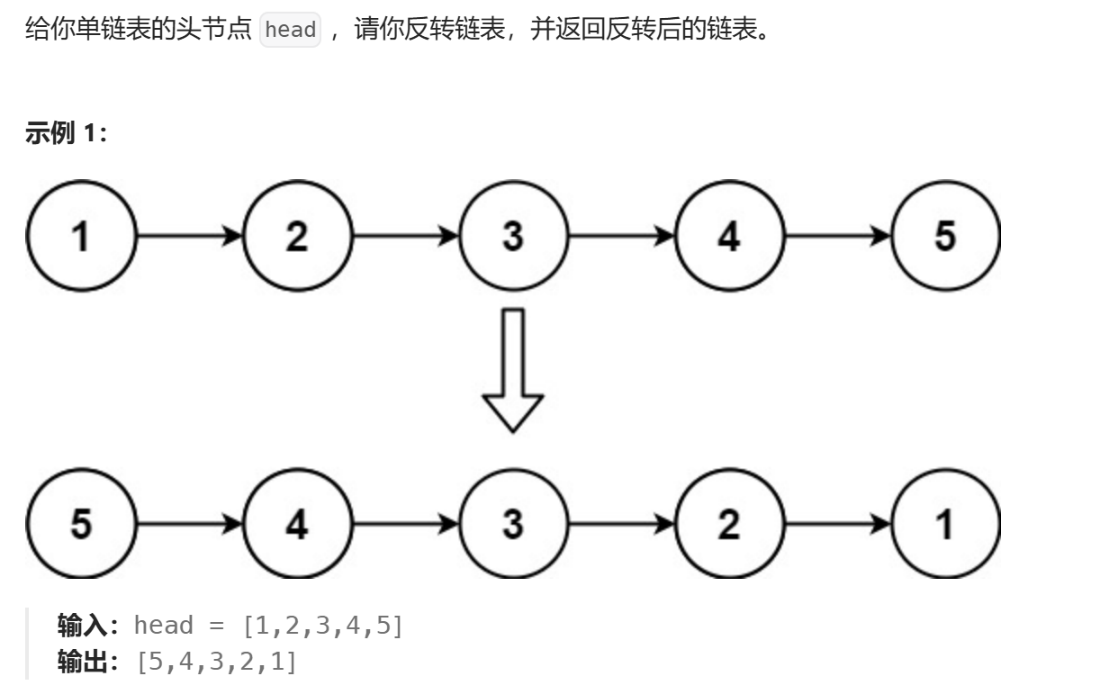
image.png|488
思路解透
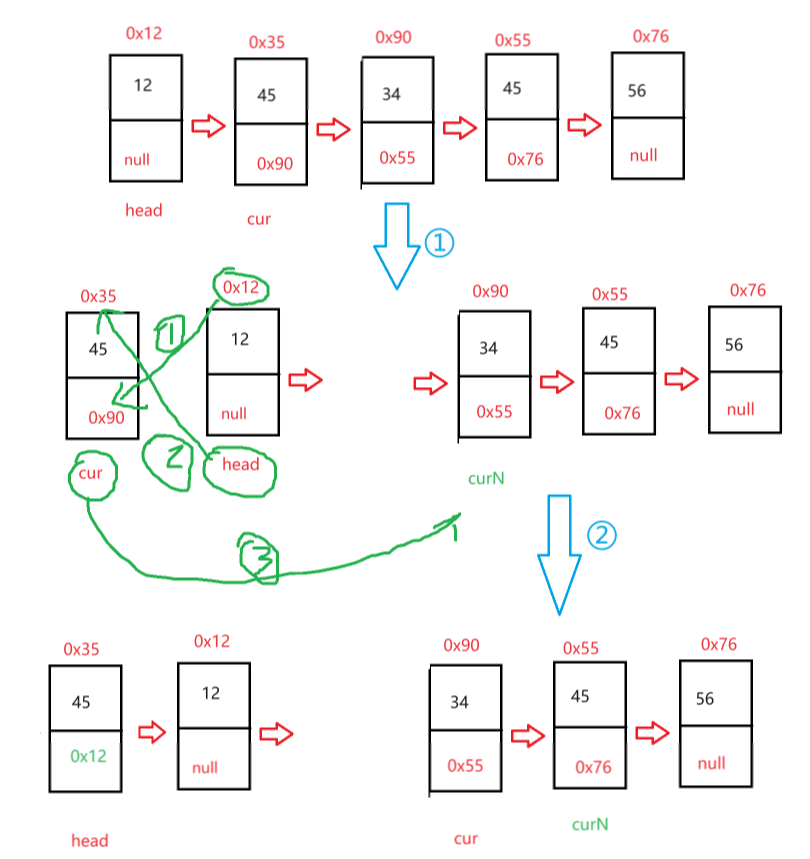
image.png|447
本题就是通过不停地将最先的 head 节点位置的后一位插到最前面,完成链表的反转
本题需要两个节点变量
cur:其任务就是定位到原head节点位置的前一位,然后将自己插入到当前head节点的前面- 因为链表的最后一个节点都是指向一个
null值,所以需要将最先的head节点的next置为空 - 但在将
head.next置为null之前,需要先将cur节点实例化出来,不然cur就无法找到原先的head节点的位置了
- 因为链表的最后一个节点都是指向一个
curN:其任务就是定位到cur的后一个节点,方便让cur进行循环插入- 其在循环中进行实例化,因为每一次插入完成之后,
curN的位置都是需要随着cur的改变而改变 curN实例化为cur的下一个节点。在cur插入完成后,cur就会定位到curN的位置,若此为止不为null,则继续进行前插
- 其在循环中进行实例化,因为每一次插入完成之后,
代码解析
class Solution {
    public ListNode reverseList(ListNode head) {
        //1. 防止空指针异常
		if(head == null){
    		return head;
		}

		//2. 将head.next置为空
		//注意先把 cur 节点给先弄出来
		ListNode cur = head.next;
		head.next = null;

		//3. 进行循环头插
		while (cur != null) {
		    ListNode curN = cur.next;
		    cur.next = head;
		    head = cur;
		    cur = curN;
		}
		return head;
	}
}
寻找中间节点
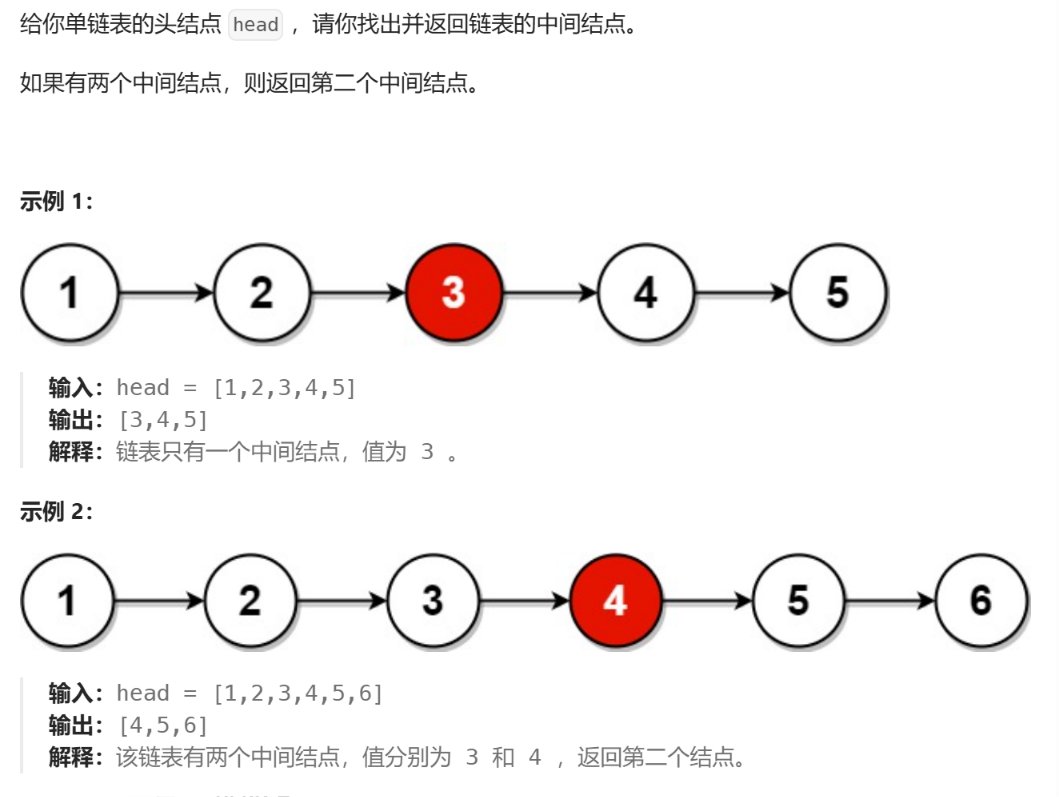
image.png|613
思路解透
解法 1:定义一个 cur 节点,从 head 节点的地方,向后走 size()/2 步,就到了中间位置
解法 2:定义一个 slow 节点,一次走一步,在定义一个 fast 节点,一次走两步,当 fast 走完的时候,slow 就刚好在中间位置(快慢指针)
- 当有偶数个节点时,循环判断条件为:
fast != null - 当有奇数个节点时,循环判断条件为:
fast.next != null - 这里的两个条件判断顺序不能换,否则会报空指针异常错误
快慢指针原理: 路程一样的情况下,速度是两倍,那么当走完的时候,路程也是两倍
代码解析(法 1)
public ListNode middleNode(){
    int count = 0;
    ListNode node = head;
    while(node != null){
        count++;
        node = node.next;
    }
    ListNode cur = head;
    for (int i = 0; i < count/2; i++) {
        cur = cur.next;
    }
    return cur;
}
代码解析(法 2)
public ListNode middleNode(){
    ListNode slow = head;
    ListNode fast = head;
    while(fast != null && fast.next != null){
    	//slow走一步,fast走两步
        slow = slow.next;
        fast = fast.next.next;
    }
    return slow;
}
返回链表中倒数第 k 个节点
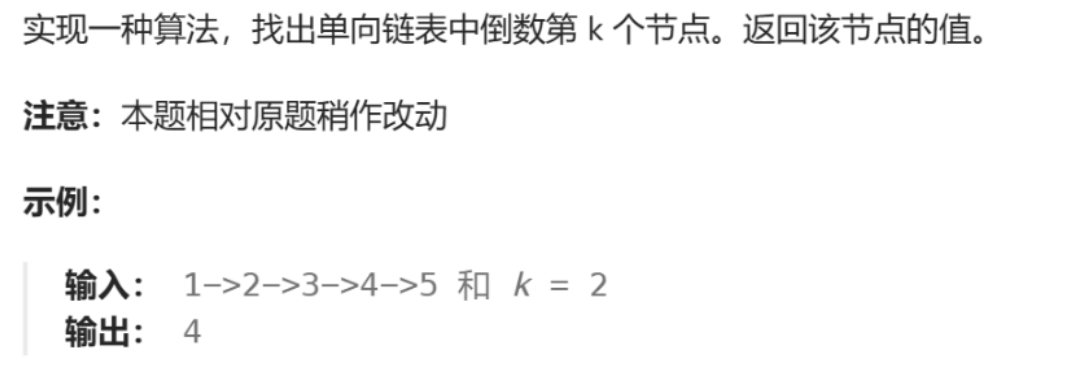
image.png|533
思路解透
- 首先判断 k 是否合法,链表是否为为 null
k <= 0,返回-1- (下面的第二点看完再回来)因为如果
k大于链表长度的话,当fast走k - 1步的时候就会走出链表,所以在fast走k-1步的过程中如果出现fast == null,则返回-1
- 定义两个节点,
fast先走k - 1步,随后fast和slow一起走,当fast走到最后了,slow所在的地方就是倒数第k个节点
代码解析
public int kthToLast(int k) {
	//判断k是否合法,链表是否为null
    if(k <= 0 || head == null) {
        return -1;
    }
    ListNode fast = head;
    ListNode slow = head;
    int count = 0;
    while (count != k - 1) {
        //fast先向后走k-1步
        fast = fast.next;
        if(fast == null){
        //判断k是否合法
            return -1;
        }
        count++;
    }
    while (fast.next != null){
    	//两个节点一起向后走,直到fast走到最后一个
        fast = fast.next;
        slow = slow.next;
    }
    return slow.val;
}
合并两个有序链表
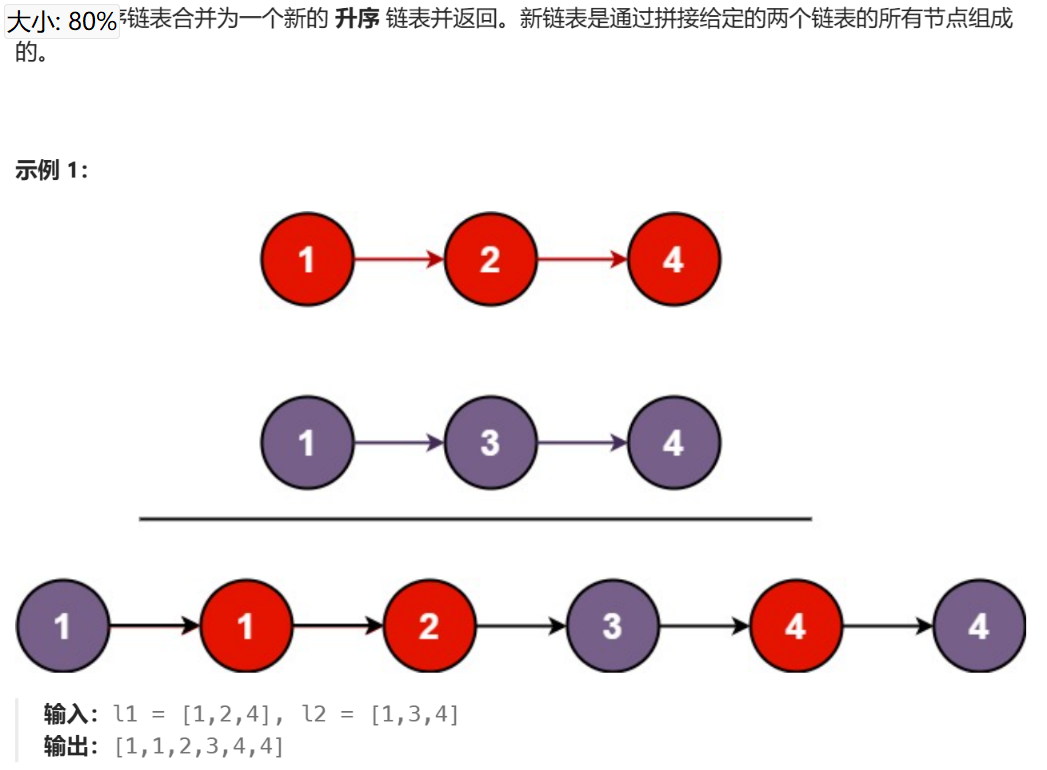
image.png|546
思路解透
创建一个新的链表,为虚拟节点(傀儡节点),然后对需要合并的两个链表中的值进行比较,谁小谁就接在虚拟节点后面
- 创建一个新的节点
newH,在这个链表上进行合并,再创建一个tmp节点,用来指向newH链表中的最后一个节点 - 当
headA != null && headB != null的时候,进行比较- 若
headA. val < headB. val,则将headA这个节点接在newH后面,即接在tmp节点后面,最后tmp和headB节点均向后移一位 - 若
headA. val > headB. val,则将headB这个节点接在newH后面,即接在tmp节点后面,最后tmp和headB节点均向后移一位
- 若
- 当
headA == null || headB == null的时候,剩下的一个链表里面的节点直接接到newH后面就行了 - 最后返回
newH. next,因为newH是一个虚拟节点,不存在于要合并的链表中,它只是一个引子
代码解析
public ListNode mergeTwoLists(ListNode headA, ListNode headB) {
    ListNode newH = new ListNode(0);
    ListNode tmp = newH;
    while(headA != null && headB != null){
        if(headA.val < headB.val){
        	//将headA接到newH上面,随后后移
            tmp.next = headA;
            headA = headA.next;
            tmp = tmp.next;
        }else if{
        	//将headB接到newH上面,随后后移
            tmp.next = headB;
            headB = headB.next;
            tmp = tmp.next;
        }
    }
    if(headA == null){
    	//headA空了,将headB直接接到newH后面
        tmp.next = headB;
    }
    //headB空了,将headA直接接到newH后面
    if (headB == null) {
        tmp.next = headA;
    }
    return newH.next;
}
分割链表

image.png
思路解透
构建两个区间,一个里面接上小于 x 的节点,一个里面接上大于 x 的节点,最后将这两个区间连接起来
- 若链表为空
- 遍历链表
- 创建一个
cur节点,用来遍历链表
- 创建一个
- 把对应的节点放到指定区间
- 在小区间里
- 创建
bs(before start) 节点指向区间里面最前面的一个节点,创建be(before end) 节点指向区间里面最后一个节点 - 在小区间里面插入第一个节点的时候,
bs和be都指向这个节点,随后cur向后移 - 之后插入的节点均为尾插,
bs位置不变,be始终指向新插入的节点
- 创建
- 在大区间里
- 创建
as(after start) 节点指向区间里面最前面的一个节点,创建ae(after end) 节点指向区间里面最后一个节点 - 在小区间里面插入第一个节点的时候,
as和ae都指向这个节点,随后cur向后移 - 之后插入的节点均为尾插,
as位置不变,ae始终指向新插入的节点
- 创建
- 在小区间里
- 把两个区间连接起来
- 将
be节点和as节点连接起来,并且将ae节点的next置为null,作为新链表的尾巴,并且返回bs节点 - 若所有节点全在小区间里,就将
be节点的next置为null,作为新链表的尾巴,并且返回bs节点 - 若全在大区间里,则返回
ae节点
- 将
代码解析
public ListNode partition(ListNode pHead, int x) {
    //判断空链表
    if(pHead == null){
        return null;
    }
    //小区间的两个节点
    ListNode bs = null;
    ListNode be = null;
    //大区间的两个节点
    ListNode as = null;
    ListNode ae = null;

	//遍历链表的节点
    ListNode cur = pHead;
    while(cur != null){
    	//插入小区间
        if(cur.val < x){
        	//第一次插入
            if(bs == null){
                bs = be = cur;
            }else{
                be.next = cur;
                be = be.next;
            }
        //插入大区间
        }else{
        	//第一次插入
            if(as == null){
                as = ae = cur;
            }else{
                ae.next = cur;
                ae = ae.next;
            }
        }
    cur = cur.next;
    }
    //当节点全部都在小区间时,直接返回大区间
    if(bs == null){
        return as;
    }

    //进行大小区间的拼接
    be.next = as;
    //大区间不为空,把最后一个节点置空,作为尾巴
    if(as != null){
        ae.next = null;
    }
    return bs;
}
回文链表
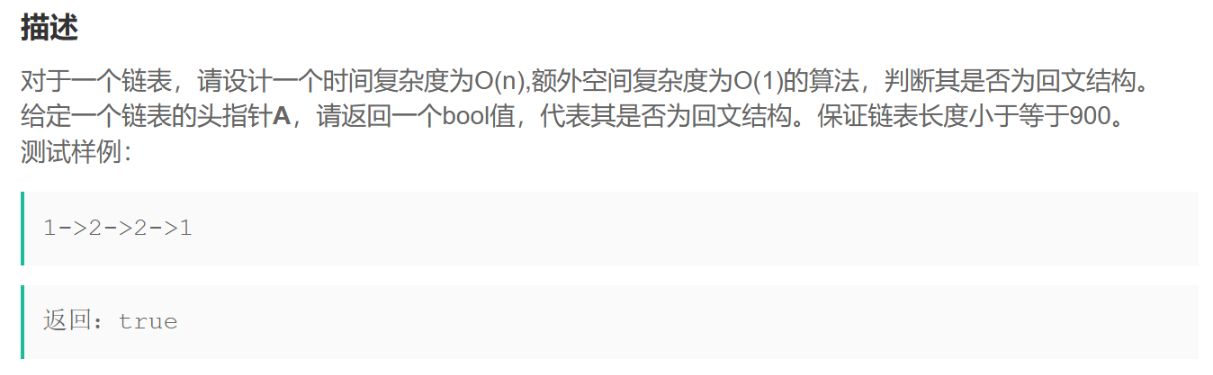
image.png|579
思路解透
- 首先用快慢指针找到中间的节点(上面第二题有讲解)
- 再对后半部分进行反转(上面第一题有讲解)
- 最后让首尾两个节点往中间走,直到相遇,返回
true;若是偶数个节点,则只需要前面节点的next与后面节点的值相等即可返回true
代码解析
public boolean chkPalindrome(ListNode head) {
    // write code here
    if (head == null) {
        return true;
    }
    //1. 找到链表的中间节点
    ListNode fast = head;
    ListNode slow = head;

    while (fast != null && fast.next != null) {
        slow = slow.next;
        fast = fast.next.next;
    }
    //2. 反转后半节点
    ListNode cur = slow.next;
    slow.next = null;
    while (cur != null) {
        ListNode curN = cur.next;
        cur.next = slow;
        slow = cur;
        cur = curN;
    }
    //3. slow从后往前,head从前往后,直到相遇
    while (head != slow) {
        if (head.val != slow.val) {
            return false;
        }
        //当节点个数为偶数
        if (head.next == slow)
            return true;
        head = head.next;
        slow = slow.next;
    }
    return true;
}
相交链表
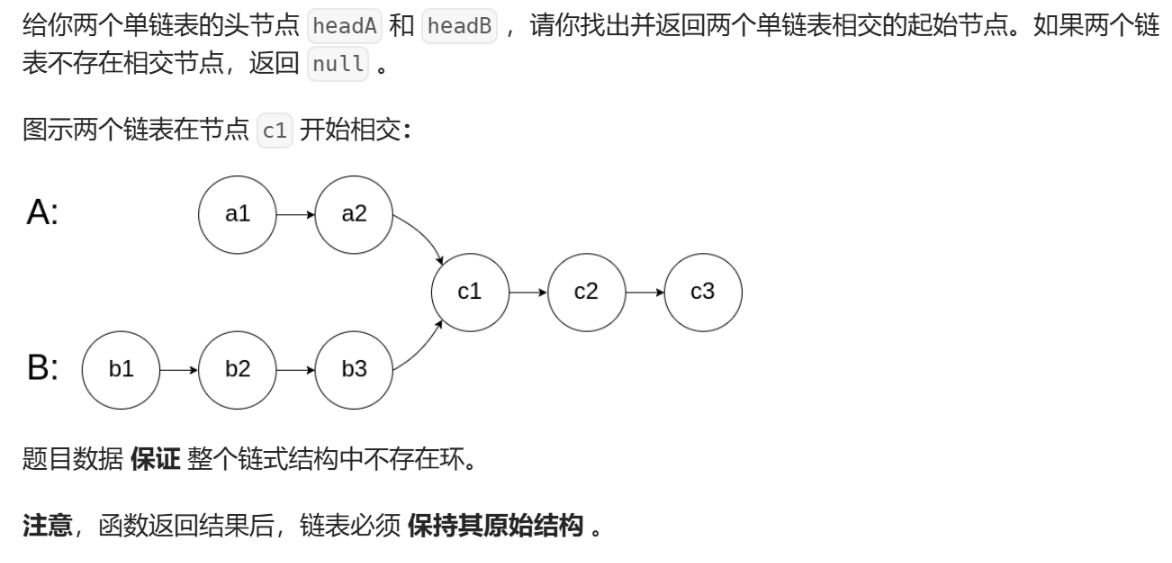
image.png|572
思路解透
- 首先计算两个链表的长度,并计算他们的差值
- 随后让长的链表的头节点先走“差值“步,让他们站在同一起跑线
- 最后让他们携手同行,直到相遇,返回任意一个链表;若最终零个引用都为空,证明不相交,返回
null
代码解析
public ListNode getIntersectionNode(ListNode headA, ListNode headB) {
    //1. 计算两个链表的长度,并计算差值
    int lenA = 0;
    int lenB = 0;
    ListNode curA = headA;
    ListNode curB = headB;
    while (curA != null) {
        curA = curA.next;
        lenA++;
    }
    while (curB != null) {
        curB = curB.next;
        lenB++;
    }
    int len = lenA - lenB;

    curA = headA;
    curB = headB;

    //2. 根据差值,长的链表头节点先走len步,
    // 让两个链表在同一起跑线
    if (len > 0) {
        int count = 0;
        while (count != len) {
            curA = curA.next;
            count++;
        }
    } else {
        int count = 0;
        while (count != -len) {
            curB = curB.next;
            count++;
        }
    }
    //3. 两个链表的节点携手同行,直到相等
    while (curA != curB) {
        curA = curA.next;
        curB = curB.next;
    }
    if (curA == null) {
        //若两个引用都为空,证明不相交
        return null;
    }
    return curA;
}
环形链表
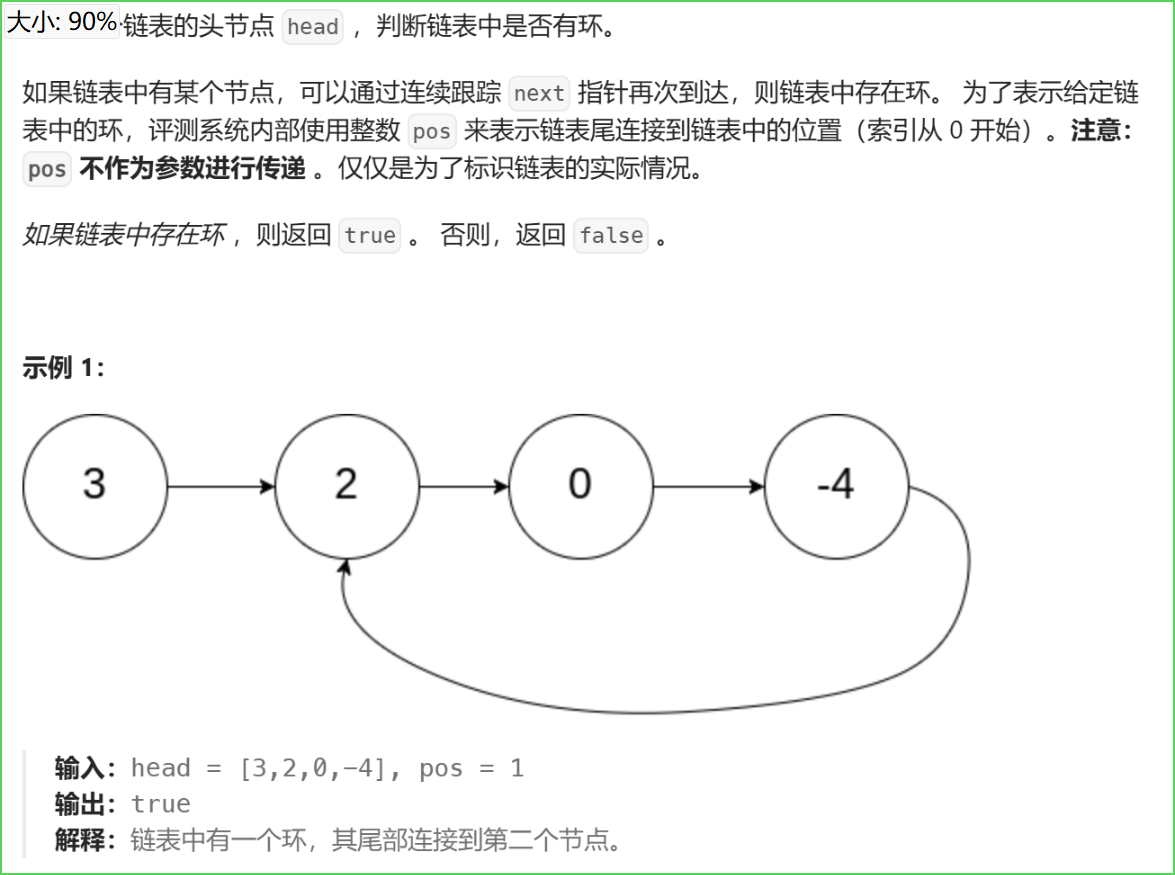
image.png|527
思路解透
- 定义两个节点,一个一次走一步,一个一次走两步
- 当走得快的节点不为空,并且走得快的节点的 next 不为空,循环就一直继续
- 当两个节点相等,则返回
true
假设链表带环,两个指针最后都会进入环,快指针先进环,慢指针后进环。当慢指针刚进环时,可能就和快指针相遇了,最差情况下两个指针之间的距离刚好就是环的长度。此时,两个指针每移动一次,之间的距离就缩小一步,不会出现每次刚好是套圈的情况 因此:在慢指针走到一圈之前,快指针肯定是可以追上慢指针的,即相遇。
代码解析
public boolean hasCycle(ListNode head) {
    ListNode fast = head;
    ListNode slow = head;
    while(fast != null && fast.next != null){
        fast = fast.next.next;
        slow = slow.next;
        if(fast == slow)
            return true;
    }
    return false;
}
环形链表Ⅱ
image.png|528
思路解透
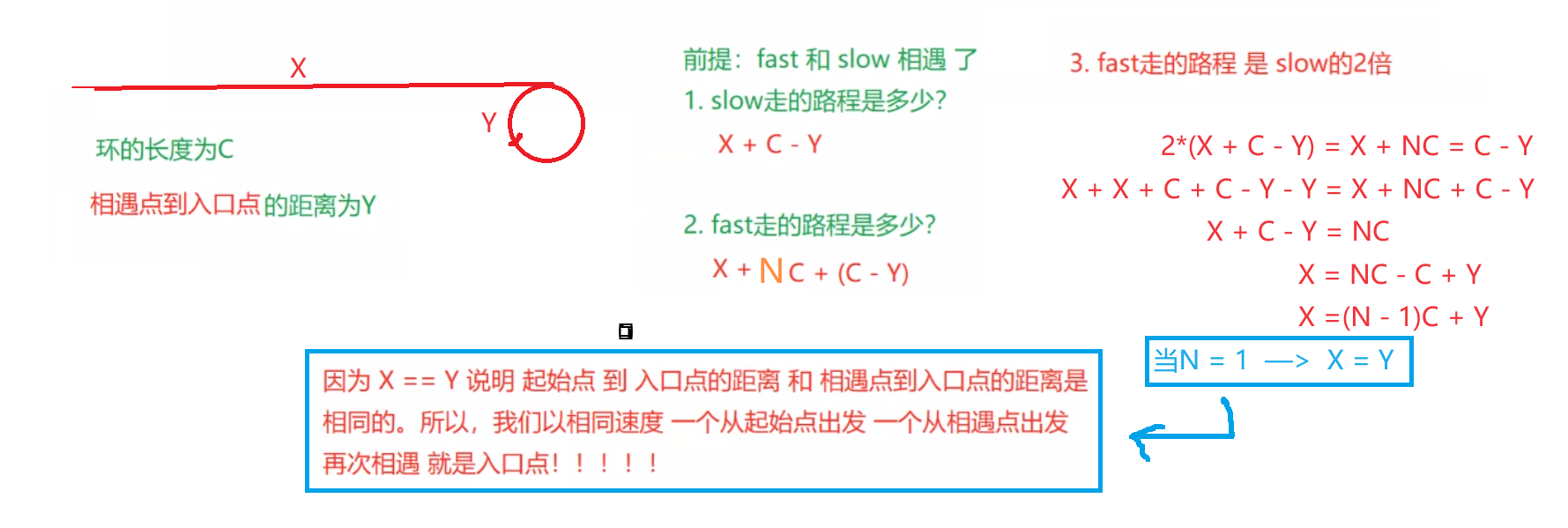
image.png|626
代码解析
public ListNode detectCycle(ListNode head) {
    //1. 判断是否有环
    ListNode fast = head;
    ListNode slow = head;
    while (fast != null && fast.next != null) {
        fast = fast.next.next;
        slow = slow.next;
        //有环,跳出循环
        if (fast == slow) {
            break;
        }
    }
    //若是因为没有环而跳出循环的话,返回null
    if (fast == null || fast.next == null) {
        return null;
    }
    //此时slow在相遇点,将fast拿到起始点
    //让他们相向而行,相遇点即为入口点
    fast = head;
    while(fast != slow) {
        fast = fast.next;
        slow = slow.next;
    }
    return fast;
}
本文参与 腾讯云自媒体同步曝光计划,分享自作者个人站点/博客。
原始发表:2024-09-02,如有侵权请联系 cloudcommunity@tencent.com 删除
评论
登录后参与评论
推荐阅读
目录
腾讯云开发者

Copyright © 2013 - 2026 Tencent Cloud. All Rights Reserved. 腾讯云 版权所有
深圳市腾讯计算机系统有限公司 ICP备案/许可证号:粤B2-20090059  粤公网安备44030502008569号
腾讯云计算(北京)有限责任公司 京ICP证150476号 | 京ICP备11018762号