You can create, view, and terminate read-only instances in the TencentDB for SQL Server console.
Note:
Single-node (cloud disk) instances do not support adding read-only instances.
Read-only instances cannot be purchased and used separately; they must be bound to a master instance (Dual Node - original High Availability Edition/Cluster Edition).
If there is only one read-only instance in the RO group, there will be a single point of risk, and this RO group will not be included in the overall availability calculation of the TencentDB for SQL Server service. A single read-only instance does not provide SLA guarantee. We recommend you purchase at least two read-only instances in the RO group to ensure its availability.
展开全部
feature limitations
A source instance can create up to 5 read-only instances.
Currently, read-only instances are not supported for Standard Edition.
Currently, read-only instances cannot be added to instances in the Financial District. If you need to add them, refer to Publish and Subscribe .
Read-Only instances do not support backup and rollback.
Data cannot be migrated to read-only instances.
Read-Only instances do not support database creation/deletion. If needed, please operate on a primary instance.
Read-Only instances do not support account creation/deletion/authorization and account name/password change. If needed, please operate on a primary instance.
Differences in read-only instances of different versions
Read-only instances of different versions have differences. If your business requires read-only instances, we recommend using database instances of version 2017 and above.
Versions below 2017 use the Publish-Subscribe method to create read-only instances, with object-level synchronization, and a synchronization delay of 3 to 5 seconds. To ensure efficient and stable data synchronization, if you need to use the read-only instance feature, you are advised to upgrade your master instance to version 2017 and above.
On 2017 Enterprise Dual Node (original High Availability Edition/Cluster Edition) and above, the Always-On method is used to create read-only instances, with a synchronization delay of 1 to 2 seconds, resulting in more efficient and stable data synchronization.
Read-only instances support regions
Region | Availability Zone | Cloud Disk Edition RO | Local Storage RO |
Guangzhou ap-guangzhou | Guangzhou Zone 3 ap-guangzhou-3 | × | ✓ |
| Guangzhou Zone 6 ap-guangzhou-6 | ✓ | × |
| Guangzhou Zone 7 ap-guangzhou-7 | ✓ | × |
Shanghai ap-shanghai | Shanghai Zone 2 ap-shanghai-2 | ✓ | ✓ |
| Shanghai Zone 3 ap-shanghai-3 | × | ✓ |
| Shanghai Zone 4 ap-shanghai-4 | ✓ | ✓ |
| Shanghai Zone 5 ap-shanghai-4 | ✓ | × |
Nanjing ap-nanjing | Nanjing Zone 1 ap-nanjing-1 | ✓ | ✓ |
| Nanjing Zone 2 ap-nanjing-2 | ✓ | ✓ |
Beijing ap-beijing | Beijing Zone 1 ap-beijing-1 | × | ✓ |
| Beijing Zone 2 ap-beijing-2 | × | ✓ |
| Beijing Zone 3 ap-beijing-3 | ✓ | ✓ |
| Beijing Zone 4 ap-beijing-4 | × | × |
| Beijing Zone 5 ap-beijing-5 | × | ✓ |
| Beijing Zone 6 ap-beijing-6 | ✓ | × |
| Beijing Zone 7 ap-beijing-7 | ✓ | × |
Chengdu ap-chengdu | Chengdu Zone 1 ap-chengdu-1 | ✓ | × |
| Chengdu Zone 2 ap-chengdu-2 | ✓ | × |
Chongqing ap-chongqing | Chongqing Zone 1 ap-chongqing-1 | ✓ | × |
Hong Kong (China) ap-hongkong | Hong Kong Zone 1 ap-hongkong-1 | × | ✓ |
| Hong Kong (China) Zone 2 ap-hongkong-2 | ✓ | ✓ |
| Hong Kong Zone 3 ap-hongkong-3 | ✓ | × |
Region | Availability Zone | Cloud Disk Edition RO | Local Storage RO |
Mumbai ap-mumbai | Mumbai Zone 1 ap-mumbai-1 | ✓ | × |
| Mumbai Zone 2 ap-mumbai-2 | ✓ | × |
Singapore ap-singapore | Singapore Zone 1 ap-singapore-1 | × | × |
| Singapore Zone 2 ap-singapore-2 | × | × |
| Singapore Zone 3 ap-singapore-3 | ✓ | × |
| Singapore Zone 4 ap-singapore-4 | ✓ | × |
Jakarta ap-jakarta | Jakarta Zone 1 ap-jakarta-1 | ✓ | × |
| Jakarta Zone 2 ap-jakarta-2 | ✓ | × |
Bangkok ap-bangkok | Bangkok Zone 1 ap-bangkok-1 | ✓ | × |
| Bangkok Zone 2 ap-bangkok-2 | ✓ | × |
Seoul ap-seoul | Seoul Zone 1 ap-seoul-1 | ✓ | × |
| Seoul Zone 2 ap-seoul-2 | ✓ | × |
Tokyo ap-tokyo | Tokyo Zone 1 ap-tokyo-1 | ✓ | × |
| Tokyo Zone 2 ap-tokyo-2 | ✓ | × |
Region | Availability Zone | Cloud Disk Edition RO | Local Storage RO |
Virginia na-ashburn | Virginia Zone 1 na-ashburn-1 | ✓ | × |
| Virginia Zone 2 na-ashburn-2 | ✓ | × |
Frankfurt eu-frankfurt | Frankfurt Zone 1 eu-frankfurt-1 | ✓ | × |
| Frankfurt Zone 2 eu-frankfurt-2 | ✓ | × |
Silicon Valley na-siliconvalley | Silicon Valley Zone 1 na-siliconvalley-1 | ✓ | × |
| Silicon Valley Zone 2 na-siliconvalley-2 | ✓ | × |
Sao Paulo sa-saopaulo | São Paulo Zone 1 sa-saopaulo-1 | ✓ | × |
Read-only instance detail page
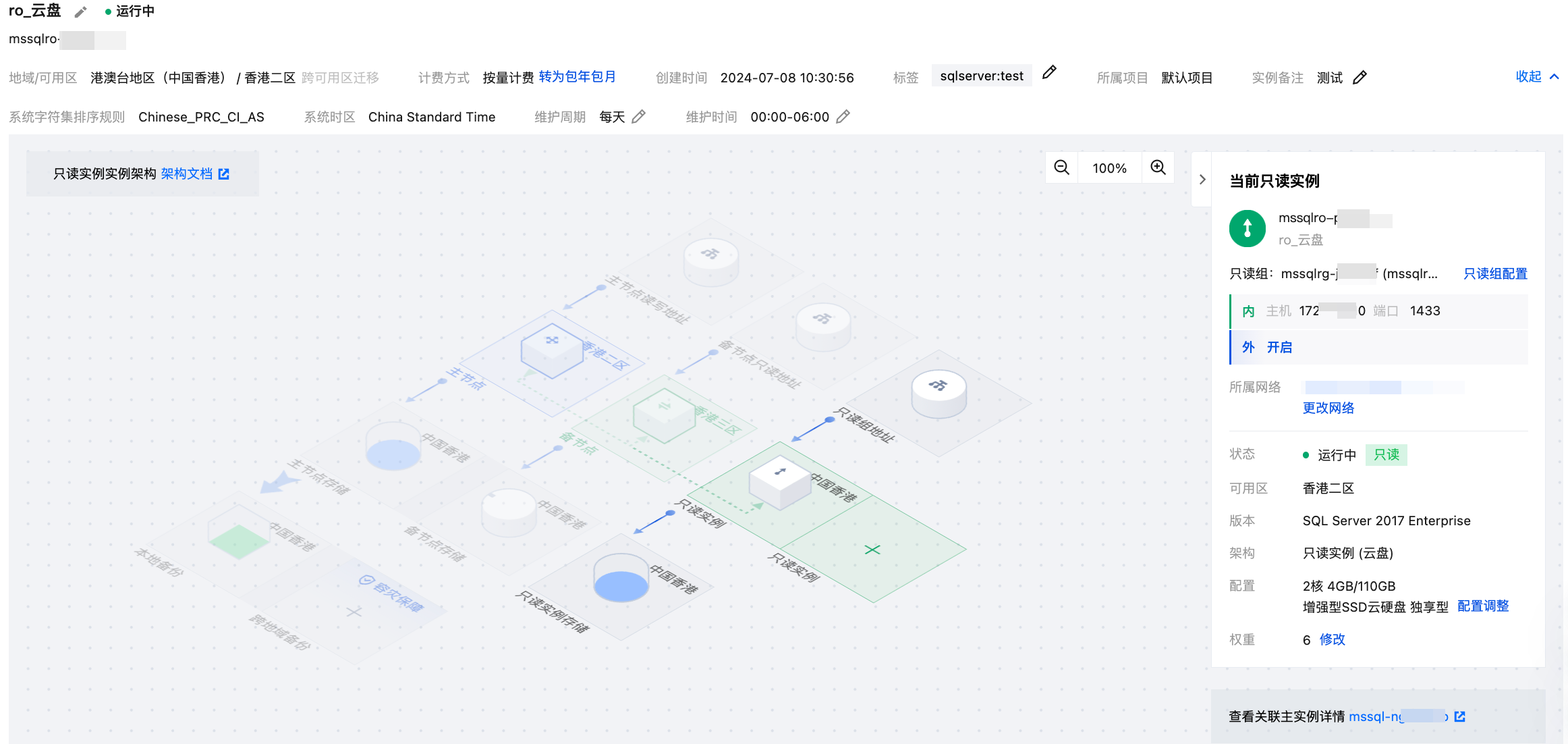
The instance detail page of a read-only instance is shown as below:

Feature area | Illustration | Feature | Features |
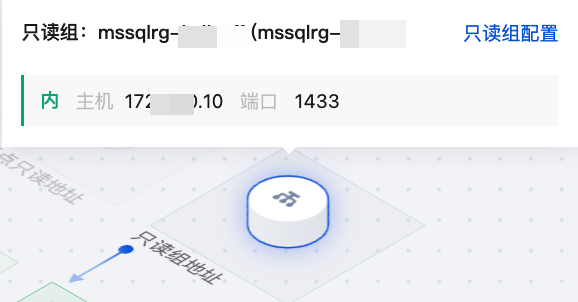
Topology diagram (architecture diagram) | ![]() | Read-only group address | Hover over the read-only group address in the topology diagram to quickly query the read-only group address and configure the read-only group. For details, see Read-Only Group . |
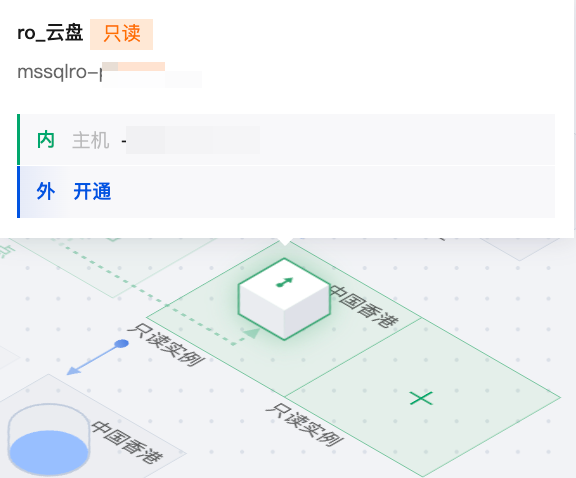
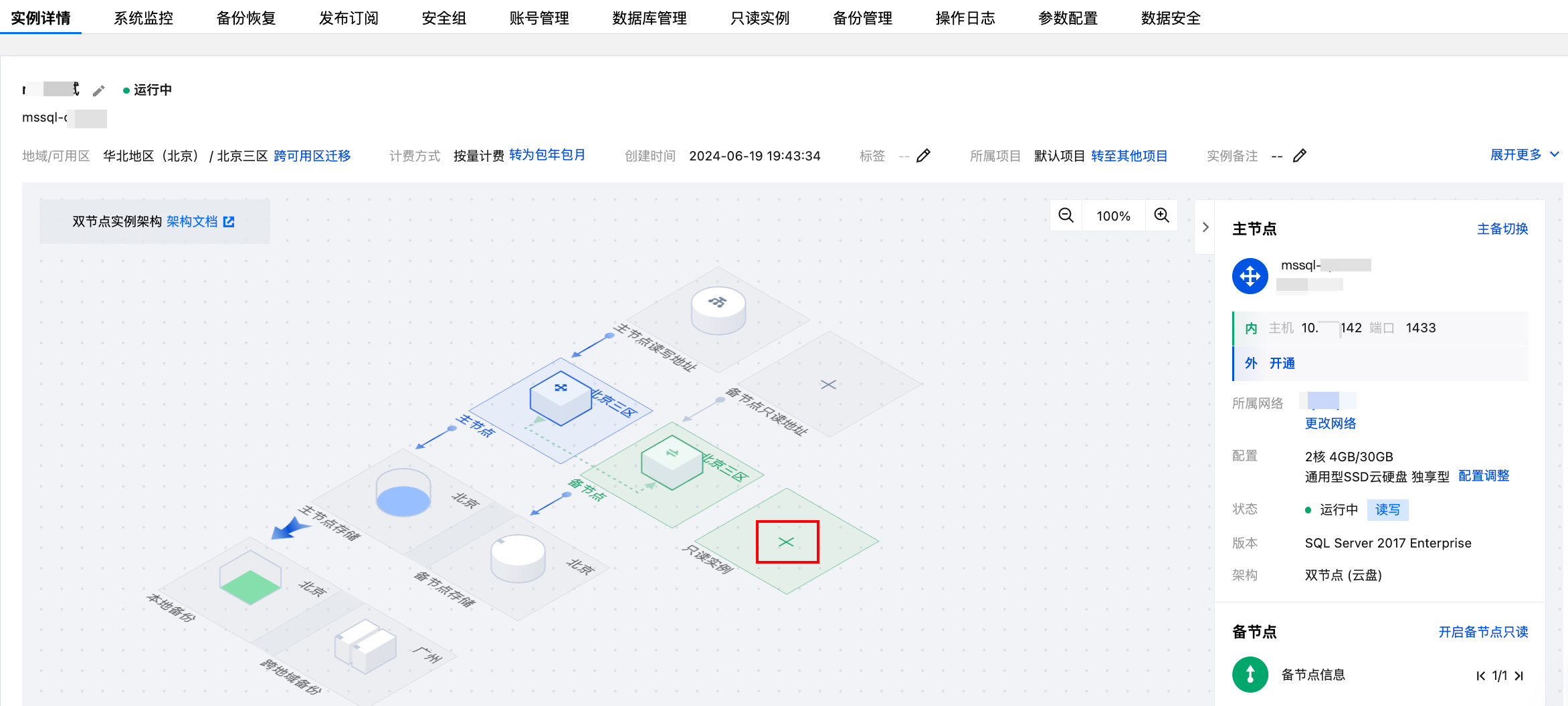
| ![]() | Read-only Instance | Hover over the read-only instance in the topology diagram to quickly query the internal and external addresses of the read-only instance. Click the "+" on the read-only instance in the topology diagram to create a new read-only instance. |
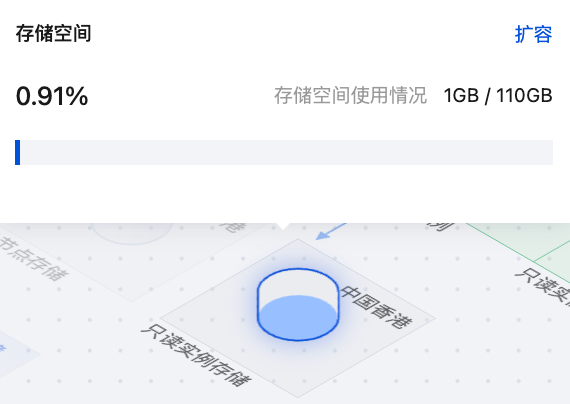
| ![]() | Read-only instance storage | Hovering over the read-only instance storage in the topology diagram allows you to query the storage space usage of the read-only instance. Click 'Scale-out' to jump to the configuration adjustment page for settings. |
| ![]() | Topology diagram view scale | The display scale of the topology diagram can be adjusted. |
| - | Grayed-out area in the topology diagram | The grayed-out area in the topology diagram represents the deployment architecture of the master instance to which the read-only instance belongs, and the grayed-out area does not support click operations. |
Instance information (right side) | ![]() | Hide/Expand Instance Information | You can hide or expand the instance information section. |
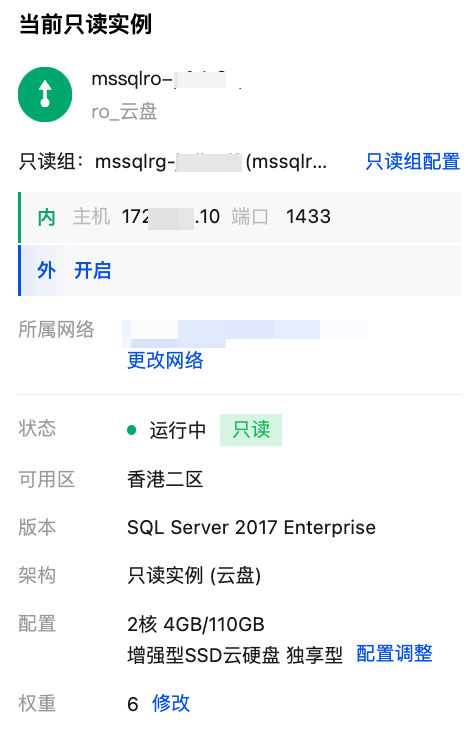
| ![]() | Current Read-Only Instance | On the right side, under the current read-only instance, you can query the intranet address, public network address, network, instance status, availability zone, version, architecture, configuration, and weight information of the read-only instance. Operations available include: Read-Only Group Configuration, Change Network, Enable External Network Access, Configuration Adjustment. |
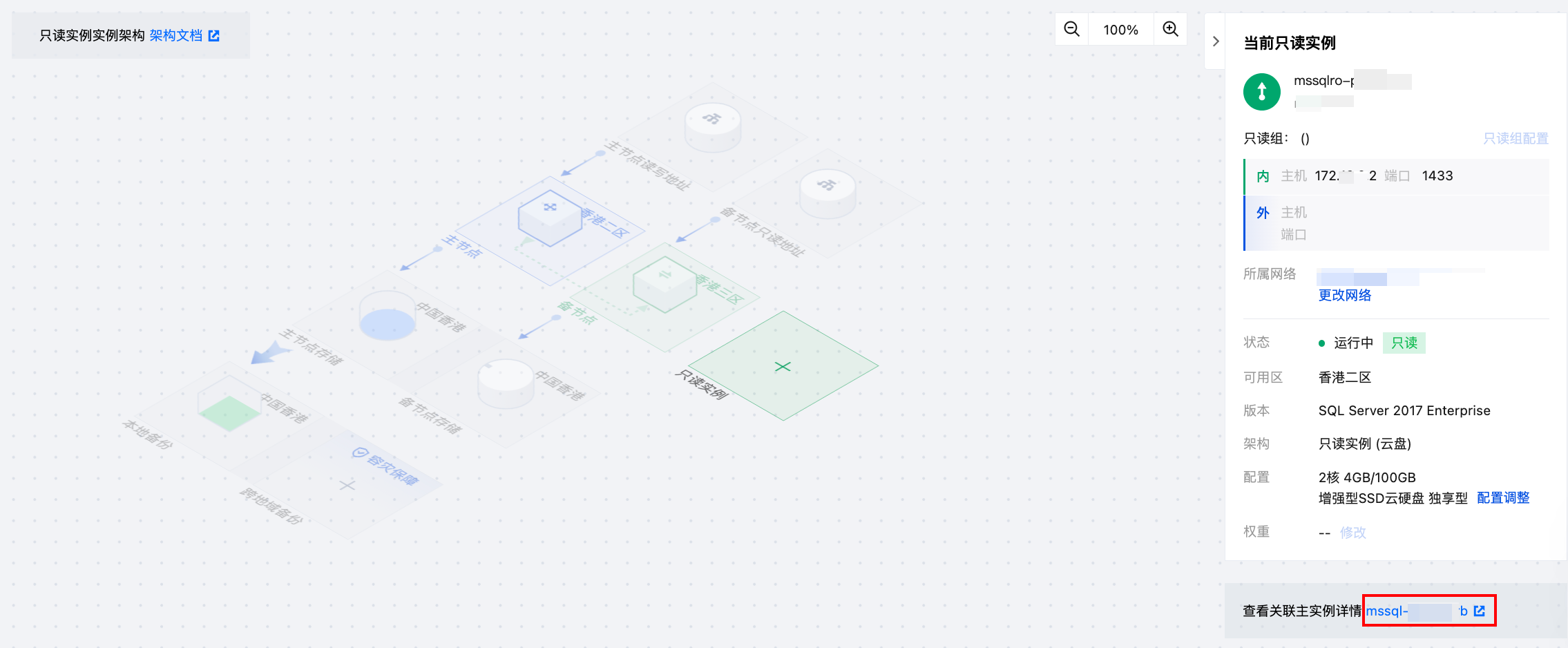
| ![]() | View associated master instance details | On the right side, after viewing the associated master instance details, you can click the master instance ID to navigate to the master instance details page belonging to the read-only instance. |
Create a read-only instance
1. Log in to the SQL Server Console, in the instance list, click Instance ID or Manage in the Actions column to enter the details page.
2. On the instance details page, click the "+" in the read-only instance area of the topology diagram, or select the read-only instance page, click Create to enter the purchase page.

3. On the purchase page, select the desired read-only instance configuration, confirm that everything is correct, and click Buy Now to purchase the read-only instance.
Note:
If you need to unify the expiration time of the read-only instance and the master instance, you can set the unified expiration date in the Renewal Management Console. For detailed steps, please refer to the Unified Expiration Date section.
Viewing Read-Only Instance
1. Log in to the SQL Server Console, in the instance list, instances with the "R" tag are read-only instances. You can click Instance ID or Manage in the Actions column to enter the details page to view the details of the read-only instance.
2. In the Instance Information section on the right side of the instance details page, you can view the master instance it is bound to. Click the Instance ID to navigate to the master instance details page, or you can enter the read-only instance details page through the master instance’s topology diagram.
Note:
On the read-only instance Instance Details page, some features have restricted modifications and synchronize with its master instance configuration. If changes are needed, please make modifications on the master instance’s Instance Details page.

Terminating Read-Only Instance
The termination process for a read-only instance is the same as for a master instance. Refer to Terminating Instance for details.
Related APIs
API | Description |
The interface (CreateReadOnlyDBInstances) is used to add read-only replica instances. | |
The interface (CreateCloudReadOnlyDBInstances) is used to add read-only replica instances (CVM version). | |
The interface (DescribeReadOnlyGroupDetails) is used to query the details of the read-only group. | |
The interface (DescribeReadOnlyGroupList) is used to query the read-only group list. | |
The interface (DescribeReadOnlyGroupByReadOnlyInstance) is used to query the read-only group by the read-only replica instance ID. | |
The interface (ModifyReadOnlyGroupDetails) is used to modify the details of the read-only group. | |
The interface (DescribeReadOnlyGroupAutoWeight) is used to query the automatic weighting distribution results of the read-only group, and the (BalanceReadOnlyGroup) interface is used to allocate route weight based on the automatic weighting distribution results. | |
The interface (BalanceReadOnlyGroup) is used to balance the route weighting of each read-only instance based on predefined weights. | |
The interface (RecycleReadOnlyGroup) reclaims the resources of the read-only group immediately. Resources such as VIP occupied by the read-only group will be released immediately and cannot be recovered. |