Viewing Backup List

Last updated: 2024-09-08 23:01:07
TencentDB for SQL Server automatically backs up data based on the default backup settings. You can modify the automatic or manual backup settings in the console. You can also view the backup files and relevant information in the backup list. This document describes how to view backup files in the console.

Operation

1. Log in to SQL Server Console.
2. Select the region above, find the desired instance, click on the instance ID or the Operation column's Manage to enter the instance management page.


3. In the Instance Management page, select the Backup Management page. Here, you can view information related to each backup task in either the data backup list or the log backup list.
The data backup list displays: backup start time, backup end time, backup name, backup strategy, backup method, backup file format, retention policy, backup size, database, backup region, status, and operations (download, restore, delete).

The log backup list displays: file name, log data start time, log data end time, backup size, backup region, status, and operations (download).

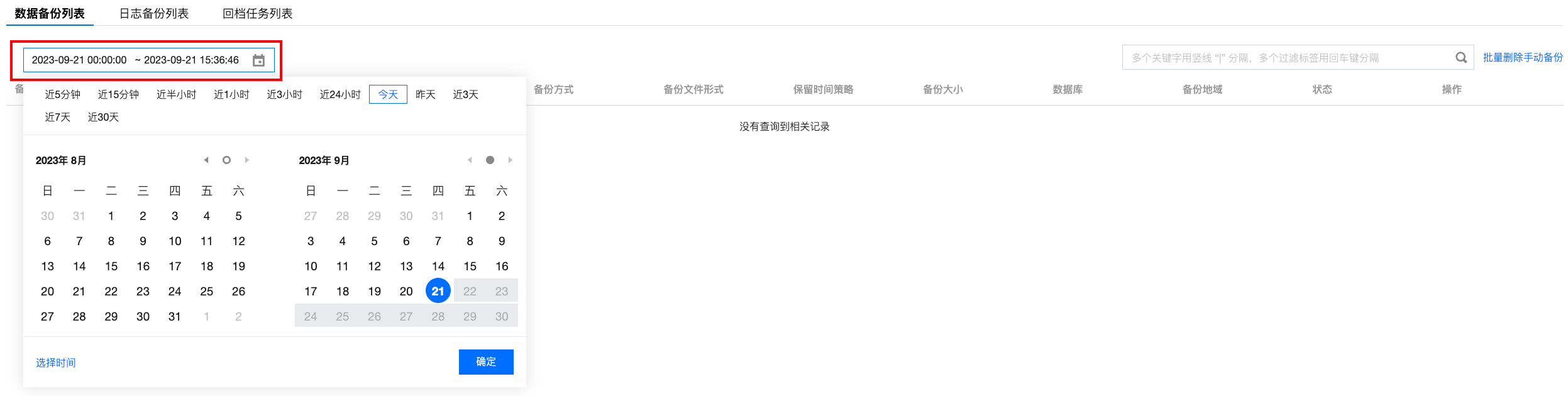
Supports filtering backup files by fixed or custom time range.

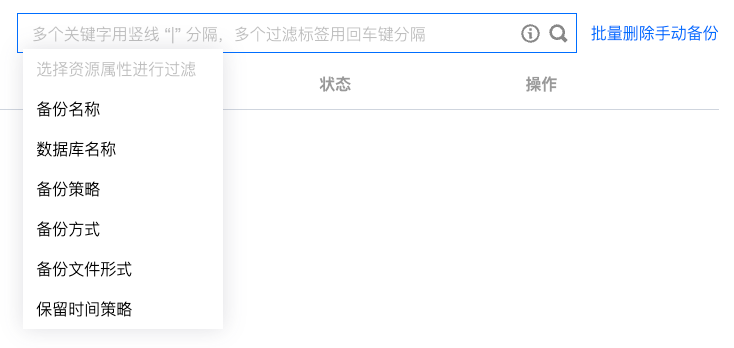
The search box on the right side of the data backup list supports searching for data backup files based on backup name, database name, backup strategy, backup method, backup file format, and retention time policy resource attributes.


FAQs

1. Can I download or restore backup files that exceed the retention period?

Expired backup sets will be deleted automatically and cannot be downloaded or restored.
We recommend setting the backup retention time based on your needs or downloading backup files to your local device from the SQL Server console.
You can also manually back up the instance data in the console.
Note:
Manual backups will also take up the backup space. We recommend that you plan the usage of the backup space appropriately to reduce costs.

2. Can I delete backups manually?

Automatic backups cannot be deleted manually, but you can set the retention time, after which they are automatically deleted. If the cross-region backup feature is enabled, you can also set the retention time for cross-region backup files, which are automatically deleted upon expiration.
Manual backups can be manually deleted from the backup list in the SQL Server console. If not manually deleted, their retention duration is determined by the retention time policy selected at the time of the manual backup.

3. Can I disable data and log backups?

It cannot be turned off. However, you can reduce the backup space usage by decreasing the backup frequency and deleting unused manual backup data through the SQL Server console.

4. How can I reduce the backup capacity costs?

Delete unused manual backup data (manual backups can be deleted from the backup management page in the SQL Server console's Instance Management page).
Reduce the frequency of automatic data backup for non-core businesses. You can adjust the backup cycle and backup file retention period in the console, which should be at least twice a week.
Note:
Rollback feature is based on data backups + log backups within the backup cycle and retention days. Reducing the frequency of automatic backups and retention days will affect the rollback time range of instance data, so please weigh your backup configurations carefully.
Reduce the retention period of data and log backups for non-core businesses (a 7-day retention period can meet the requirements of most scenarios).
Business Scenario
Recommended Backup Retention Period
Core product/service
7-1830 days
Non-core and non-data product/service
7 days
Archive businesses
Seven days. We recommend you manually back up data based on your actual business needs and delete the backups promptly after use
Testing business
Seven days. We recommend you manually back up data based on your actual business needs and delete the backups promptly after use

5. Can I download the backup files of an isolated instance?

Yes.
For annual and monthly subscription instances: seven days after the instance expires, starting from the 8th day, the instance is isolated and moved to the recycle bin. At this time, rollback is prohibited; manual backups and automatic backups still proceed. Backup downloads can be done under the instance operations column > More. The portion of the instance backup that exceeds the free space provided is still billed until the instance is taken offline.
Pay-as-you-go instances: 24 hours after expiration, the instance is isolated and moved into the Recycle Bin. At this time, rollback is prohibited, but manual backup and automatic backup can still be performed. You can perform backup download in the instance operation column > More. The excessive backup space will still be billed until the instance is decommissioned.

Related APIs

API
Description
The ModifyBackupName interface is used to rename backup tasks.
The DescribeBackups interface is used to query the backup list.
The DescribeBackupFiles interface is used to query single database backup details.