操作场景
本文将为您介绍如何使用 API 3.0 Explorer 在线调试文字识别相关接口,并快速将该接口对应的腾讯云开发者工具套件(SDK) 集成到本地项目中。
操作步骤
只需三步,轻松完成腾讯云文字识别接口调用。
第一步:开通文字识别服务
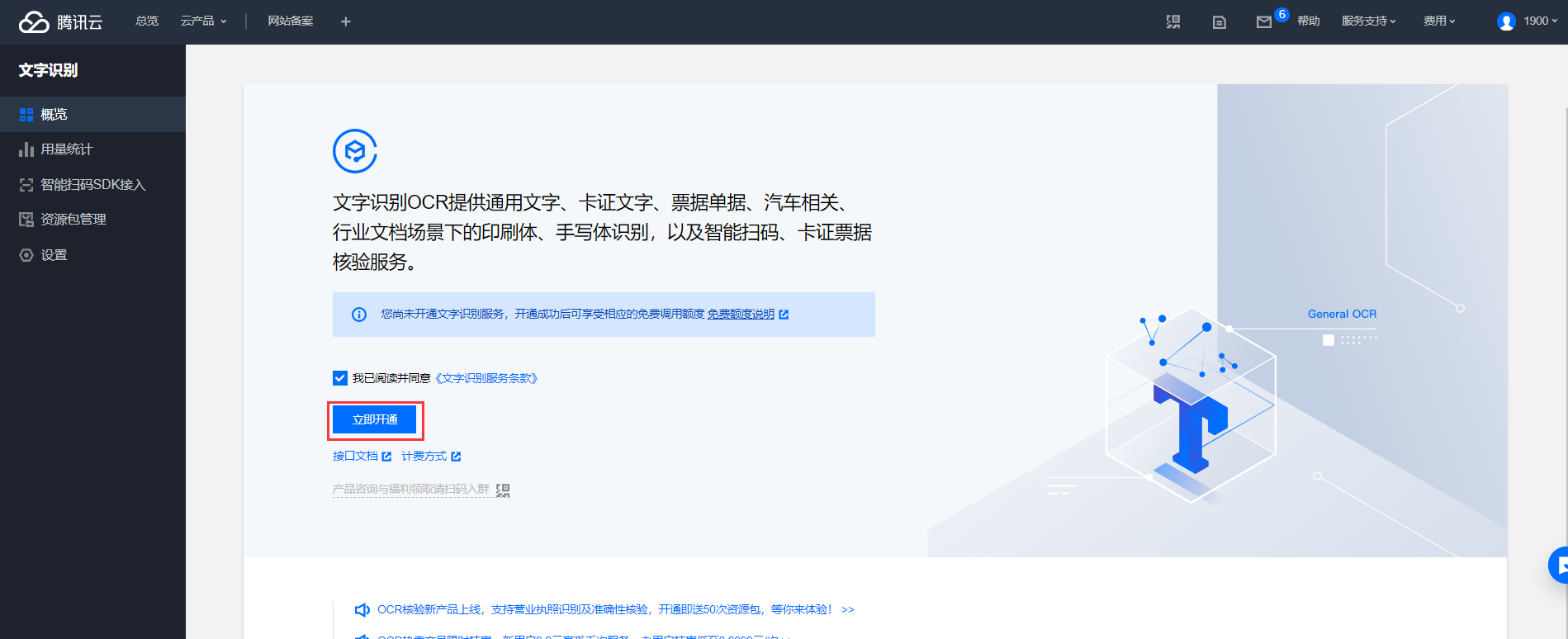
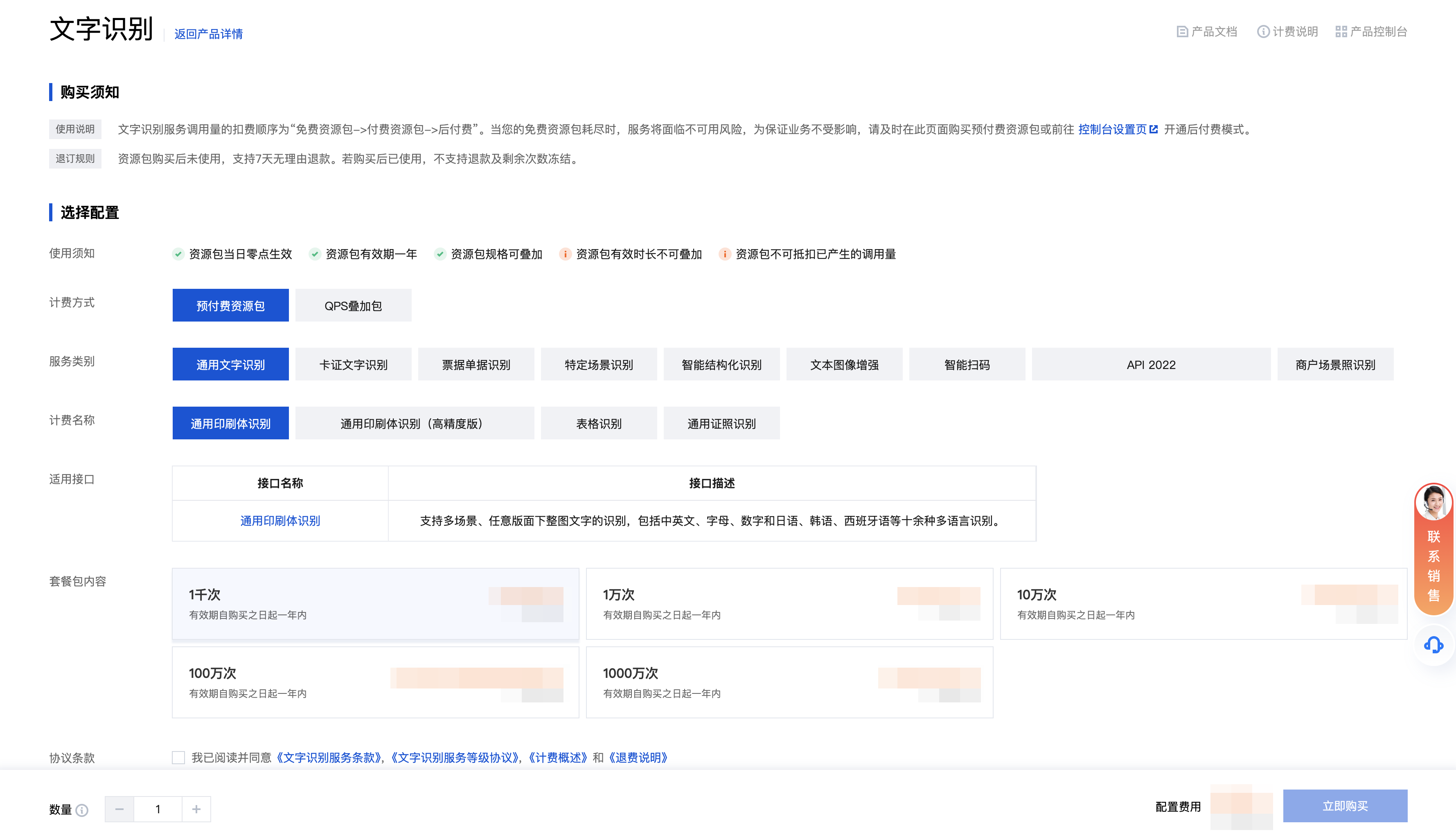
服务开通成功后,您将获得各项服务对应的免费调用额度,可在 资源包管理页 查看。同时您也可以在 文字识别购买页 中购买对应文字识别服务的资源包,若免费额度以及资源包调用次数耗尽,接口计费将自动转为后付费方式按月进行结算,具体计费标准可以查看文字识别的 购买指南。
第二步:调试文字识别接口
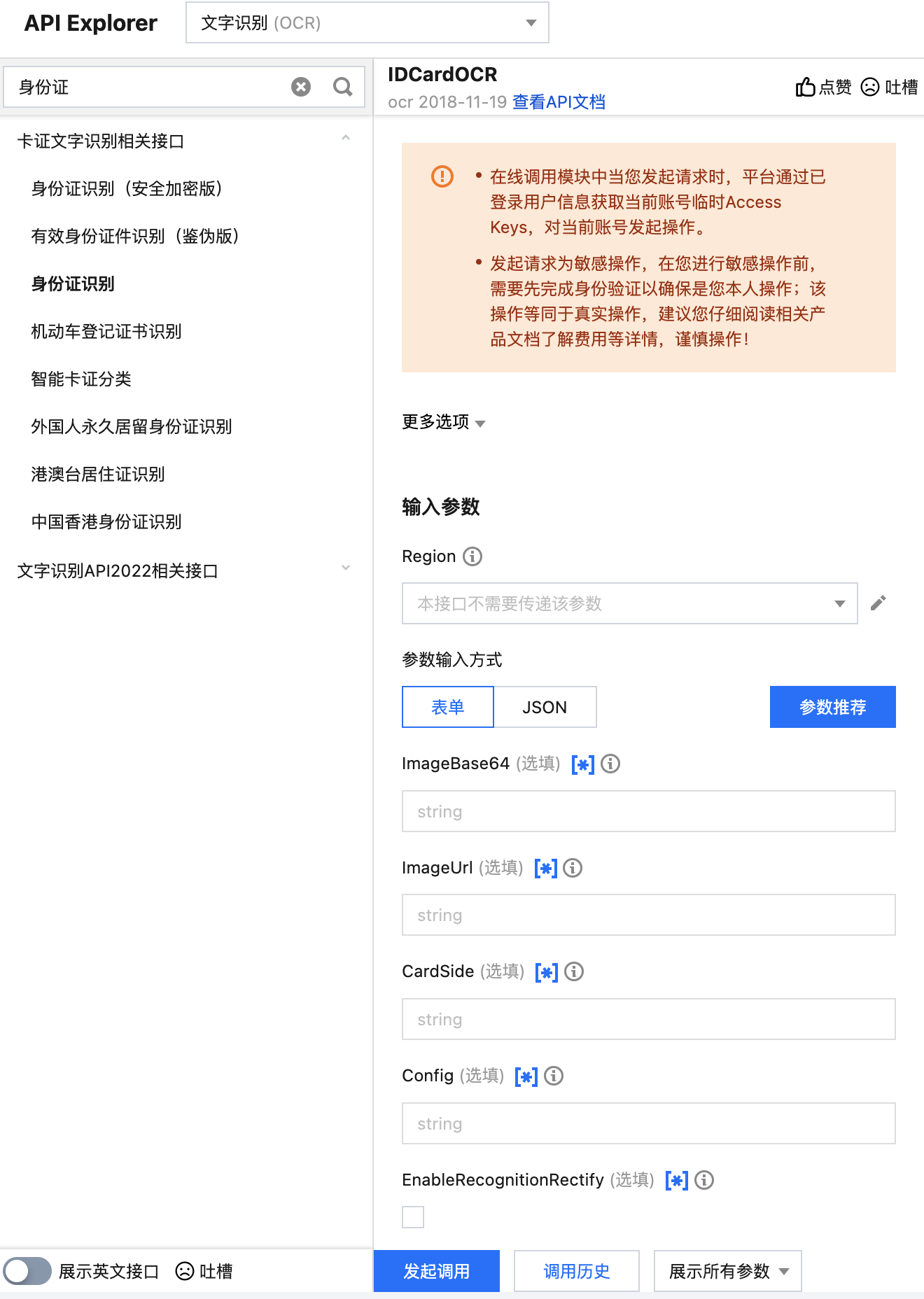
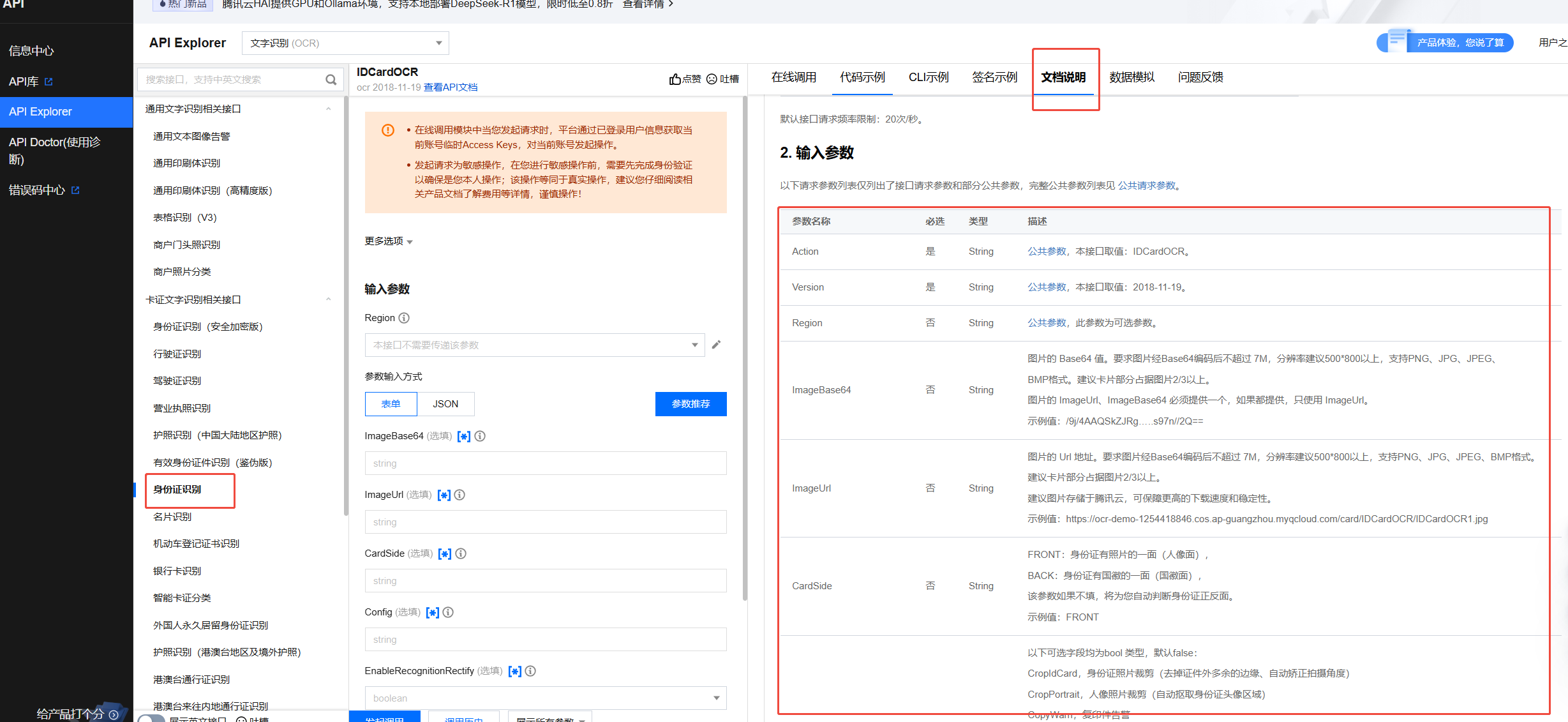
在 API 3.0 Explorer 界面的文档说明选项卡中可以查看对应接口输入参数的具体含义。
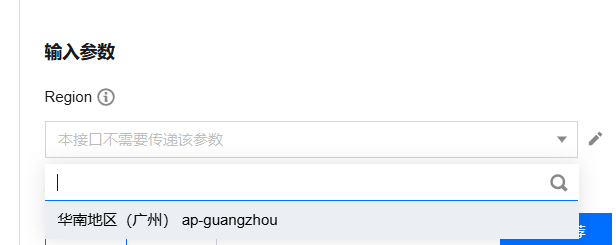
其中,Region 表示提供文字识别服务的资源所在区,单击 Region 的下拉框可以选择不同地域的腾讯云服务器,建议选择与访问点 IP 地址距离相近的地域:例如您的访问点在深圳,建议 Region 选择距离较近的华南地区(广州)。
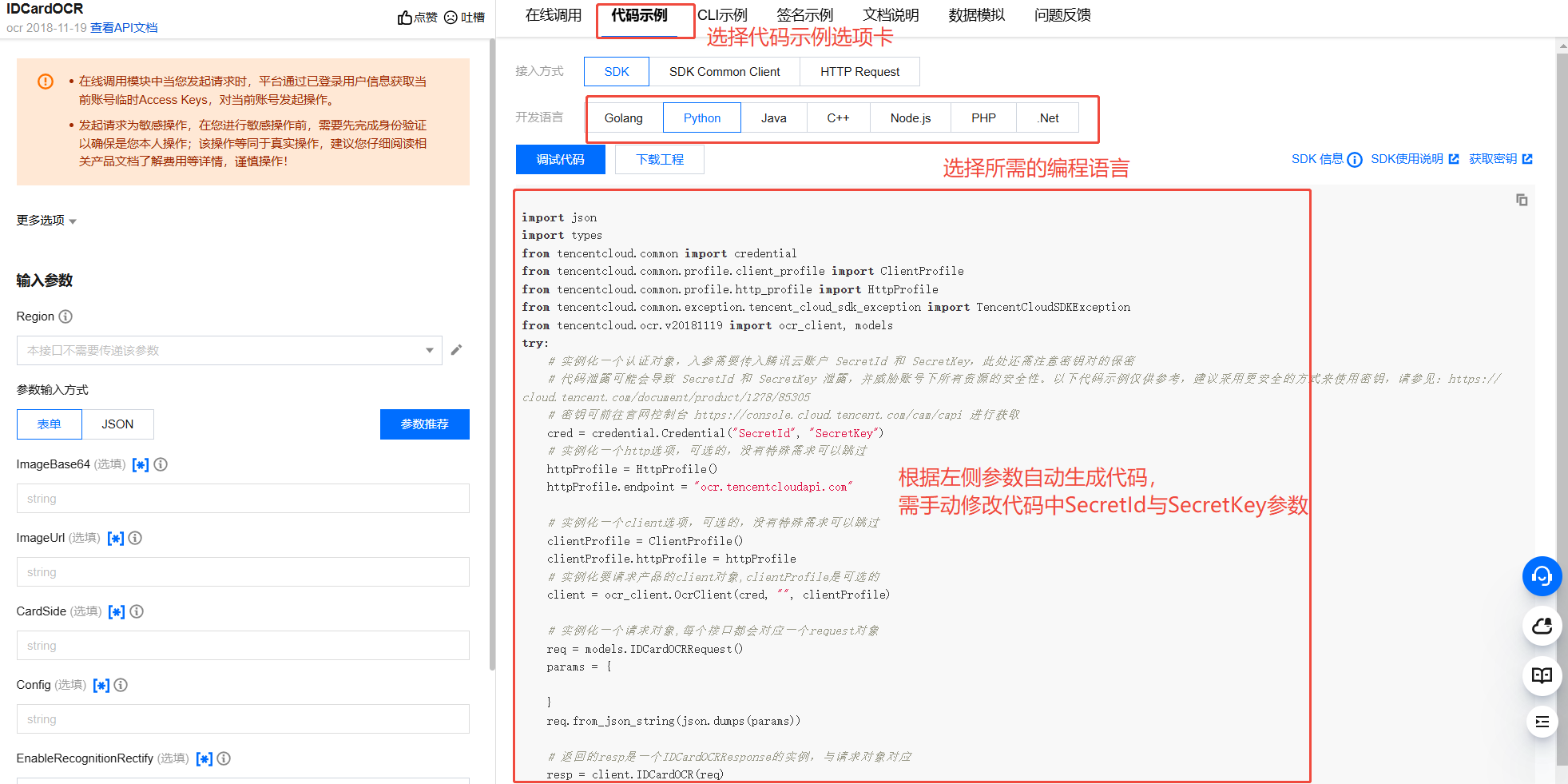
填写好输入参数之后,选择代码示例选项卡,可以看到自动生成的不同编程语言代码(可支持 Java、Python、Node.js、PHP、Go、.NET、C++ 语言),生成代码中的部分字段信息和填写内容是关联的,如需调整传入参数,可在左侧修改参数值后重新生成代码。
填写好输入参数之后,选择在线调用选项卡,单击发送请求按钮可进行真实请求,供您调试、参考。

第三步:集成文字识别 SDK
确认本地依赖环境满足以下条件:
编程环境 | SDK 集成要求 |
Node.js | 需要7.10.1版本及以上 |
Python | 需要2.7至3.6版本 |
Java | 需要 JDK 7版本及以上 |
Go | 需要 Go 1.9版本及以上 |
.NET | 需要 .NET Framework 4.5+ 和 .NET Core 2.1 |
PHP | 需要5.6.33版本及以上 |
C++ | 需要 GCC 4.8版本及以上的 C++ 编译器和 cmake 3.0版本及以上的编译工具,暂时仅支持 Linux 环境,不支持 Windows 环境 |
通过 npm 安装(推荐):npm 是 Node.js 的包管理工具,执行以下安装命令:
npm install tencentcloud-sdk-nodejs --save
通过源码包安装:前往 GitHub 代码托管地址,下载源码压缩包。解压源码包到您项目合适的位置。
SDK 安装完成后,可在您的项目代码中引用 API 3.0 Explorer 自动生成的代码, 以 Node.js 为例,简易 demo 示例如下:
const tencentcloud = require("tencentcloud-sdk-nodejs")// 导入对应产品模块的client models。const OcrClient = tencentcloud.ocr.v20181119.Client// 实例化要请求产品的client对象const client = new OcrClient({// 腾讯云认证信息credential: {secretId: "secretId",secretKey: "secretKey",},// 产品地域region: "ap-shanghai",// 可选配置实例profile: {signMethod: "TC3-HMAC-SHA256", // 签名方法httpProfile: {reqMethod: "POST", // 请求方法reqTimeout: 30, // 请求超时时间,默认60s},},})const params = {"ImageUrl": "https://ocr-demo-1254418846.cos.ap-guangzhou.myqcloud.com/card/IDCardOCR/IDCardOCR1.jpg"};// 通过client对象调用想要访问的接口(Action),需要传入请求对象(Params)以及响应回调函数// 即:client.Action(Params).then(res => console.log(res), err => console.error(err))client.IDCardOCR(params).then((data) => {console.log(data)},(err) => {console.error("error", err)})
注意事项
SDK 调用公共参数时只需要关注 Region 字段,建议域名和 Region 统一使用 “ap-guangzhou”。
图片/视频转 Base64 时,需要去掉相关前缀
data:image/jpg;base64,和换行符\\n。如果 SDK 调用时出现如下情况报错:[TencentCloudSDKException]message:AuthFailure.SignatureFailure-The provided credentialscould not be validated because of exceeding request size limit, please use new signaturemethod `TC3-HMAC-SHA256`. requestId:719970d4-5814-4dd9-9757-a3f11ecc9b20
则需要手动设置签名类型:
signMethod: "TC3-HMAC-SHA256", // 指定签名算法"TC3-HMAC-SHA256"(默认为 HmacSHA256)
文字识别 API 3.0 SDK 目前支持的语言包括:Node.js、Python、Java、PHP、Go、.NET、C++。如果您使用其他编程语言或者不想使用腾讯云 SDK,需要自行实现 V3 鉴权进行接口调用,如何实现请参考 GitHub 示例 。建议使用 API 3.0 Explorer 中签名串生成工具进行核验签名有效性。