Description of the Feature
Local recording helps you record meetings quickly and conveniently. It can save the meeting video and shared content in your local folder.
Prerequisites
log in to user: Free Edition, Membership, Business Edition, Enterprise Edition user.
log in to device: Windows/macOS.
Version: v2.3.0 or later.
How to use Local Recording
Enabling Local Recording
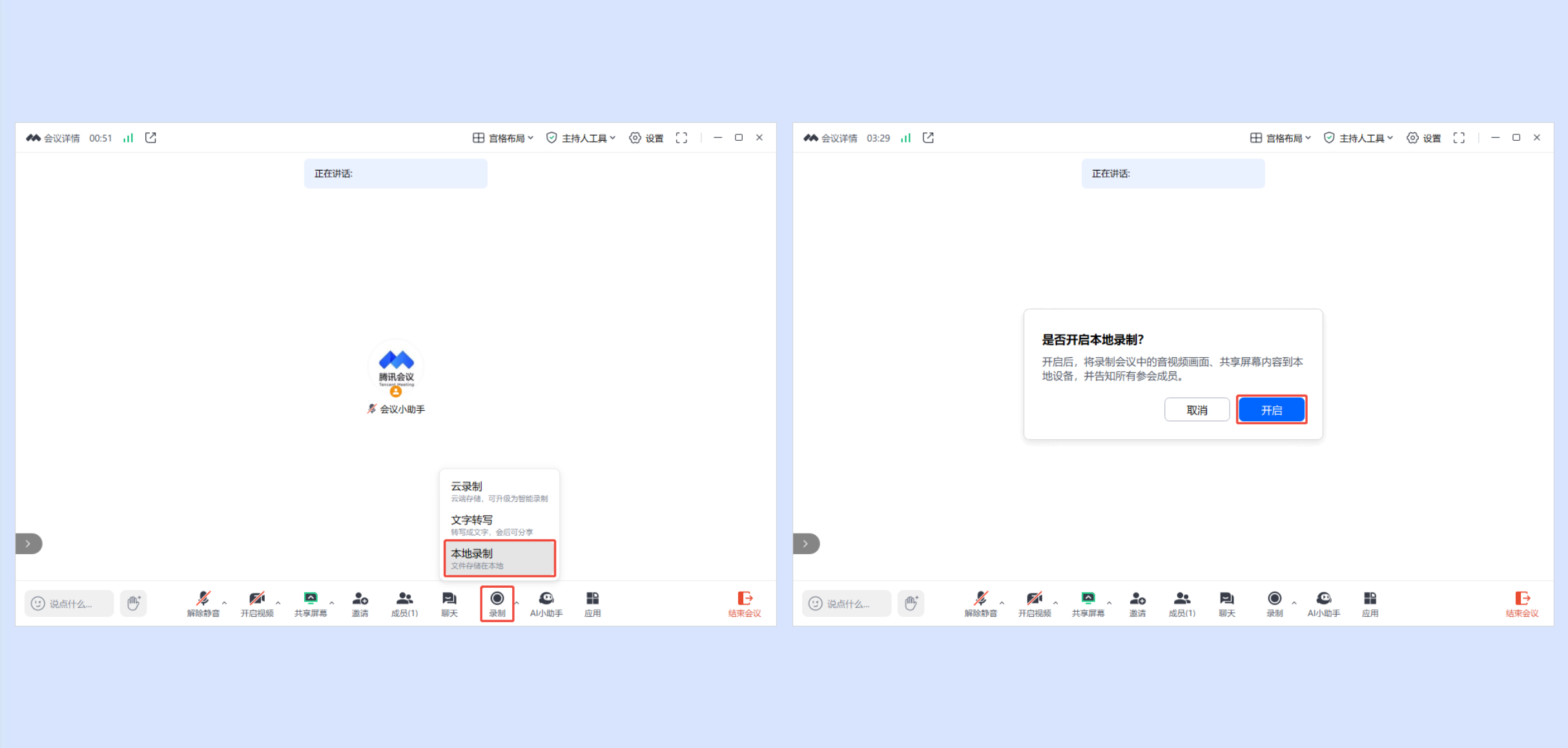
During the meeting, click the bottom toolbar Record > Local Recording > Start to enable local recording, and notify all participants.

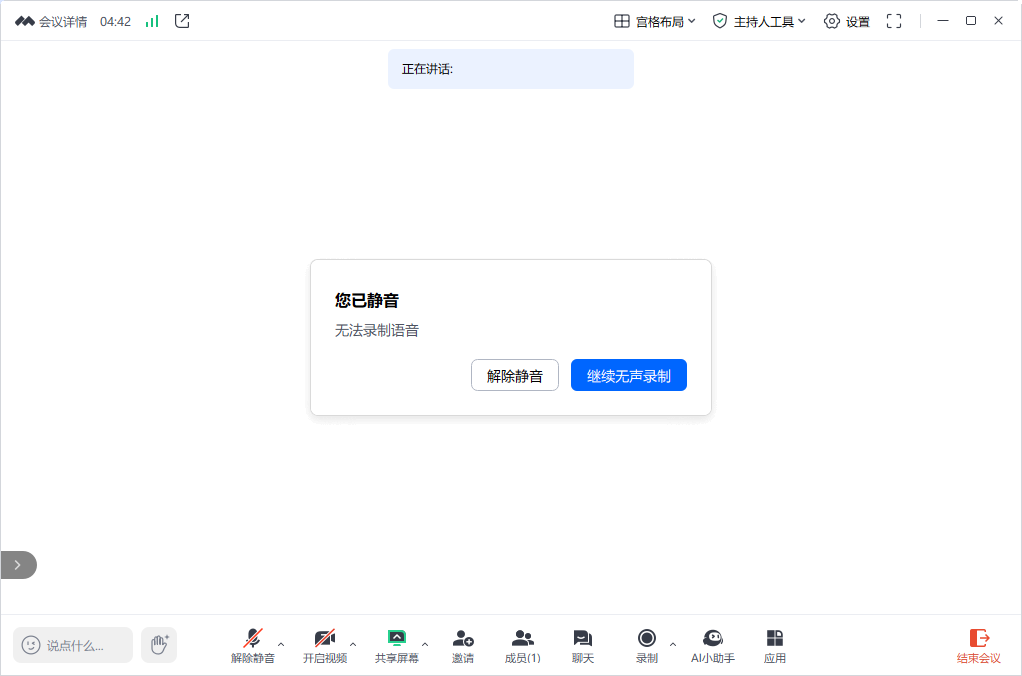
If the user is currently muted, prompt user to unmute or continue silent recording, then start recording after selection.
If the user is currently unmuted, start recording normally.

Pause or End Local Recording
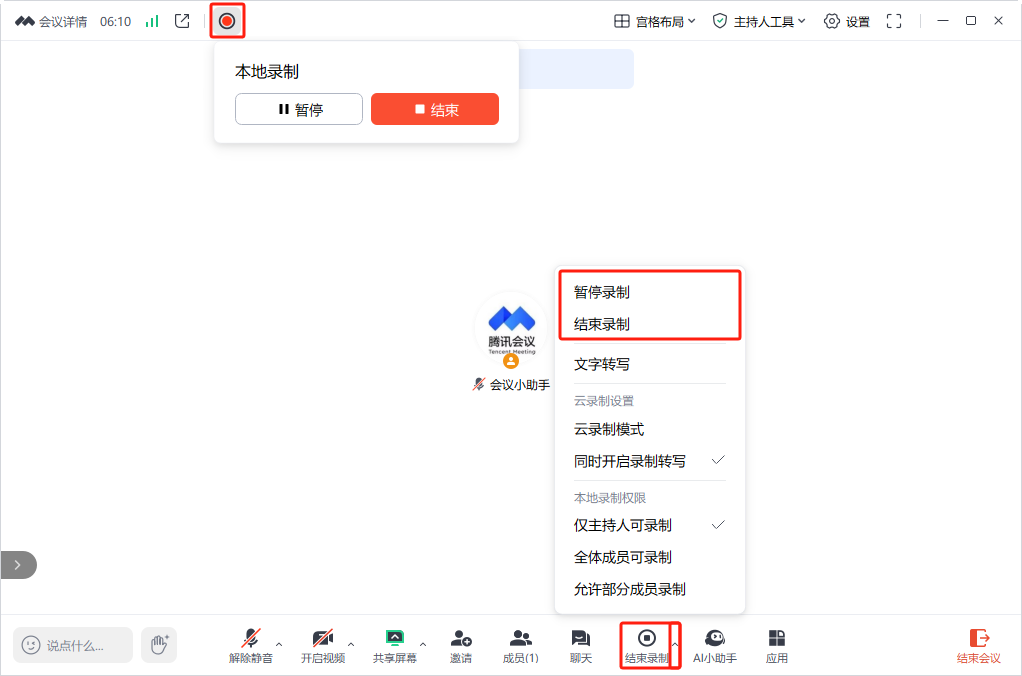
After starting the recording, the bottom toolbar Record changes to End Recording.
The recording status is displayed in the upper left corner of the main window with Pause Recording and End Recording control icons.
Click the triangle button on the right side of Stop Recording in the bottom toolbar, and add Pause Recording and Stop Recording in the expanded menu.
In Pause Recording status, Pause changes to Resume Recording.
Pause Recording: Click to pause the current recording.
Resume Recording: Resume recording status.
End Recording: End and exit recording status, and prompt "The meeting recording will be automatically converted to MP4 format once the meeting ends.".
In the member list, all members will be able to see the user's recording status.

View Local Recording
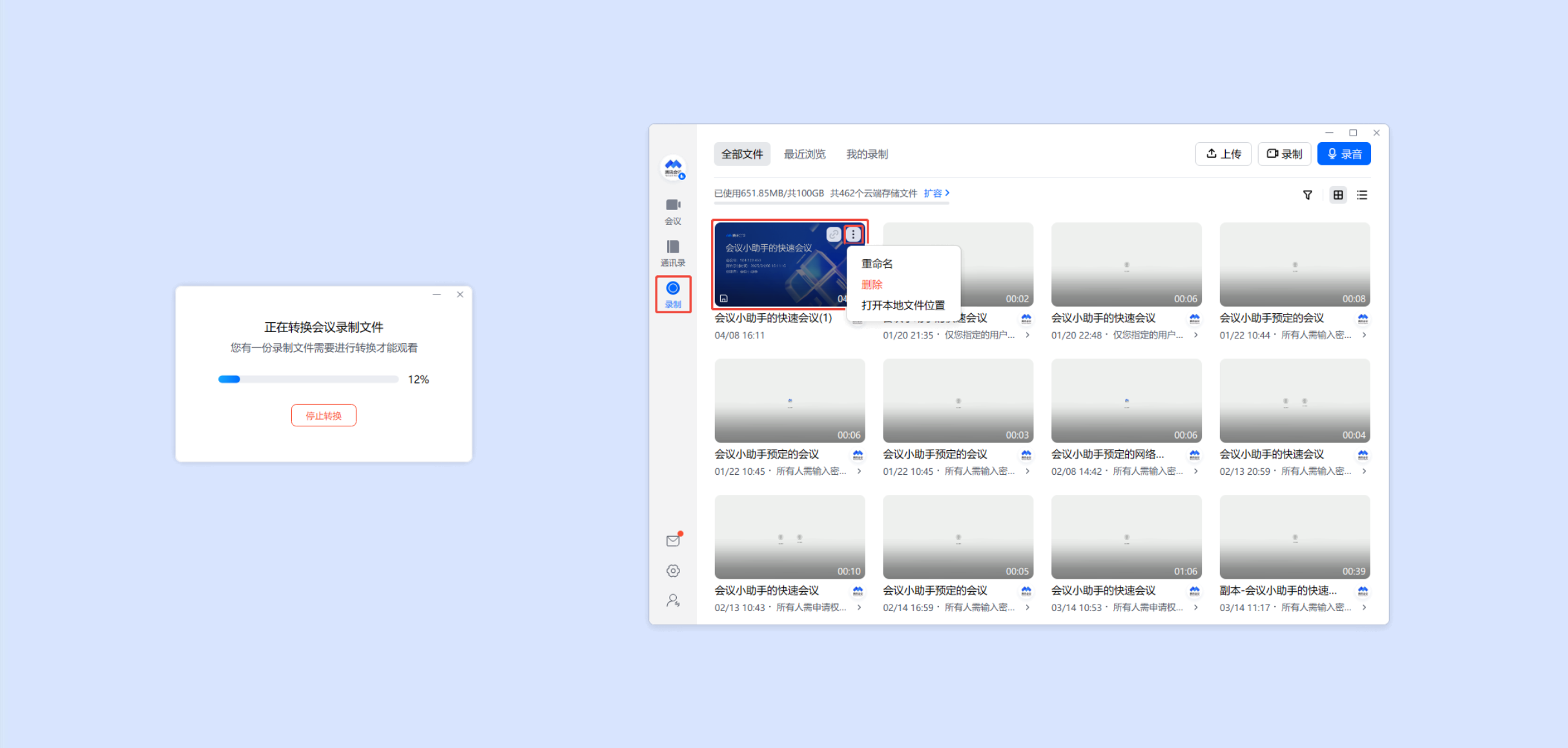
After a meeting ends, the system will automatically transcode the recording to MP4 format and open the folder containing the recording file for easy viewing.

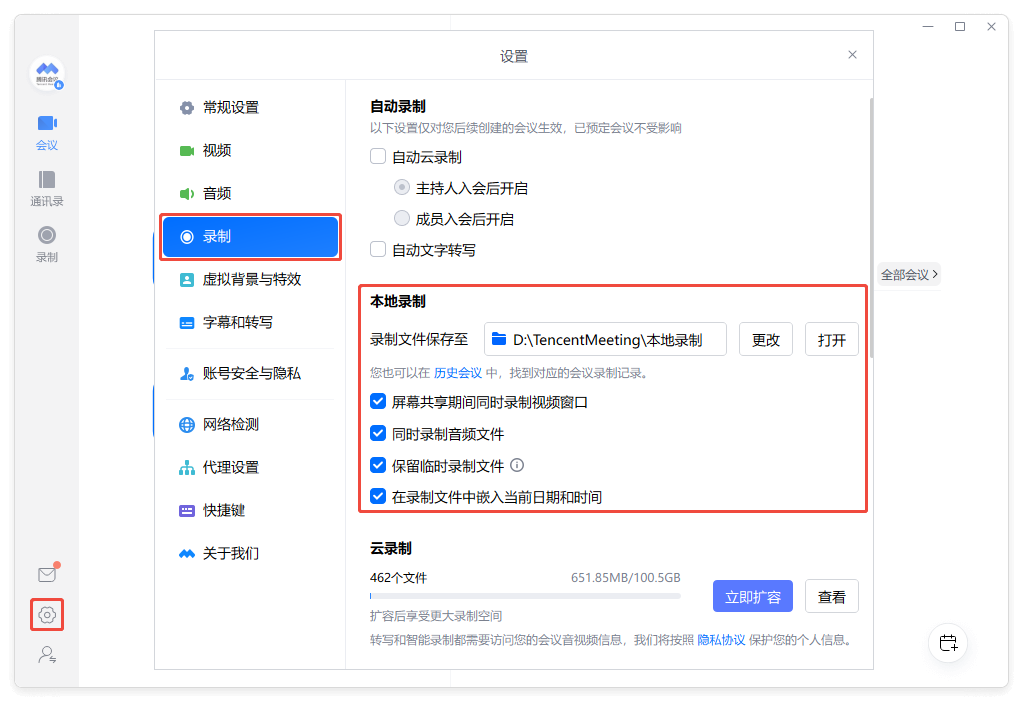
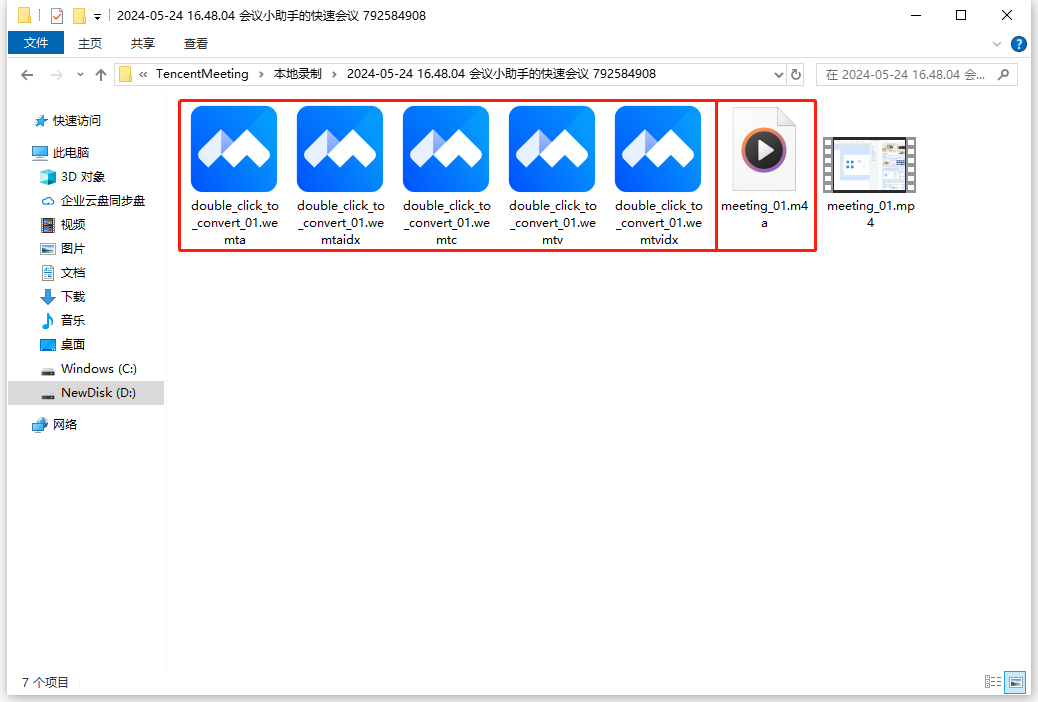
If the option Record audio files at the same time is selected before starting local recording, an audio file will be generated separately after the meeting and saved in the folder.
If the option Keep temporary recording files is selected before starting local recording, the original recording files (formats: wemta, wemta.idx, wemtv, wemtv.idx) will be saved after the meeting. You can manually transcode these by double-clicking the original recording files.

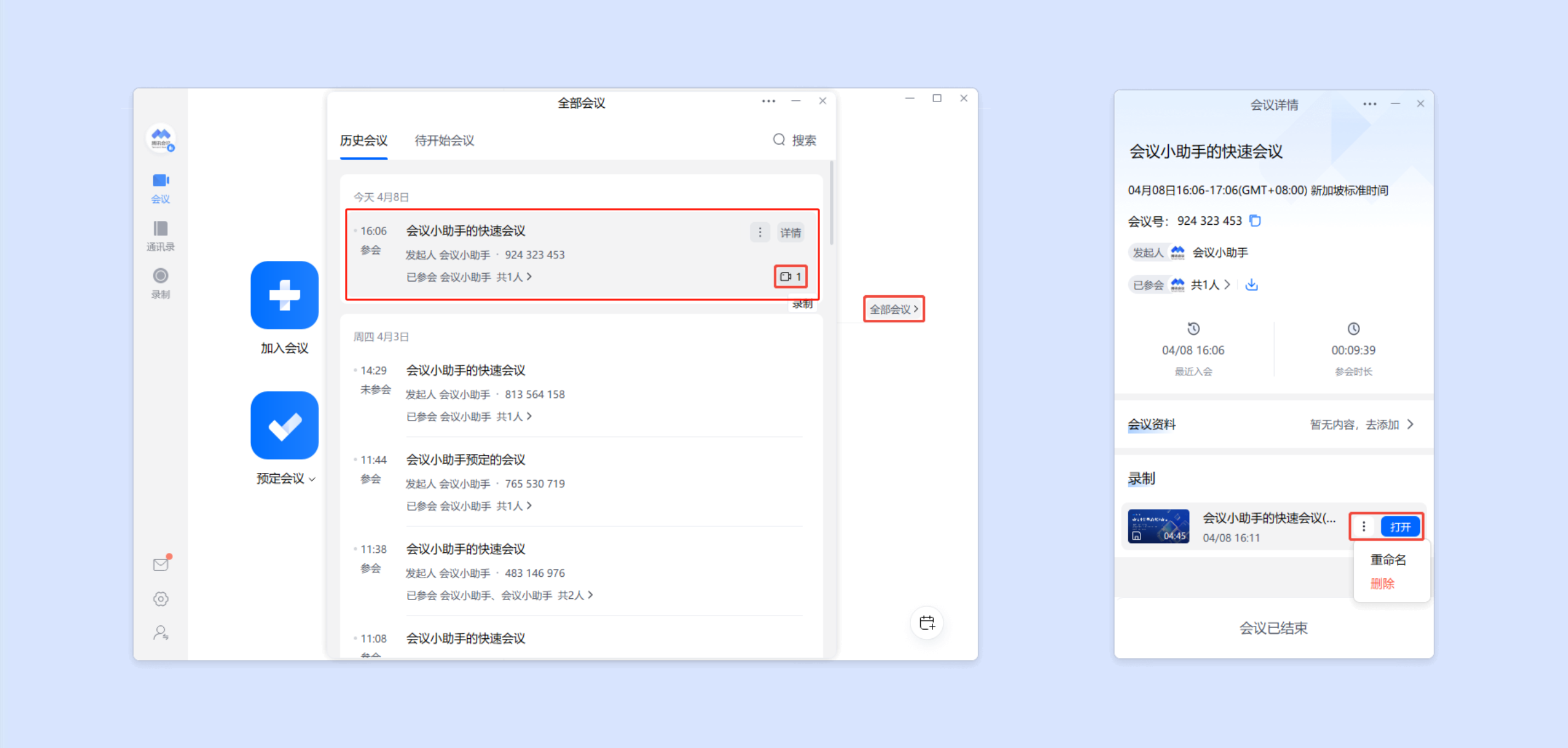
You can also click Historical Meetings on the main interface, select a meeting, then click Details and on the meeting details page click Local Recording to view the recording content.

You can click on the client's main interface settings > record > and select the locally recorded recording file save location to the right of change to modify the save address. After modifying, your subsequent locally recorded files will be saved to this address; click open for quick access to locally recorded content.

Notes
Notes during the recording process
During recording, you cannot change the recording file storage path.
If a meeting ends during recording or you are removed from the meeting, recording will stop and the recording file will be transcoded automatically.
Cloud and local recording are mutually exclusive for hosts and co-hosts, sharing the same start, pause, resume, and end operations.
Local Recording Format
Video file: MP4.
Audio file: m4a.
Original file: wemta, wemta.idx, wemtv, wemtv.idx.
Recording File Notes
If a meeting has multiple recording segments, multiple recording files will be generated in chronological order. After a recording is resumed, the recording content before pause will be merged with the content after resumption into one recording file.
If unforeseen circumstances cause an interruption in recording transcoding, you can perform manual transcoding in two ways.
You can find the recorded file of the meeting in Historical Meetings and click the file for transcoding.
You can also open the recorded file, find the original recorded files (formats: wemta, wemta.idx, wemtv, wemtv.idx), double-click to start transcoding. Once transcoding is complete, the system will prompt you with the location of the recorded video (MP4 file), and you can open and play it.
If you delete the local recording log in Historical Meetings, the original recorded files saved locally will also be deleted.